

Commercial HVAC 5-Year TCO: DX vs Chilled Water
Choose DX when decentralization reduces project risk, and choose chilled water when centralization reduces lifecycle risk. This guide compares cost, sizing, footprint, refrigerant safety, redundancy, maintenance and 5-year total cost of ownership.

DX unit vs chilled water system selection should start with project scale, operating hours, plant room availability and zone diversity. A DX unit cools air directly with refrigerant and works well for standalone zones, temporary buildings, rooftops, equipment rooms and projects that need fast installation. A chilled water system uses a chiller to cool water, then distributes that water to AHUs or fan coils, which works better for larger buildings, campuses and projects that need central plant control.
For most small and medium commercial areas below about 150 kW per zone, a DX unit is usually simpler. For projects above 500 kW total cooling load, many zones, or more than 4000 operating hours per year, a chilled water system deserves serious comparison because central plant efficiency and maintenance access can outweigh first-cost simplicity.
This guide connects the decision to SongXin’s direct expansion unit, air-cooled screw chiller, water-cooled chiller supplier, air handling unit and DX unit load calculation worksheet resources.
Direct Selection Rule for Buyers
A DX unit is better for compact, independent and fast-install projects. A chilled water system is better for larger multi-zone buildings with long operating hours.
The direct answer is this: choose DX when decentralization reduces project risk, and choose chilled water when centralization reduces lifecycle risk. The wrong choice creates cost later because DX systems multiply refrigerant circuits across many zones, while chilled water systems add pumps, piping, valves and plant-room coordination.
- Total load < 150 kW, single building, < 3,000 hrs/yrDX unit / packaged DX
- Total load 150-500 kW, 1-4 zonesDX air handler
- Total load > 500 kW or > 4 zones or > 4,000 hrs/yrChilled water plant with AHU or FCU terminals
- Total load > 2,000 kW + cooling tower allowedWater-cooled chilled water plant
One-Sentence Decision
DX reduces plant construction, while chilled water reduces distributed equipment risk when load, runtime and zone count increase.
Buyer shortcut: if the system is small, fast and independent, start with DX. If the building is large, long-running and centrally maintained, model chilled water before locking the budget.
Direct Comparison Matrix
DX and chilled water systems solve the same cooling problem through different distribution methods. A DX system moves refrigerant heat transfer closer to the room; a chilled water system centralizes refrigeration and distributes water.
| Decision factor | DX unit | Chilled water system | Buyer rule |
|---|---|---|---|
| Practical zone scale | 10-150 kW per unit or zone | 100-2000 kW plant range | Use chilled water as load and zone count rise. |
| First installation | Faster, fewer water components | Slower, more plant coordination | DX wins when schedule is tight. |
| Distribution medium | Refrigerant and air | Chilled water and air | Water is easier to route across large buildings. |
| Plant room footprint | Minimal, compressor on unit or rooftop | 30-80 m² for 500 kW plant + tower yard | DX wins when plant room is scarce. |
| Refrigerant charge | Higher, especially with long DX lines | Lower, because refrigerant stays in the chiller | Chilled water lowers refrigerant safety risk. |
| Maintenance structure | Many small refrigerant systems | Central chiller plus pumps and terminals | Chilled water wins with a trained plant team. |
| Expansion | Add units zone by zone | Add terminals if plant has spare capacity | Plan plant spare capacity if future load is known. |
| Controls | Local or unit-level control | Central BMS and plant optimization | Chilled water gives stronger central control. |
| Typical inspection rhythm | Filters every 1-3 months; refrigeration inspection 6-12 months | AHU/FCU filters 1-3 months; plant inspection monthly | Match service staff to system complexity. |
| Typical lifetime | 12-15 years per DX unit | 15-20 years chiller + 15-20 years AHU/FCU | Chilled water has longer central-asset life. |
DX is not automatically cheaper over the full life of the building. It reduces plant complexity, but projects with more than 10 zones increase the number of compressors, condensers and refrigerant circuits. Chilled water adds pumps and piping, but central equipment is easier to stage and monitor when one plant serves many terminals.
SongXin Equipment Range at a Glance
SongXin can quote both sides of the DX-vs-chilled-water decision under the same engineering basis, which is essential for a fair lifecycle comparison.

DX Units
10-200 kW per unit, rooftop, ducted, split and tent configurations.
Air-Cooled Screw Chiller
150-1,475 kW, R134a/R513A, -35°C to +48°C operation.

Water-Cooled Chiller
200-3,000 kW typical, cooling tower required.
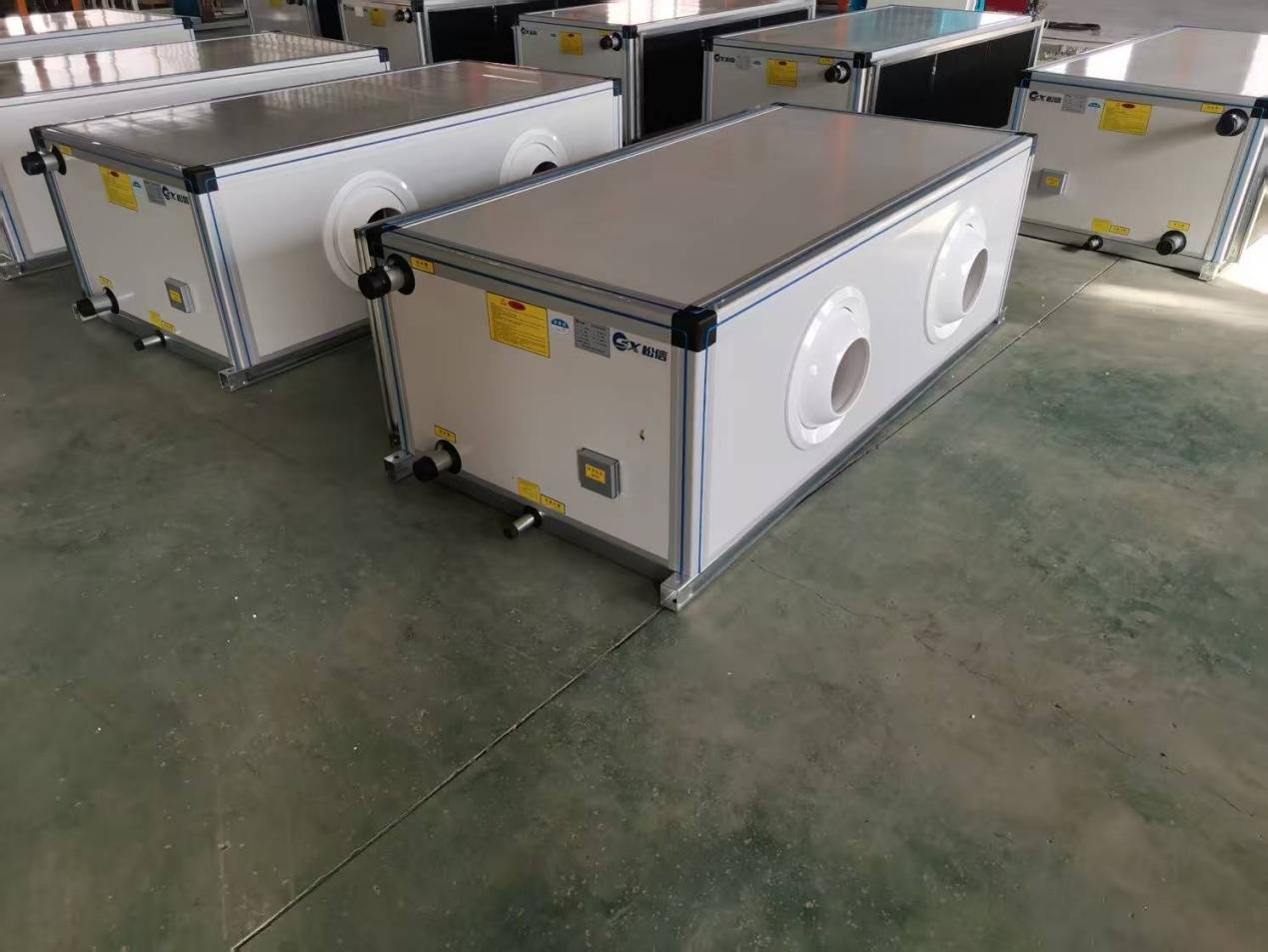
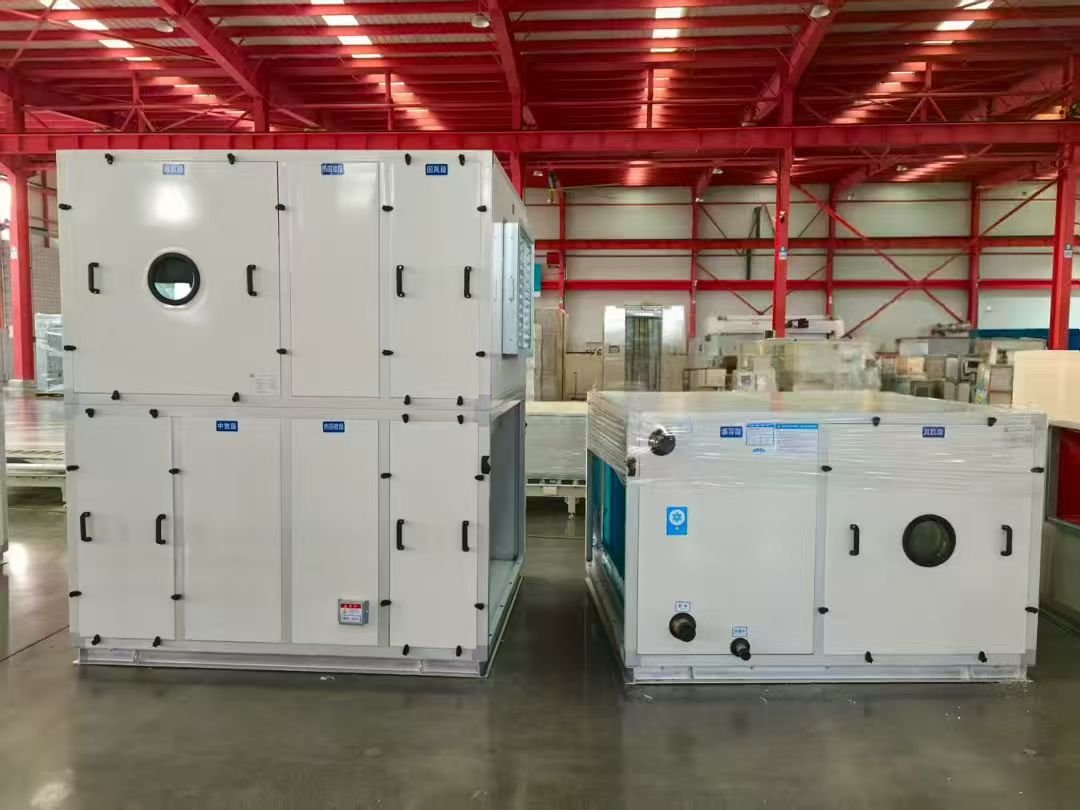
Air Handling Unit
1,000-40,000 m³/h, 12-610 kW, DX or chilled-water coil.
| Platform | Capacity range | Refrigerant typical | Operating ambient | Key references |
|---|---|---|---|---|
| DX units (rooftop / ducted / split / tent) | 10-200 kW per unit | R410A / R32 / R134a (project) | -10°C to +48°C standard | Direct expansion unit |
| Air-cooled screw chiller | 150-1,475 kW (4 size bands: 150-300, 300-600, 600-1,000, 1,000-1,400 kW) | R134a / R513A typical | -35°C to +48°C | Air-cooled screw chiller, supplier page[9] |
| Water-cooled chiller | 200-3,000 kW typical | R134a / R513A / R1234ze | Cooling tower required | Water-cooled chiller supplier |
| Air handling unit (terminal) | 1,000-40,000 m³/h, 12-610 kW | DX or chilled-water coil | IP54, 68-75 dB(A) | Air handling unit[10] |
When DX Wins and When Chilled Water Wins
The right system depends on which risk matters most: installation speed and local control, or central efficiency and lifecycle coordination.
When a DX Unit Wins
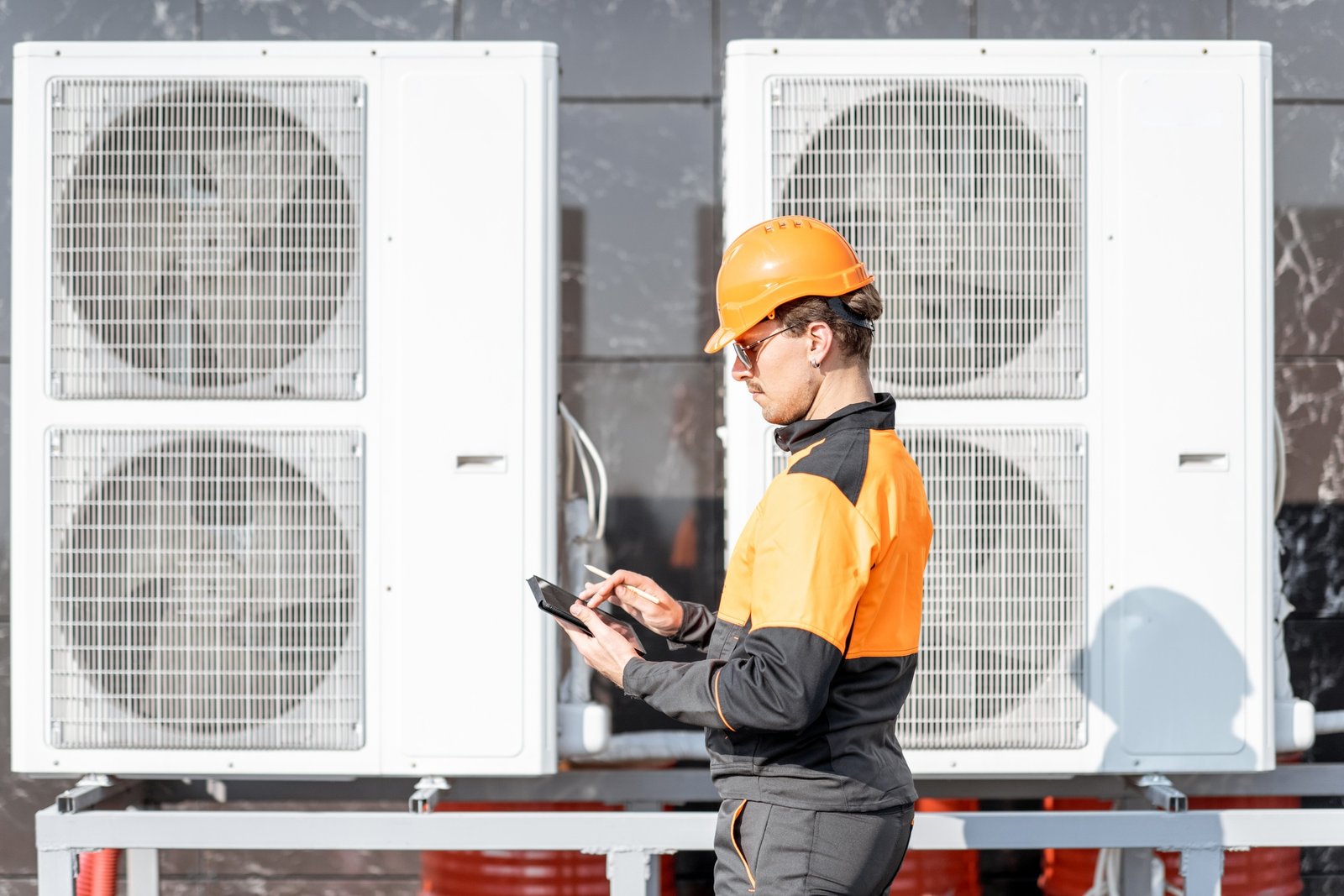
A DX unit wins when the project value is speed, simplicity and independent operation. It is a strong fit for shops, offices, restaurants, site buildings, telecom rooms, equipment rooms, remote facilities, small factories and temporary spaces.
DX is attractive when there is no chilled water plant, no cooling tower, no pump room and no large pipe network. It also works well when different zones have different schedules.
- Limited plant-room space
- Short construction schedule
- Standalone zone or remote building
- Simple local control and service access
Use SongXin’s direct expansion air handler selection guide when duct static pressure, fresh air or filtration makes the air side more complex than a standard DX unit. For rooftop vs split decision, see DX rooftop unit vs DX split system.
When Chilled Water Wins
A chilled water system wins when central plant control lowers lifecycle risk. It is a better candidate for hotels, airports, hospitals, malls, campuses, industrial workshops and multi-zone buildings with long operating hours.
The main mechanism is load diversity. Not all rooms peak at the same hour. A central chilled water plant can serve many terminal units while using load diversity, which reduces the need to install every zone as a separate full-size refrigeration system.
- Total load above about 500 kW
- More than 10 major zones
- Central BMS and trained plant team
- Future expansion or redundancy planning
A 6-zone building with 100 kW per zone often runs at a 350-400 kW plant peak, not 600 kW.
Air-Cooled vs Water-Cooled Chilled Water
If chilled water is the answer, there is still a sub-decision: air-cooled or water-cooled.

| Decision factor | Air-cooled screw chiller | Water-cooled chiller |
|---|---|---|
| Typical capacity | 150-1,475 kW (SongXin)[9] | 200-3,000 kW+ |
| Heat rejection | Outdoor air via condenser fans | Cooling tower + condenser water loop |
| Full-load efficiency (COP) | 2.9-3.3 typical | 5.0-6.0 typical |
| IPLV (part-load) | 4.5-6.0 typical | 6.5-8.5 typical |
| Plant room | Outdoor placement, no plant room needed | Indoor chiller room + outdoor tower yard |
| Water consumption | None | 2-4 L/kWh cooling (tower makeup + bleed) |
| Water treatment | Not required | Required: chemicals, scale and Legionella control |
| Ambient operating range | -35°C to +48°C (SongXin)[9] | Limited by tower freeze and scale risk |
| CAPEX per kW | Lower | Higher, because tower, pumps and treatment are added |
| OPEX per kWh | Higher, because COP is lower | Lower, but adds water cost |
| ROI break-even vs air-cooled | – | About 3,000-4,000 hrs/yr depending on water price |
For sub-selection within screw chillers, see single screw vs twin screw chiller and 50 ton air-cooled screw chiller selection guide. For the water-cooled side, see how to select a water cooled chiller.
Worked Example: 5-Year Total Cost of Ownership
A simplified cost screen helps a buyer avoid a first-price decision. Assume a building has 600 kW peak cooling load and 3,000 full-load equivalent operating hours per year, electricity at USD 0.12/kWh, project life horizon 5 years.
Result: The Crossover Region
5-year TCO is virtually identical: about USD 1,400 difference, or roughly 0.2%. The decision then turns on non-cost factors: plant room, schedule, zone schedules, future expansion, refrigerant risk and operating hours.
| Tiebreaker | Favors |
|---|---|
| Plant room is unavailable or expensive | DX |
| Project schedule < 4 months | DX |
| 4+ zones with different schedules | DX, because of independent control |
| Owner already has BMS + plant team | Chilled water |
| Future expansion to 800+ kW planned | Chilled water, because terminals can be added if plant capacity is reserved |
| Refrigerant safety / leak risk is a concern | Chilled water |
| Run hours likely to rise above 4,000 | Chilled water, because lower kWh matters more |
In a recent SongXin 600 kW concept review for a Southeast Asia industrial building, the energy screen difference was smaller than the installed-cost gap, so the buyer kept DX for Phase 1 and reserved plant room space for a future chilled water plant in Phase 2 – a hybrid choice that the all-or-nothing comparison would have missed.
Refrigerant and Plant Room Footprint Comparison
Two factors strongly influence the decision but are often left out of CAPEX-only comparisons: refrigerant charge and equipment footprint.

Refrigerant charge
| System type | Typical charge for 600 kW | Implication |
|---|---|---|
| 6 × 100 kW DX units | About 60-90 kg total, distributed across 6 systems | More units to inspect for leaks; ISO 5149 safety zones apply per system. |
| 1 × 600 kW air-cooled chiller | About 80-110 kg in chiller body, no field refrigerant piping | One centralized refrigerant inventory; easier to manage F-gas / GWP regulations. |
| 1 × 600 kW water-cooled chiller | About 60-90 kg, indoor location | Indoor location requires ISO 5149 mechanical ventilation and detection. |
Plant room and equipment footprint
| System type | Footprint for 600 kW | Notes |
|---|---|---|
| 6 × 100 kW DX, rooftop | 6 × 4-6 m² rooftop = 24-36 m² roof area | No plant room. |
| Air-cooled screw chiller | 1 × 8-12 m² outdoor pad | No plant room, no tower yard. |
| Water-cooled chiller plant | 25-35 m² indoor + 12-18 m² tower yard | Plant room + cooling tower yard needed. |
For projects where rooftop or outdoor area is constrained, such as urban high-rise, heritage buildings or dense industrial yards, this footprint table often determines the answer before any cost comparison runs.
Industry-Specific Recommendations
These are SongXin’s typical recommendations for common building types. They are starting points, not absolute rules – confirm with project load profile and operating hours.
| Building / facility type | Typical load | Recommended system | Why |
|---|---|---|---|
| Small office / shop / restaurant | 20-80 kW | Packaged DX or DX split | Speed and simplicity. |
| Telecom shelter / equipment room | 5-40 kW | DX precision unit | 24/7 reliability, independent control. |
| Mid-size factory support | 100-400 kW | DX air handler(s) | Process variability per zone. |
| Data center, small/medium | 100-500 kW | DX precision + N+1 redundancy | Sensible-heavy load, redundancy critical. |
| Hotel, 50-200 rooms | 400-1,000 kW | Air-cooled chiller + FCU | Many small zones, central plant economy. |
| Shopping mall | 500-2,000 kW | Water-cooled chiller + AHU | Long hours, high load, central BMS. |
| Hospital / lab building | 500-1,500 kW | Water-cooled chiller + AHU + redundancy | Strict IAQ, redundancy, 24/7 operation. |
| Airport terminal | 1,000-10,000 kW | Water-cooled chiller plant + large AHUs | Diversity, redundancy, central control. |
| Industrial process cooling | Varies | Process chiller, often glycol loop | Continuous, tight temperature control. |
| Remote site / temporary building | 20-200 kW | Rugged DX, rooftop or containerized | No plant infrastructure available. |
| Pharma / cleanroom | 200-2,000 kW | Chilled water + process AHU | Latent control, multi-stage filtration. |
For airport-specific design references, see airport HVAC system design guide.
Lifecycle, Maintenance and Redundancy Matrix
Lifecycle planning should compare installed cost, energy cost, service access and failure impact, not only the first equipment quotation.
| Project profile | Better first option | 5-year TCO risk | Maintenance interval | Decision rule |
|---|---|---|---|---|
| Single shop, 50-100 kW | DX unit | Low plant complexity | Filters every 1-3 months | Choose DX unless chilled water already exists. |
| Remote site, 20-80 kW | Rugged DX unit | High service travel cost | Remote alarm plus 3-6 month inspection | Choose DX with access panels and spare parts. |
| Hotel or mall, 500-2000 kW | Chilled water | Higher plant coordination | Monthly plant inspection | Choose chilled water when many zones share load. |
| Factory support rooms, 100-500 kW | DX or chilled water | Depends on load diversity | 1-3 month filters; 6-12 month refrigeration review | Compare both options with energy and service data. |
| Airport terminal, above 1000 kW | Chilled water with AHUs | High outage impact | Central plant and AHU maintenance plan | Use redundancy and BMS coordination. |
The failure mode is different. A DX failure affects one unit or zone, which limits outage size but creates many assets to track. In a single-plant chilled water design, one plant failure affects many zones, so redundancy, pump standby and alarm response become more important.
| Architecture | DX example | Chilled water example | Failure impact |
|---|---|---|---|
| N, no redundancy | 6 × 100 kW = 600 kW total | 1 × 600 kW chiller | Critical zone loss on any single failure. |
| N+1 | 7 × 100 kW, 1 standby | 2 × 350 kW, one standby | Single unit failure, zero impact. |
| N+2, data center grade | 8 × 100 kW, 2 standby | 3 × 300 kW, 2 standby | Two simultaneous failures tolerated. |
For data centers, hospitals and mission-critical industrial rooms, chilled water at N+1 is often cheaper than DX at N+1 because adding one extra chiller is less expensive than doubling many distributed DX units. This is one of the strongest cases for chilled water in mid-load projects between 300 and 600 kW with strict uptime requirements.
RFQ Data and Specification Checklist
A good RFQ should ask suppliers to compare systems at the same load, ambient condition and operating profile. Do not compare a DX catalog price with a chiller plant price unless installation scope is defined.
- Peak cooling load in kW or RT, plus load profile by hour or season.
- Number of zones, operating schedule and future expansion plan.
- Outdoor design temperature, altitude and condenser-air condition.
- Indoor temperature, humidity and fresh-air requirements.
- Available plant-room, roof, yard and service-access space.
- Electricity price, water price, operating hours and maintenance staffing level.
- Required redundancy level: N, N+1 or N+2.
- Required documents: datasheet, wiring diagram, installation manual, O&M notes and compliance file.
| Item | DX unit answer | Chilled water answer |
|---|---|---|
| Rated capacity | Unit capacity at project ambient | Chiller capacity at leaving-water temperature |
| Distribution design | Refrigerant piping, duct ESP and airflow | Water flow, pump head, pipe route and terminal units |
| Controls | Local controller, alarms, BMS option | Chiller plant control, pumps, valves and BMS |
| Safety basis | ISO 5149-1, ISO 5149-2, ISO 817 | ISO 5149-1, ISO 5149-2, ISO 817 |
| Certifications | ISO 9001, CE, AHRI rating basis | ISO 9001, ISO 14001, CE, AHRI, EN 14511, EN 14825[9] |
| Energy comparison | Unit input power at real condition | Chiller input plus pump and auxiliary power |
If the project is still early, send your load and building layout to SongXin for engineering support. The team can help compare DX units with air-cooled or water-cooled chiller options before the quotation is locked.
Common Mistakes
The most expensive errors happen when buyers compare labels instead of installed scope and operating conditions.
| Mistake | Why it creates cost later |
|---|---|
| Comparing equipment price instead of installed scope | Chilled water needs pumps, piping, valves, insulation, controls and terminals. DX needs refrigerant piping or packaged unit placement, condensate drainage, electrical feeds and service access. |
| Ignoring operating hours | A system that runs 500 hours per year should not be judged like a system that runs 5000 hours per year because energy savings need enough runtime to recover extra capital cost. |
| Leaving redundancy out | DX redundancy is usually zone by zone. Chilled water redundancy depends on plant layout, standby pumps, multiple circuits, valves and control logic. |
| Forcing one answer across all buildings | A facility can use chilled water for the main building and DX for remote support spaces. Mixed systems are practical when each area has different schedule, access and reliability needs. |
| Ignoring water cost for water-cooled chillers | Tower makeup + bleed + treatment can add USD 4,000-12,000 per year for a 1,000 kW plant. In water-stressed regions this can flip the answer back to air-cooled. |
DX Unit vs Chilled Water System FAQ
These answers use the same equipment rating, energy and safety basis referenced above under AHRI 340/360, AHRI 550/590, EN 14511, ASHRAE 90.1, ASHRAE 62.1, ISO 5149-1, ISO 5149-2 and ISO 817.
Which is better, a DX unit or a chilled water system?
A DX unit is better for compact, independent and fast-install projects, while a chilled water system is better for larger multi-zone buildings with long operating hours. The better choice is the one that reduces lifecycle risk. Use DX below about 150 kW per zone; compare chilled water above about 500 kW total load.
When should a project choose DX instead of chilled water?
Choose DX when the site has limited plant-room space, a short construction schedule, independent zone operation or a remote building that does not justify a central plant. DX also works well when the owner wants each zone to operate separately. State load, airflow, ESP, ambient temperature and service access before requesting a quote.
When should a project choose chilled water instead of DX?
Choose chilled water when the project has many zones, long operating hours, future expansion plans or a central maintenance team. Chilled water is usually stronger for hotels, airports, malls, hospitals and campuses. The plant should be compared using chiller input, pump power, terminal units, controls and redundancy scope.
Is DX cheaper than chilled water?
For projects below about 150 kW or with short run hours, DX is usually cheaper on both CAPEX and 5-year TCO. For projects in the 300-600 kW range, CAPEX and TCO are often within 5% of each other – the tiebreakers decide. For projects above 600 kW with more than 4,000 run hours per year, chilled water usually wins on TCO even when CAPEX is higher.
Air-cooled or water-cooled chiller?
Air-cooled wins below about 600 kW total load, in water-stressed regions, or when no plant room is available. Water-cooled wins above about 1,000 kW with long run hours, where COP gains, often 5.0+ versus about 3.0, outweigh tower water and treatment cost. Between 600-1,000 kW, run a full lifecycle comparison including water price and plant room CAPEX.
Which option has lower maintenance risk?
DX has lower plant complexity but more distributed refrigerant assets. Chilled water has more central plant complexity but fewer refrigeration machines across zones. Maintenance risk is lower when the owner’s staff, service access and spare-parts plan match the system type. Compare inspection routes before comparing equipment price.
What capacity does SongXin offer on each side?
SongXin DX units cover 10-200 kW per unit across rooftop, ducted, split and tent configurations. SongXin air-cooled screw chillers cover 150-1,475 kW in four size bands with -35°C to +48°C operating range.[9] Water-cooled chillers extend up to 3,000 kW+, and AHUs cover 1,000-40,000 m³/h with 12-610 kW per unit.[10]
What should I send for a DX vs chilled water quotation?
Send peak load, operating hours, zone count, indoor and outdoor design conditions, fresh-air requirement, plant-room space, roof or yard space, control requirement, power supply and maintenance staffing level. The same data lets SongXin compare DX units, air-cooled screw chillers and water-cooled chillers under one project basis.
References Used for Technical Claims
- AHRI 340/360, “Performance Rating of Commercial and Industrial Unitary Air-conditioning and Heat Pump Equipment,” https://www.ahrinet.org/search-standards/ahri-340360-i-p-performance-rating-commercial-and-industrial-unitary-air-conditioning-and-heat-pump
- AHRI 550/590 and AHRI 551/591, “Performance Rating of Water-Chilling and Heat Pump Water-Heating Packages,” https://www.ahrinet.org/search-standards/ahri-550590-i-p-and-551591-si-performance-rating-water-chilling-and-heat-pump-water-heating-packages
- European Commission policy reference for EN 14511-2 rating conditions, https://webgate.ec.europa.eu/single-market-compliance-space/notified-bodies/notified-body/standards/standard/3474
- ISO 5149-1:2014, “Refrigerating systems and heat pumps – Safety and environmental requirements – Part 1,” https://www.iso.org/standard/54979.html
- ISO 5149-2:2014, “Refrigerating systems and heat pumps – Safety and environmental requirements – Part 2,” https://www.iso.org/standard/54980.html
- ASHRAE Standard 90.1, Energy Standard for Buildings Except Low-Rise Residential Buildings, https://www.ashrae.org/technical-resources/bookstore/standard-90-1
- ASHRAE Standard 62.1 and 62.2 overview, https://www.ashrae.org/technical-resources/bookstore/standards-62-1-62-2
- ISO 817:2024, “Refrigerants – Designation and safety classification,” https://www.iso.org/standard/83452.html
- SongXin HVAC, “Air-Cooled Screw Chiller” product page, 150-1,475 kW capacity bands, -35°C to +48°C operating range, ISO 9001 / ISO 14001 / EN 14511 / EN 14825 / GB/T 18430.1 / ISO 3744 / IEC 60335 compliance, https://sxinhvac.com/products/air-cooled-screw-chiller/
- SongXin HVAC, “Air Handling Unit” product page, 1,000-40,000 m³/h, 12-610 kW, ISO 9001 manufacturing, IP54, https://sxinhvac.com/products/terminal-units/air-handling-unit/
Review Record
Technical review: SongXin HVAC Engineering Team, DX unit and chilled water selection review, 2026-07-22. Cross-platform engineering coverage includes DX units, air handling units, air-cooled and water-cooled screw chillers, and air-source heat pumps for projects in 40+ countries.