

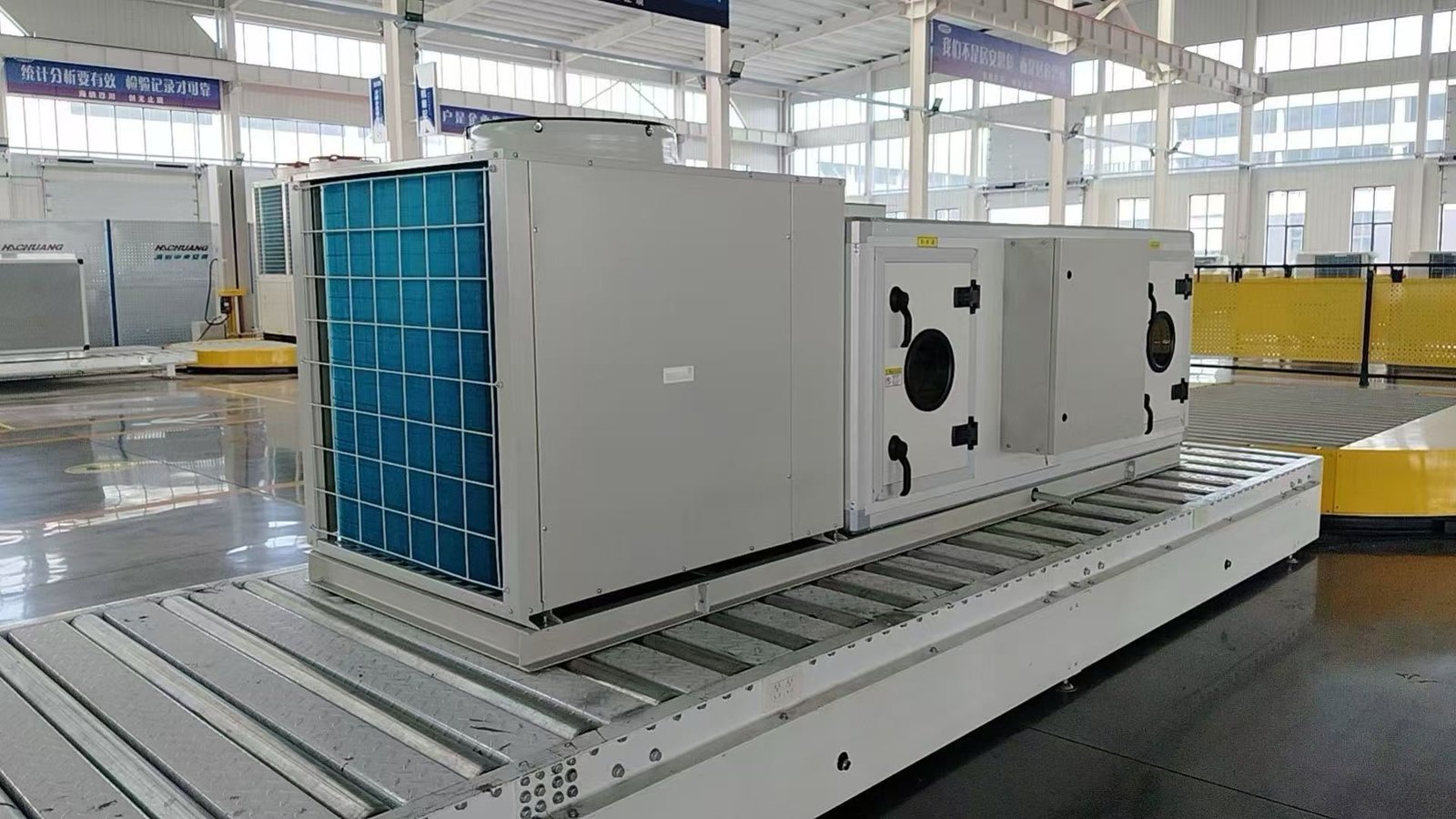
DX Rooftop Units
Packaged outdoor equipment connected to air ducts. Review roof loading, condenser discharge, filters, service clearance and fan ESP.
View DX Rooftop Units →SongXin HVAC · Commercial & Industrial DX Equipment
Compare rooftop, ducted, split and packaged direct expansion air conditioners for commercial buildings, equipment rooms, remote installations and temporary facilities. Select by actual cooling duty, airflow, external static pressure and operating conditions—not an unsupported nominal capacity.
No website forms · Model-specific datasheets and relevant documents available on request · Confirm each offered rating point with engineering
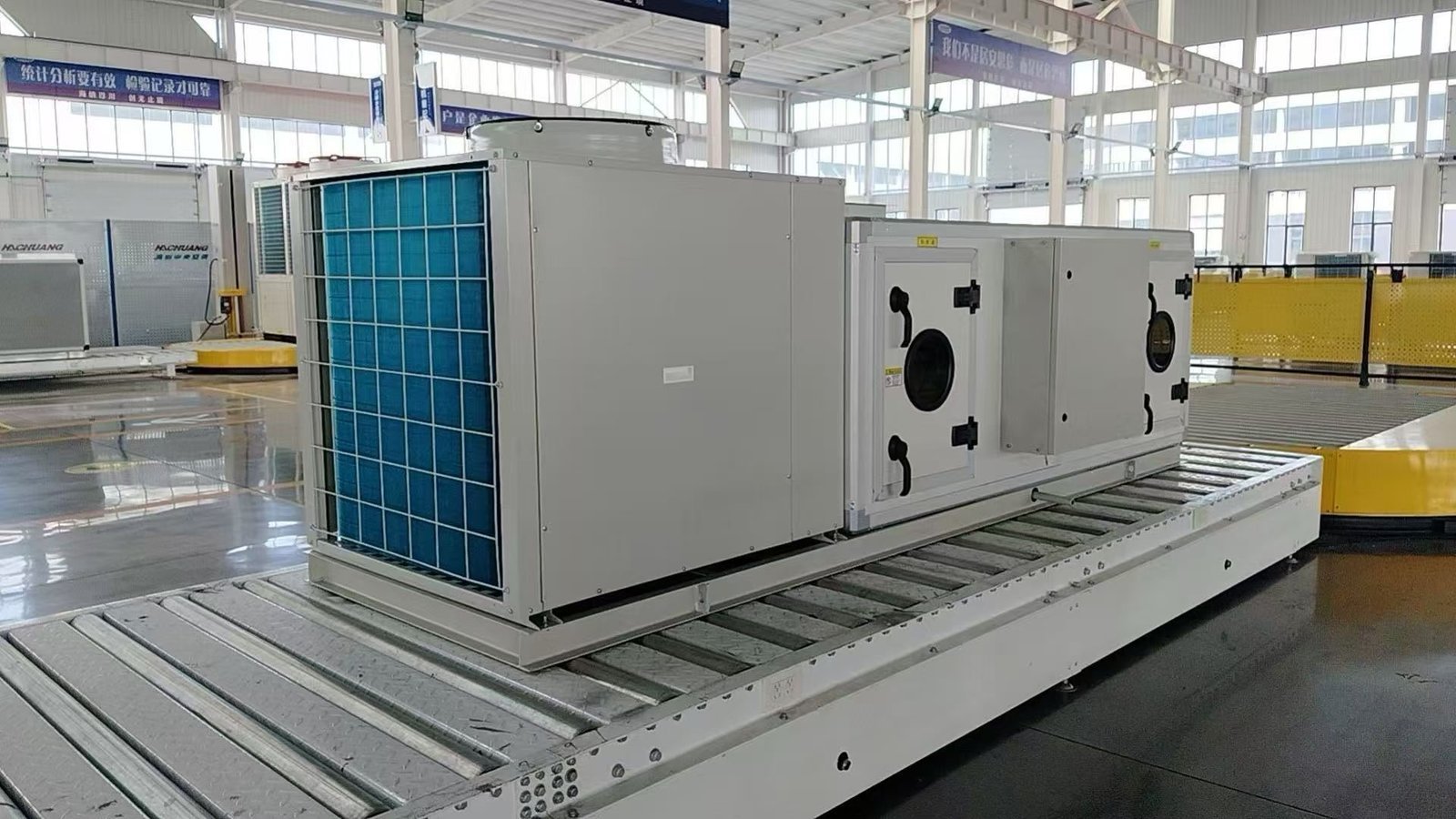
Product family
Direct expansion equipment can be supplied in several layouts. Every option must be selected using the same project design point to compare delivered cooling capacity, airflow, operating range and cost fairly. These product categories are not interchangeable.
Packaged outdoor equipment connected to air ducts. Review roof loading, condenser discharge, filters, service clearance and fan ESP.
View DX Rooftop Units →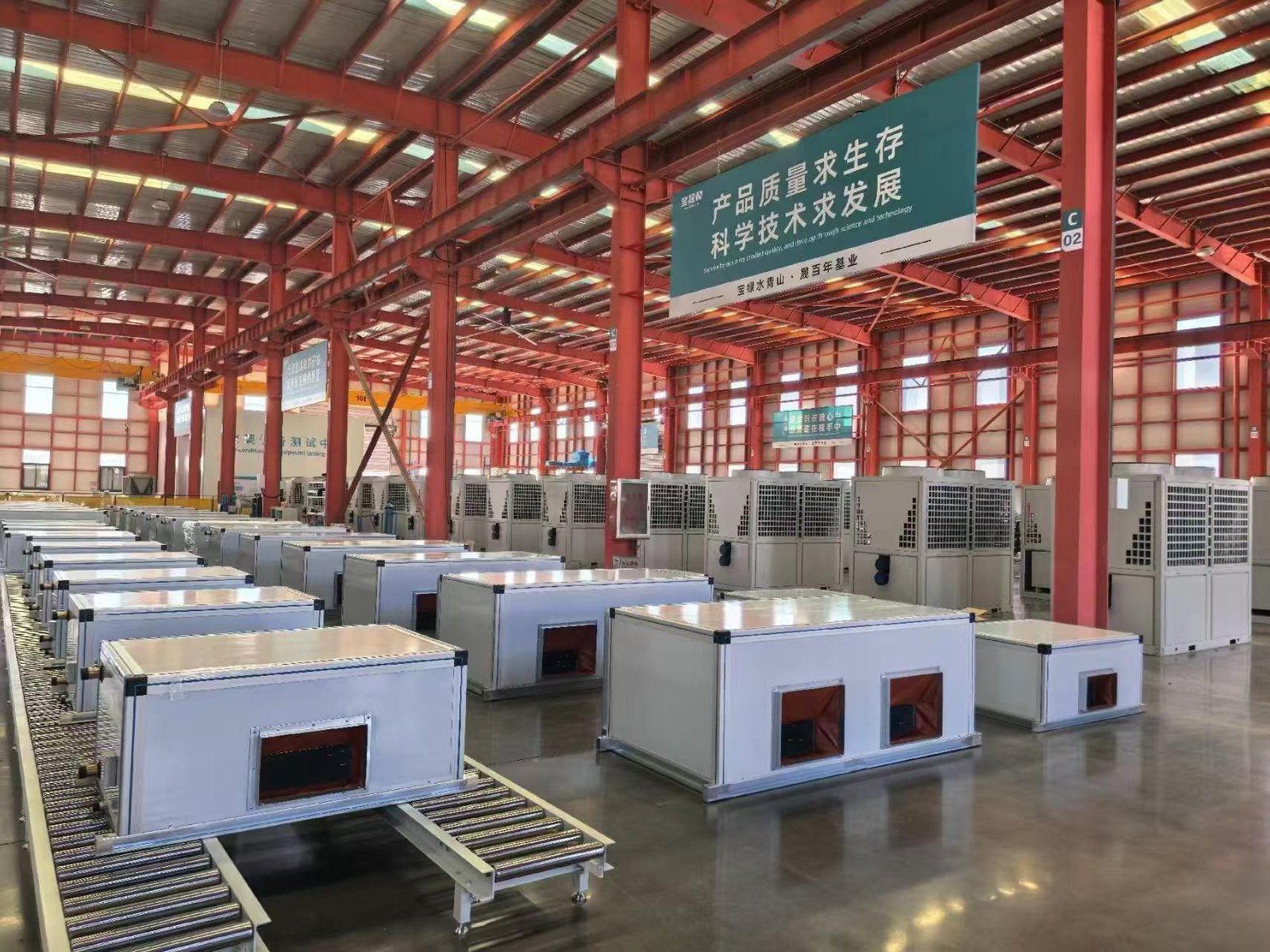
Concealed ducted systems for spaces needing distributed air. Verify ceiling void, duct resistance, return path, access and drainage.
View Ducted DX Units →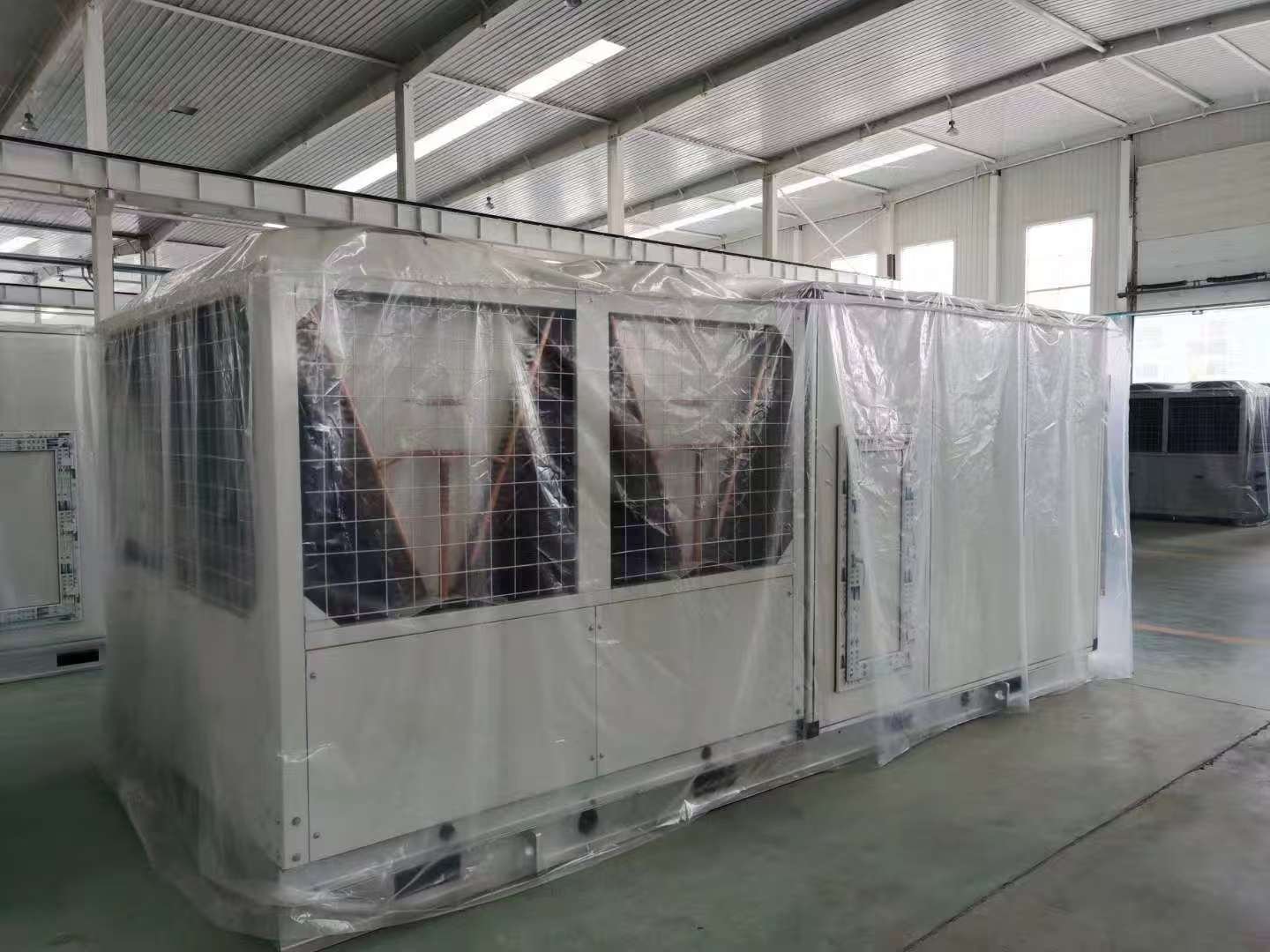
Separated indoor and outdoor equipment. Check refrigerant piping length/elevation, matched coil and condenser, controls and local charge rules.
View DX Split Systems →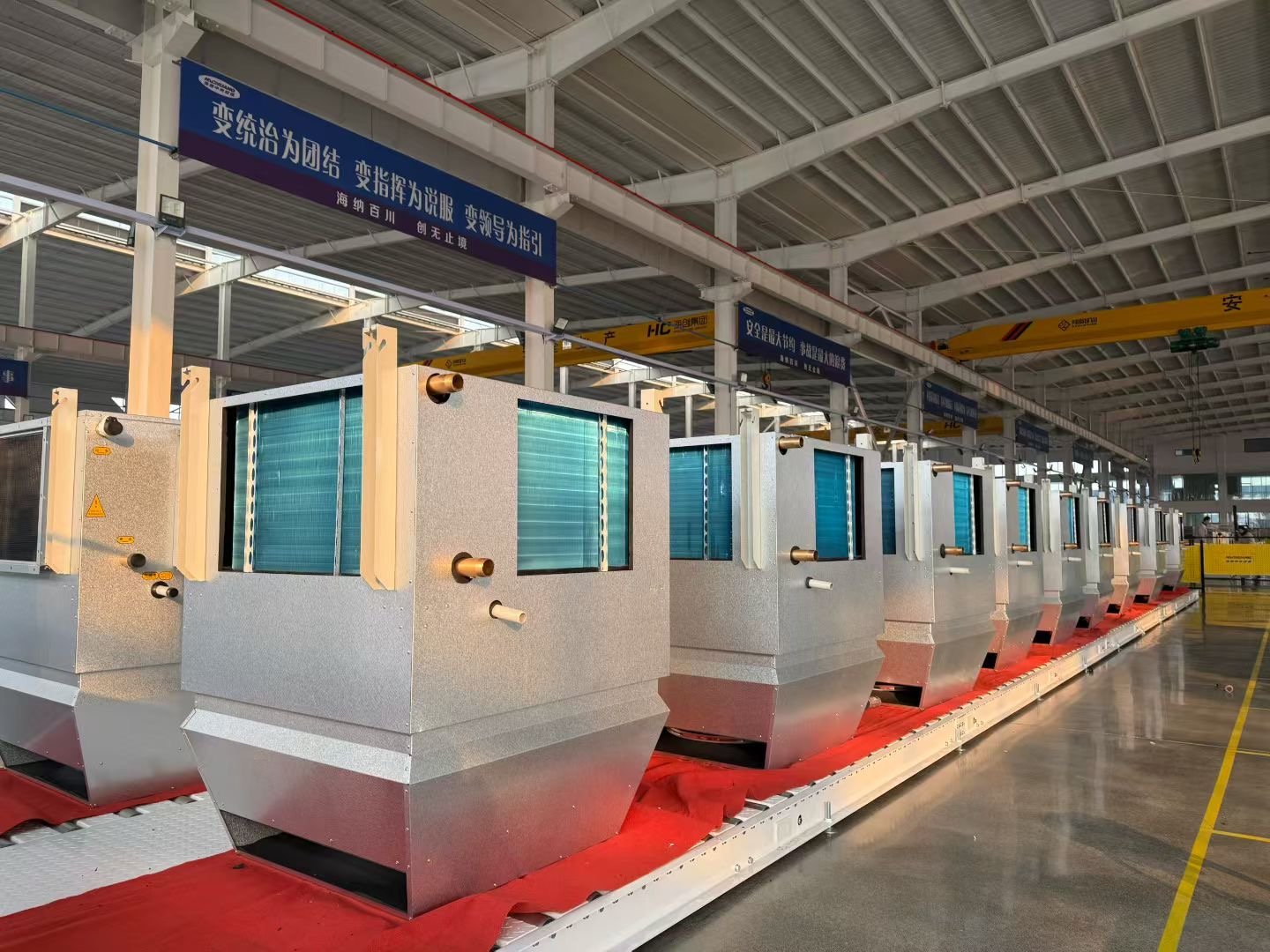
Temporary or site-specific air conditioning. Specify design airflow, quick connections, power stability, occupancy and ventilation.
View Tent & Temporary DX →Engineering submittals
For overseas B2B buyers, the essential question is not only “how many kW?” but how much total and sensible cooling does the offered unit deliver at the actual indoor and outdoor conditions? Ask for a complete matched-system selection and the documents below.
| Data to compare | Buyer provides | Supplier confirms |
|---|---|---|
| Project load | Required total and sensible cooling kW; design indoor dry-bulb and wet-bulb/RH; outdoor design dry-bulb; altitude | Exact model cooling output and electrical input at those same conditions; sensible heat ratio where applicable |
| Airside and ductwork | Airflow in m³/h, external static pressure in Pa, outside-air percentage, filters and noise limit | Selected fan curve, coil entering/leaving condition, clean/dirty-filter basis and access dimensions |
| Configuration | Rooftop, ducted, split or temporary; installation location, refrigerant piping length and height limits | Matched indoor/outdoor equipment pairing, allowable dimensions/clearance and piping instructions |
| Safety and controls | Power voltage/frequency, refrigerant restrictions, BMS/alarm requirements, redundancy and operating hours | Controller integration, protection setpoints, refrigerant charge/occupancy assessment and applicable documents |
| Procurement and logistics | Quantity, project country, destination port, required delivery date and local commissioning responsibility | Named Incoterms place and edition, packing/insurance scope, drawing package, spares and warranty exclusions |
Application matching
Use these planning prompts to decide the equipment format and documentation to request. Each project needs its own load calculation and installed-condition selection.
Match rooftop/ducted capacity to occupancy schedules, glazing, fresh-air demand and acceptable fan/noise performance.
Verify continuous heat loads, dusty or hot condenser air, corrosion exposure, controls and maintenance clearance.
Review reliability, remote alarms, electrical supply and redundancy needs; select actual rated capacity in high ambient.
Confirm occupancy air-change needs, supply/return distribution, short-term mounting, condensate disposal and logistics.
Check humidity, comfort noise, access panels and segregation of outside-air or exhaust systems.
Coordinate standby cooling, monitoring alarms and failover where required; DX is not automatically equivalent to a full precision-cooling design.
Procurement knowledge
The following guides explain the technology and support the main product decision without repeating the equipment catalogue.
Common procurement questions
DX means direct expansion: refrigerant evaporates directly within the air cooling coil after pressure reduction through an expansion device. It is a refrigeration method, not a fixed model or cabinet size.
For some independent or smaller zones, a DX system may avoid a separate chilled-water loop. For large plants or multiple zones, compare full lifecycle, electrical load, control and maintenance requirements before selecting the architecture.
The suitable capacity depends on the specific rooftop, ducted, split or special-purpose model and rating conditions. Request the selected model datasheet instead of relying on one broad family range.
Only specific reversible heat-pump or fitted heating configurations can provide heating. Verify the offered model, defrost/ambient envelope and rating conditions.
Send project country, equipment type, total and sensible load, indoor/outdoor conditions, airflow, duct static pressure, electric supply, fresh air requirements and quantity. You can send these directly via WhatsApp.
A standard number, certificate or declaration is applicable only within its defined scope. Ask for current evidence linked to the exact model and destination-market requirements.
Share project location, system configuration, cooling duty, indoor and outdoor rating point, required airflow and ESP, power supply, quantity and destination country. We can discuss the technical data and quotation scope directly over WhatsApp—no website form required.