

How Outdoor Ambient Temperature Affects Air-Cooled Screw Chiller Capacity
Outdoor ambient temperature raises condenser pressure, increases compressor work and reduces usable cooling capacity at the same chilled-water condition. For hot regions, rooftop equipment yards or poorly ventilated plant areas, request capacity at the project design ambient temperature instead of only the catalog rating point.
Quick Answer
Use the local outdoor design dry-bulb temperature from ASHRAE weather data, the project specification or the owner requirement. Then ask the supplier for corrected capacity, power input, EER/COP and operating envelope at that exact ambient condition.
A nominal 300 kW air-cooled chiller at a standard rating point is not automatically a 300 kW chiller at 46 C outdoor air. The RFQ should say the full condition, such as 300 kW at 46 C ambient, 7 C leaving water and 12 C entering water.
Scope boundary: this guide answers the high-ambient derating question for air-cooled screw chillers. For general nominal-size and project-fit decisions, use the 50 ton air-cooled screw chiller selection guide; for condenser-system comparisons, use the air-cooled vs water-cooled screw chiller guide.
Why Ambient Temperature Changes Chiller Capacity
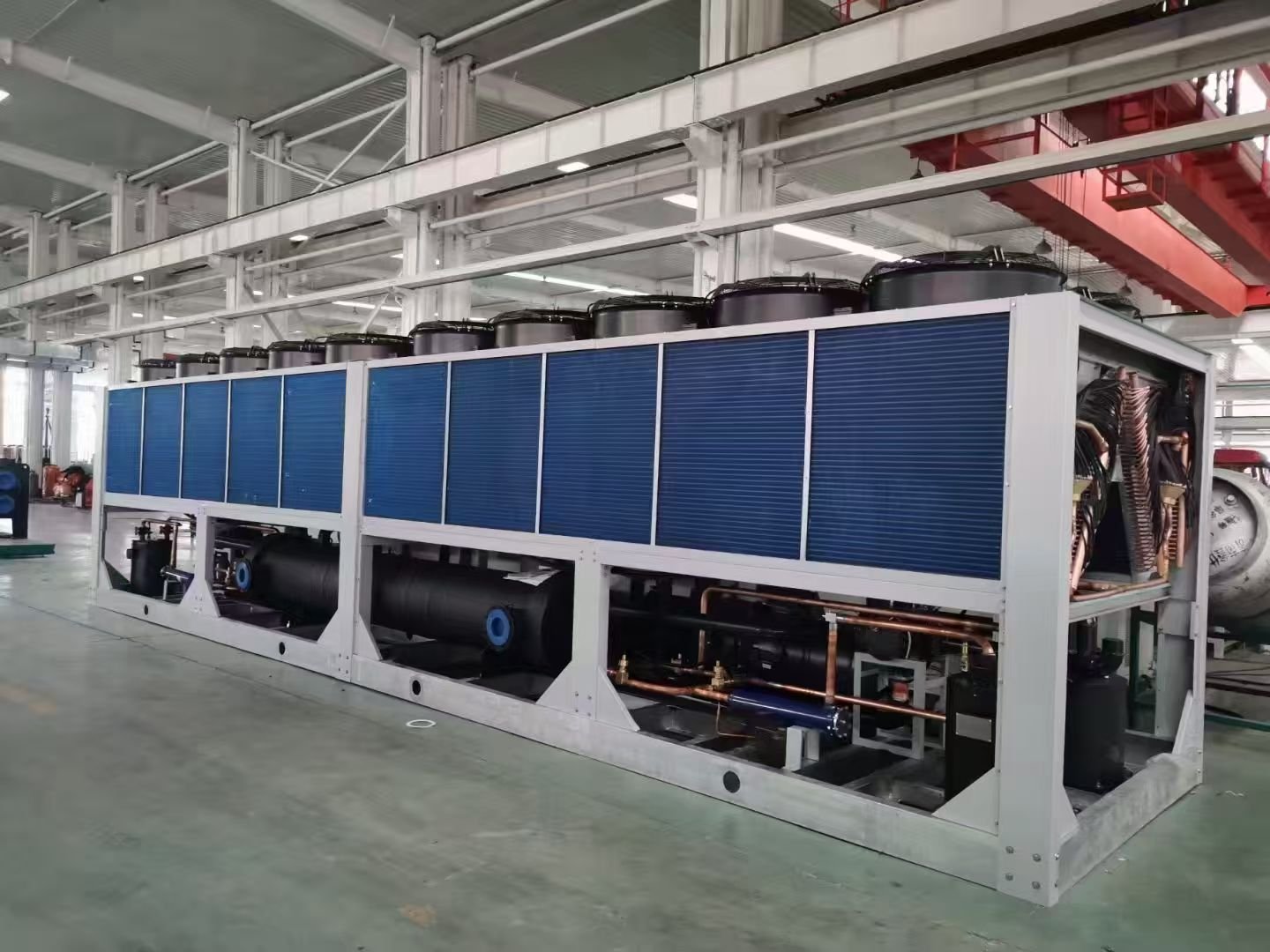
Air-cooled screw chiller capacity drops at high ambient because the condenser must reject heat to hotter outdoor air. When condenser air temperature rises, refrigerant condensing temperature rises, compressor pressure ratio increases and more motor power is spent moving the same heat.
The evaporator still needs to make chilled water at the specified leaving-water temperature, such as 7 C or 10 C. The condenser then has less temperature difference between hot refrigerant and outdoor air. That smaller heat-rejection gap forces the compressor and condenser fan system to work harder.
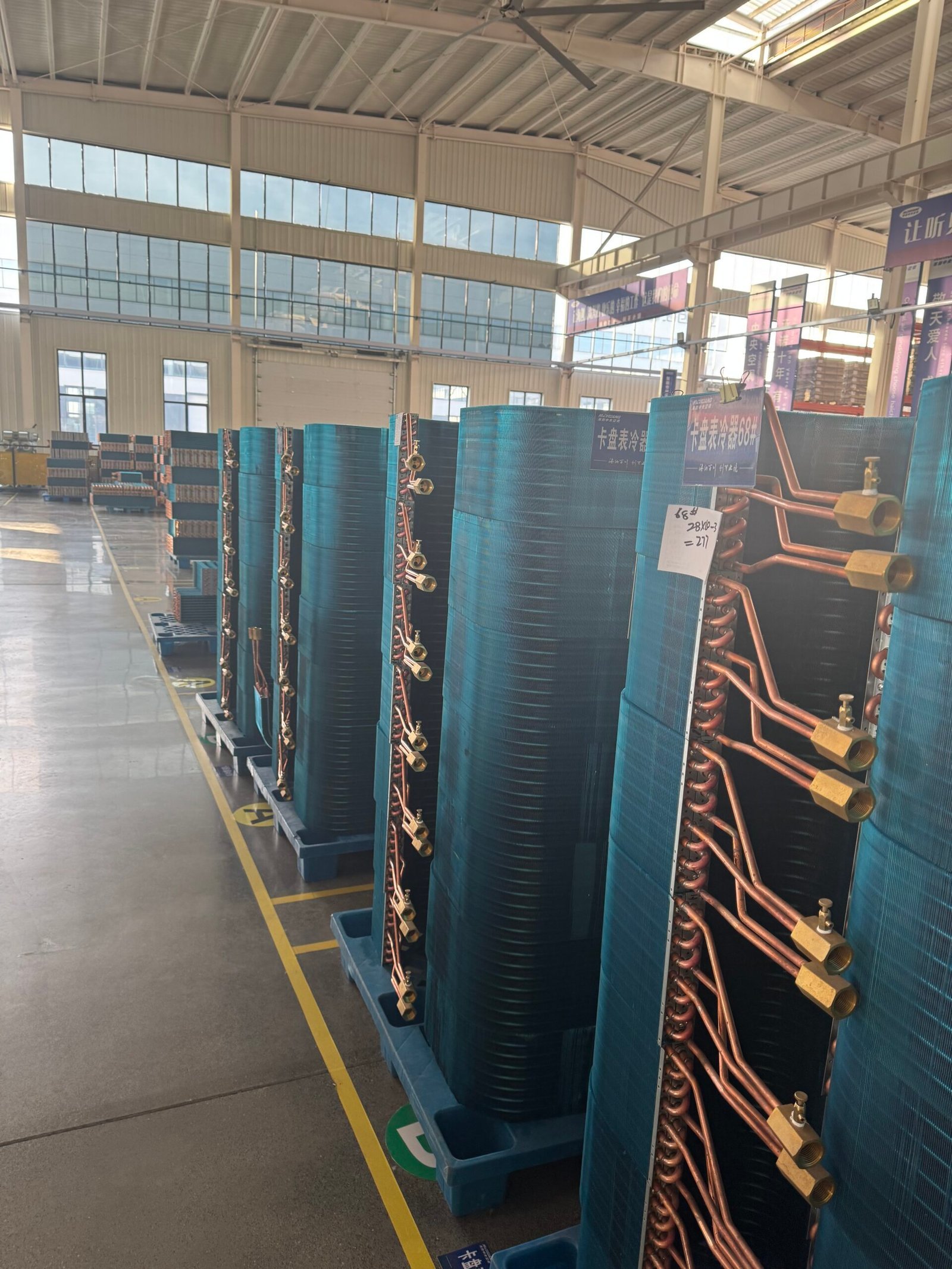
This is why high ambient selection is not only a larger condenser issue. The supplier must match compressor envelope, condenser surface, fan airflow, refrigerant charge, control logic and electrical protection. Refrigerating-system safety and environmental requirements are addressed in ISO 5149-1, and design, construction, testing, marking and documentation are addressed in ISO 5149-2.
Higher Compressor Lift
Hotter condenser air raises condensing pressure, so the compressor works harder for each kW of cooling.
Fan Airflow Becomes Critical
Low condenser airflow or blocked coil faces increase coil temperature and reduce usable capacity further.
Protection Limits Move Closer
High discharge pressure can trigger unloading, reduced output or shutdown if the operating envelope is exceeded.
Ambient Temperature Inputs for Chiller Selection
The first input is the outdoor design dry-bulb temperature at the installation site. Use the project specification, local code, airport or industrial owner requirement, or an accepted weather data reference. ASHRAE’s Weather Data Center describes climatic design data from the ASHRAE Handbook for thousands of locations.
For early RFQ screening, send the supplier these design points:
| Input | Recommended value to state | Why it matters |
|---|---|---|
| Outdoor design ambient | 35 C, 40 C, 46 C or project value | Defines condenser heat-rejection condition. |
| Chilled-water leaving temperature | 5 C, 7 C, 10 C or process value | Lower water temperature increases compressor lift. |
| Chilled-water entering temperature | Commonly 12 C for comfort; process values vary | Defines evaporator load and water flow. |
| Required cooling capacity | kW or refrigeration tons at project condition | Avoids nominal-only selection. |
| Installation type | Roof, yard, enclosure or plant deck | Hot-air recirculation changes real condenser inlet air. |
| Power supply | Voltage, phase, frequency | High ambient raises current and electrical stress. |
| Standard reference | AHRI 550/590, AHRI 551/591, EN 14511 or local requirement | Makes quoted performance comparable. |
EN 14511 covers rating conditions for air conditioners, liquid chilling packages and heat pumps, including air-cooled and water/brine-cooled process chillers. AHRI 550/590 and AHRI 551/591 cover water-chilling and heat-pump water-heating packages using the vapor compression cycle.
High-Ambient RFQ Screening Matrix (Not a Derating Curve)
These outdoor-temperature bands are illustrative flags for the documents a buyer should request. They are not universal severity grades or capacity-loss percentages. A specific unit’s operating limit depends on compressor, condenser, refrigerant, fan controls and leaving-water temperature. Model-specific corrected performance is essential.
Request rated capacity, water temperatures, flow rate and sound data.
Request capacity and power input at actual ambient; avoid standard-condition-only quotations.
Request compressor envelope, condenser fan data, electrical current and capacity correction table.
Use project-specific selection; discuss larger condenser, staged operation, shade and equipment spacing.
Add condenser inlet-air measurement point and clearance requirement to the RFQ.
Source note: convert this screening matrix into manufacturer selection at the rating condition required by AHRI 550/590, AHRI 551/591 or EN 14511.
Worked Example: Process Cooling Chiller
This example shows why a buyer should not purchase an air-cooled screw chiller only by nominal capacity. It uses a screening correction for RFQ discussion; final model selection must come from the supplier’s performance software.
Illustrative example, not a documented customer project: assume a process cooling load of 300 kW at a 46 C outdoor design dry-bulb temperature, with 12 C entering and 7 C leaving chilled water. The fluid-flow arithmetic can be checked from those inputs; the 12% capacity reduction assumed below is hypothetical and does not represent an actual SongXin model or tested performance curve.
Project Inputs
| Item | Value |
|---|---|
| Application | Industrial process cooling |
| Required cooling capacity | 300 kW |
| Leaving chilled-water temperature | 7 C |
| Entering chilled-water temperature | 12 C |
| Water temperature difference | 5 K |
| Standard catalog ambient | 35 C |
| Project design ambient | 46 C |
| Hypothetical capacity reduction used for calculation | 12% (not a model rating) |
Complete End-to-End Calculation
Required selected capacity = project cooling load / (1 - high-ambient allowance)
Required selected capacity = 300 kW / (1 - 0.12)
Required selected capacity = 300 kW / 0.88
Required selected capacity = 341 kW
Refrigeration tons = kW / 3.517
341 kW / 3.517 = 96.9 TRWater Flow Cross-Check
The coefficient 1.163 is a convenient approximation for pure water at typical HVAC temperatures. For glycol or unusual fluid temperatures, use volumetric flow (m³/h) = 3,600 × cooling duty (kW) / [density (kg/m³) × specific heat (kJ/kg·K) × water temperature difference (K)], with actual mixture properties. Recheck pump sizing, pressure drop and minimum flow against the selected chiller.
Water flow (m3/h) = cooling capacity (kW) / [1.163 x water delta T (K)]
Water flow = 300 / (1.163 x 5)
Water flow = 51.6 m3/hHow to Compare Two High-Ambient Chiller Quotations
Two quotes showing the same nominal cooling tonnage can perform differently at the project site. Ask both suppliers to submit a model-identified performance selection at identical operating conditions. This procurement comparison is a document checklist, not a manufacturer performance table.
| Required item | What the buyer should verify | Warning sign |
|---|---|---|
| Design condition | Condenser inlet-air dry-bulb temperature; entering and leaving chilled-water temperatures; fluid and site altitude | Only a nominal 35 C catalog point is shown for a 46 C site |
| Delivered cooling capacity | Corrected kW at the exact design point, with model identifier and stated operating mode | A nominal capacity with no corrected output |
| Total unit power | Compressor and condenser-fan input at that same condition; agree what auxiliaries are included | Power measured at a different ambient or load |
| Cooling COP / EER | Compare at the same point; cooling COP = delivered cooling kW / electrical input kW on a consistent boundary | IPLV or standard-condition efficiency substituted for design-point performance |
| Evaporator data | Design flow, water pressure drop, minimum flow, water or glycol properties and freeze protection | No matched hydraulic selection |
| Operation and electrical | Continuous ambient operating envelope, unloading/protection logic, voltage, frequency and maximum input current | Only a storage or survival temperature is quoted |
| Site and documentation | Actual equipment dimensions, maintenance and discharge clearance, sound basis, submittal drawing, applicable model test/certification evidence | Generic factory claims without the selected unit’s documentation |
Selection rule: for the worked example, the purchased model must deliver at least 300 kW at the specified 46 C condenser inlet air and 7/12 C water conditions. The hypothetical 341 kW nominal-equivalent calculation does not establish compliance. Require a corrected model selection before commercial approval.
Reference: AHRI 550/590 and 551/591 describe rating methods for eligible vapor-compression water-chilling packages; a manufacturer’s certificate must be checked for the exact product and claimed scope. For lifecycle comparisons, see the U.S. Department of Energy chiller purchasing guidance.
High-Ambient RFQ Checklist
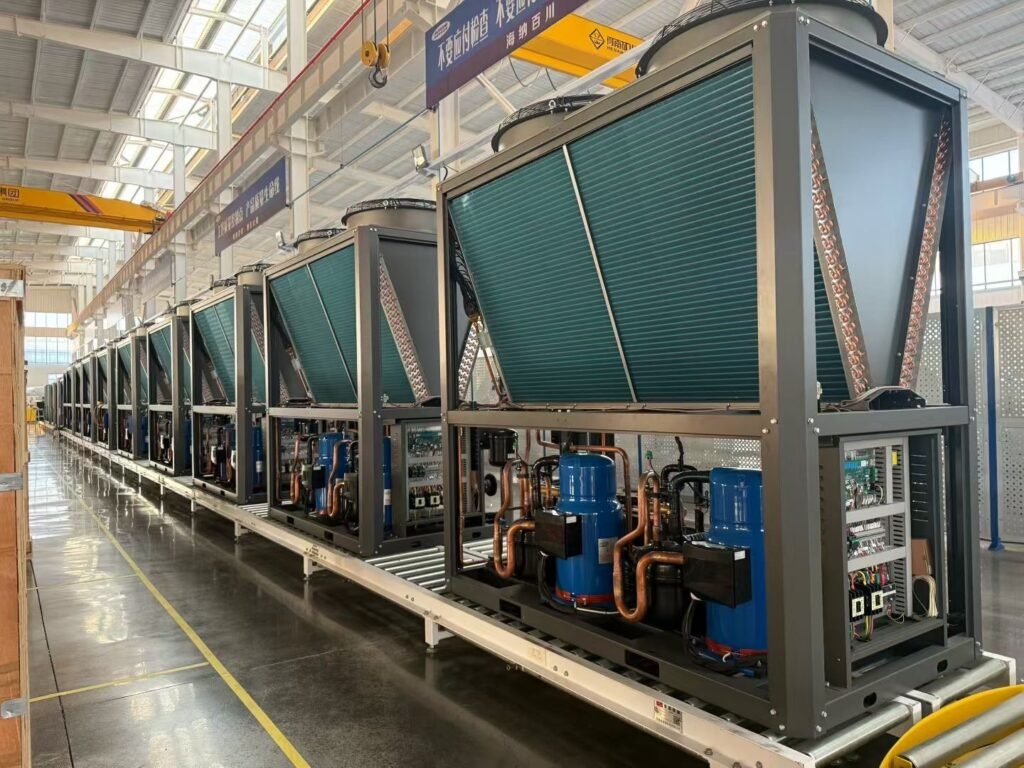
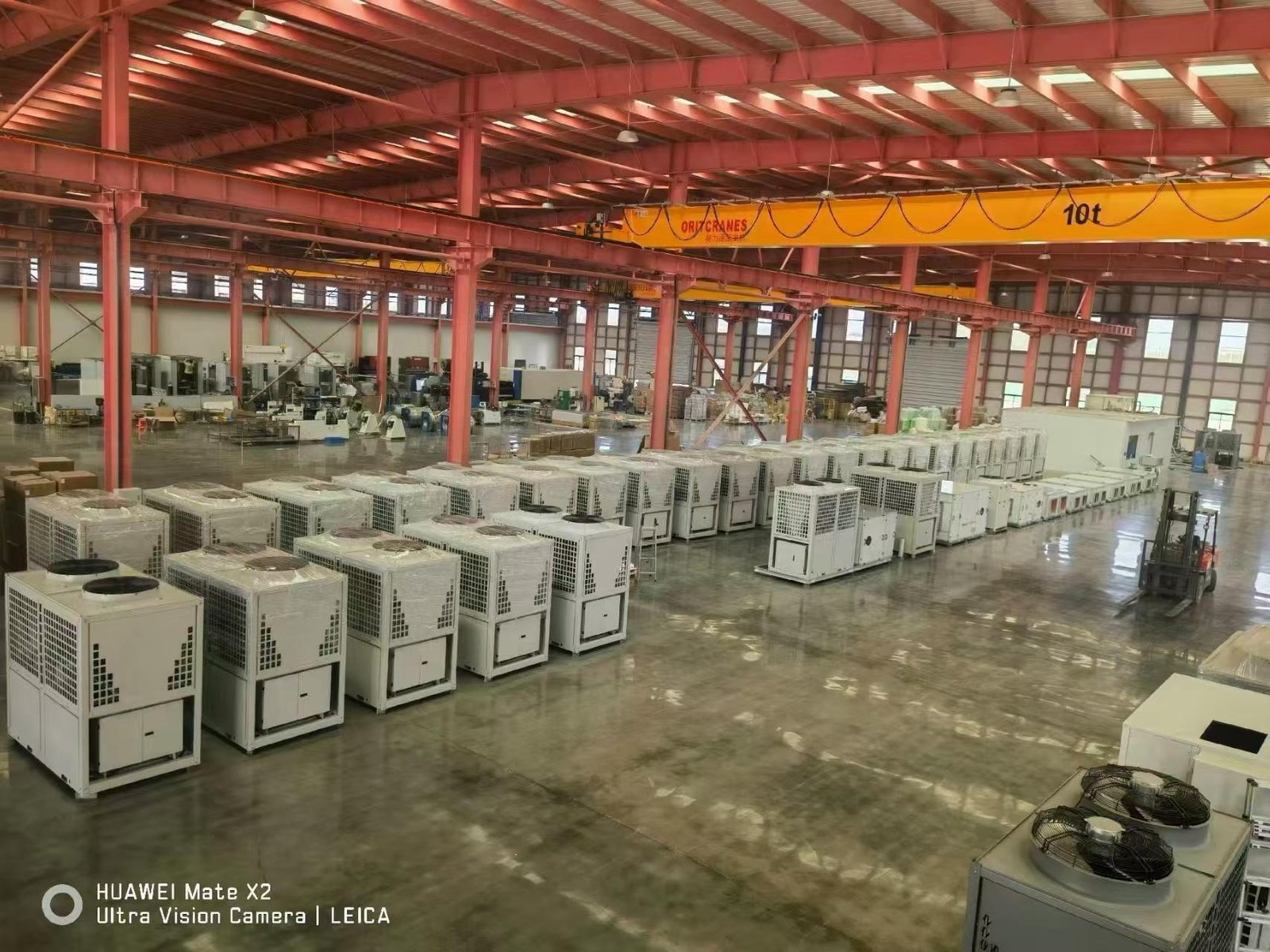
A high-ambient air-cooled screw chiller RFQ should request corrected performance instead of only catalog capacity. Send the following information to SongXin:
For engineering support, send your project ambient, water temperatures, capacity, power supply and site layout when you request a quote from SongXin.
SongXin’s Air-Cooled Screw Chiller Supplier article and air-cooled screw chiller product page can support internal linking from this high-ambient guide.
Common Selection Mistakes
Comparing Different Rating Points
A quotation at 35 C ambient and 7/12 C water is not equal to a quotation at 46 C ambient and 7/12 C water. Require a shared rating condition before comparing price, efficiency or lead time.
Ignoring Equipment Spacing
If discharge air recirculates into the condenser, its entering-air temperature can rise above the outdoor weather design temperature. The increase depends on the installation and must not be treated as a fixed correction. Check wind exposure, discharge location, enclosures, neighboring units and manufacturer clearance requirements; verify condenser inlet conditions during commissioning.
Selecting Only by Compressor Size
A screw compressor needs the right condenser surface, fan airflow, refrigerant circuit and control logic. A larger compressor without adequate condenser heat rejection can still hit discharge-pressure limits.
Leaving Maintenance Access Out
High ambient operation already stresses the condenser. Dirty coils, blocked screens and insufficient service clearance add more temperature lift, so a maintenance interval should be planned before installation.
Specification Checklist
Use this checklist before approving a high-ambient air-cooled screw chiller quotation:
FAQ
These FAQ answers use the same project-condition rating basis referenced above under AHRI 550/590, AHRI 551/591 and EN 14511.
Does high ambient temperature reduce air-cooled chiller capacity?
High ambient temperature reduces usable air-cooled chiller capacity because the condenser rejects heat to hotter air. Higher condenser pressure increases compressor work and can push the unit closer to protection limits. The final capacity change depends on the selected compressor, condenser coil, fan airflow, refrigerant and chilled-water temperature.
What ambient temperature should I use for chiller selection?
Use the project outdoor design dry-bulb temperature required by the owner, consultant or local code. When that is not available during early RFQ work, use accepted climatic design data for the project city and state the percentile or design basis. Do not use a generic 35 C rating point for a 46 C project site.
Is an oversized air-cooled screw chiller safer for hot climates?
Oversizing by nominal capacity is not a safe substitute for corrected high-ambient selection. A larger nominal model can still fail if condenser airflow, compressor envelope or electrical protection is not suitable for the project ambient condition. Select the model from corrected capacity, power input, water temperature and continuous operating limit.
What is the most important RFQ line for high ambient chillers?
The most important RFQ line is the required cooling capacity at the actual outdoor design ambient and chilled-water condition. Write it as a complete condition, such as “300 kW at 46 C ambient, 7 C leaving water and 12 C entering water.” That forces every supplier to quote comparable performance.
How does hot-air recirculation affect chiller performance?
Hot-air recirculation makes the condenser inlet air hotter than the weather data. If a roof layout or enclosure sends discharge air back into the condenser, the unit behaves as if the ambient temperature is higher. Use larger clearance, discharge-air separation, wind-aware placement and coil maintenance access to reduce that risk.
Need a corrected high-ambient chiller selection?
Send project ambient, water temperatures, capacity, power supply and site layout. SongXin can review the RFQ condition before model selection.
Review Record
Editorial update — October 9, 2026: The cooling-load and water-flow arithmetic were reviewed against the technical references below. All capacity-derating numbers in the worked example are hypothetical. No actual customer project, model-specific performance map, factory test result or third-party certification is asserted for the example. Final equipment performance must be verified in the supplier technical submittal.
Sources
- ISO 5149-1:2014, “Refrigerating systems and heat pumps – Safety and environmental requirements – Part 1,” iso.org
- ISO 5149-2:2014, “Refrigerating systems and heat pumps – Safety and environmental requirements – Part 2,” iso.org
- ASHRAE Weather Data Center, ashrae.org
- AHRI 550/590 and AHRI 551/591, “Performance Rating of Water-Chilling and Heat Pump Water-Heating Packages,” ahrinet.org
- European Commission policy reference for EN 14511-2 rating conditions, ec.europa.eu
- Engineering ToolBox, “Calculating Cooling Loads,” engineeringtoolbox.com
- ISO 817:2024 information page, “Refrigerants – Designation and safety classification,” standards.iteh.ai