

AHU Filter Selection Guide: ISO 16890, MERV, HEPA, Pressure Drop & Energy Cost
Key fact: AHU filter selection must balance air cleanliness, pressure drop, fan energy, maintenance access, replacement cost and room duty. A filter that looks stronger on paper creates problems when the AHU fan was not selected for the *final* pressure drop, when the service side lacks room for replacement, or when annual energy plus replacement cost exceeds the air-quality benefit.

Scope: this page covers only AHU filtration performance and lifecycle decisions: ISO 16890/MERV/HEPA classification, staged filtration, initial and final pressure drop, fan-energy impact, replacement access and scan testing. It complements the broader modular AHU selection guide without repeating casing, coil, fan or controls selection.
Key fact: AHU filter selection must balance air cleanliness, pressure drop, fan energy, maintenance access, replacement cost and room duty. A filter that looks stronger on paper creates problems when the AHU fan was not selected for the *final* pressure drop, when the service side lacks room for replacement, or when annual energy plus replacement cost exceeds the air-quality benefit.
Practical rule: specify performance data instead of legacy labels. Modern RFQs should state ISO 16890 filter class (or ASHRAE MERV equivalent), Eurovent 4/21 energy class where available, initial and final pressure drop, airflow, face area, replacement interval and room purpose. The old EN 779 G/M/F system was definitively replaced by ISO 16890 on 1 July 2018 and should no longer appear on new specifications.[1][11]
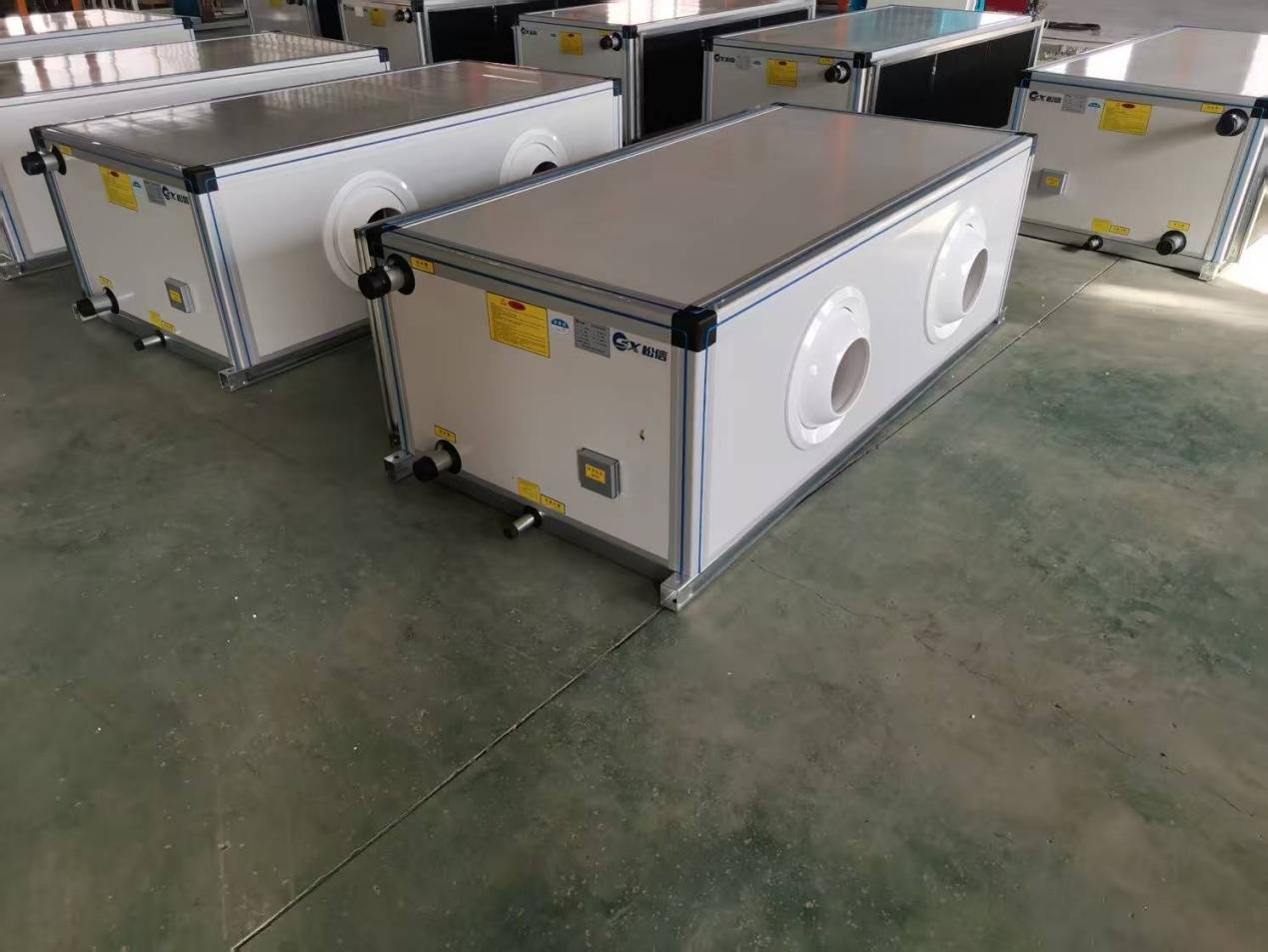
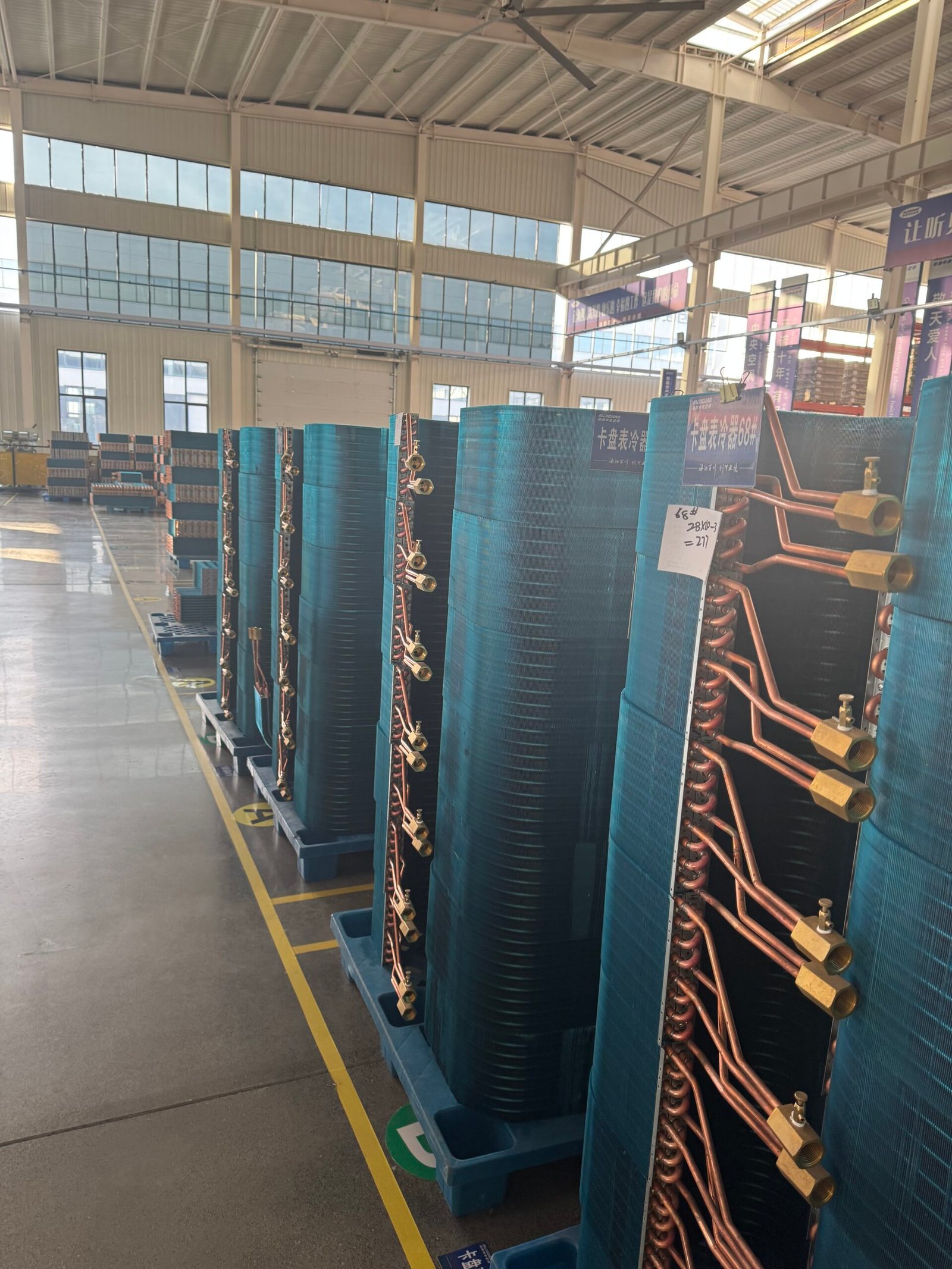
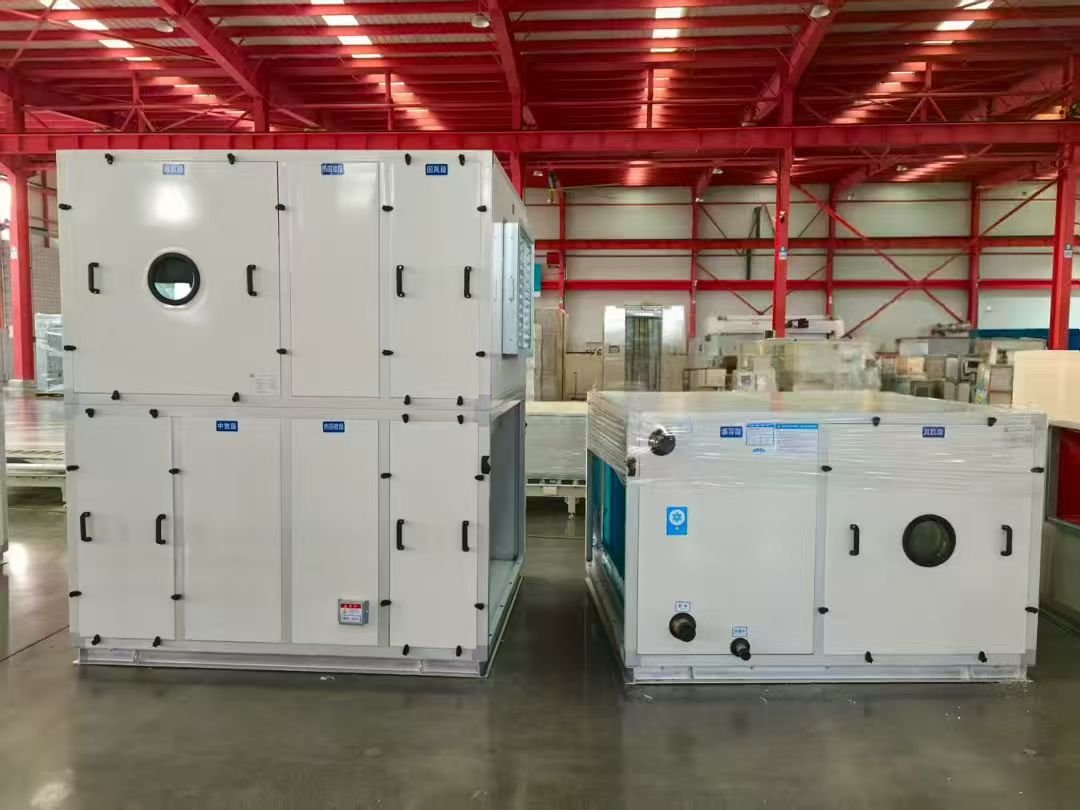
This guide supports buyers comparing SongXin’s air handling unit supplier, process AHU specification guide, modular AHU selection guide, AHU cooling coil selection and airport terminal ventilation system resources.
Quick Answer for Buyers
AHU filter selection should start from the room duty and contaminants to control. For most modern comfort AHUs, an efficient pre-filter plus ePM2.5 80% (≈ MERV 14) final filter is the recommended baseline – meaningfully higher than the F7 (≈ ePM1 50–60%) that was once typical, reflecting post-2020 indoor-air-quality awareness.
Buyer’s 30-second rule:
| Application | Pre-filter | Main filter | Final filter |
|---|---|---|---|
| Office, retail comfort | Coarse 60% (MERV 8) | ePM2.5 50% (≈ MERV 13) | – |
| Hotel, lounge, classroom | Coarse 60% | ePM2.5 80% (≈ MERV 14) | – |
| Hospital ward | Coarse 60% | ePM2.5 80% | ePM1 60–80% |
| Hospital OR / ICU | Coarse 60% | ePM1 80% | HEPA H13 |
| Pharma cleanroom | Coarse 60% | ePM1 80% | HEPA H13/H14 |
| Semiconductor fab | Coarse 60% | ePM1 80% | ULPA U15/U16 |
| Industrial workshop | Coarse 50% (washable) | ePM10 50% | – |
| Data center (general IT) | ePM2.5 50% | ePM1 50% | – |
| AI / HPC data center | ePM2.5 50% | ePM1 80% | – (protect direct-to-chip CDU) |
| Outdoor urban / polluted | ePM2.5 80% | ePM1 50% | – |
| Sandstorm-risk site | Coarse 70% (metal pre-filter) | ePM2.5 80% | – |
Filter Classification Standards
Three active standards coexist in the global market. Understand all three to read any specification correctly.
ISO 16890 (2016, current global standard)
ISO 16890 classifies filters by real-world particulate mass capture (PM10, PM2.5, PM1) – the same metric WHO and most national air-quality regulations use.[1][11]
| Class | What it captures |
|---|---|
| Coarse (e.g., Coarse 60%) | Mostly large particles (> 10 µm); pre-filter use |
| ePM10 (e.g., ePM10 50%, ePM10 80%) | Particles ≤ 10 µm |
| ePM2.5 (e.g., ePM2.5 50%, ePM2.5 80%) | Particles ≤ 2.5 µm |
| ePM1 (e.g., ePM1 50%, ePM1 80%) | Particles ≤ 1 µm (finest non-HEPA) |
ASHRAE 52.2 MERV (legacy North America, still in use)
| MERV | Approximate ISO 16890 equivalent |
|---|---|
| MERV 6–8 | Coarse 50–70% |
| MERV 9–11 | ePM10 50–80% |
| MERV 12–13 | ePM2.5 50% |
| MERV 14 | ePM2.5 70–80% |
| MERV 15 | ePM1 50% |
| MERV 16 | ePM1 75–80% |
| MERV 17 | ePM1 ≥ 95% (≈ EPA E10/E11) |
| MERV 18–20 | HEPA H13 / H14 / ULPA region |
MERV to ISO 16890 is an indicative conversion – the two tests use different challenge particle distributions, so a filter’s published MERV does not exactly equal a published ISO 16890 class.[2][12]
EN 1822 / ISO 29463 – HEPA & ULPA
| Class | Efficiency at MPPS | Typical application |
|---|---|---|
| EPA E10 | 85% | Pre-HEPA stage |
| EPA E11 | 95% | Pre-HEPA |
| EPA E12 | 99.5% | Pre-HEPA |
| HEPA H13 | 99.95% | Pharma cleanroom (Grade C/D), hospital OR, BSC |
| HEPA H14 | 99.995% | Cleanroom ISO 6/5, pharma Grade A/B, semiconductor |
| ULPA U15 | 99.9995% | Semiconductor ISO 5 |
| ULPA U16 | 99.99995% | Semiconductor lithography |
| ULPA U17 | 99.999995% | Extreme lithography, EUV |
Legacy EN 779 (deprecated since 1 July 2018)
| EN 779 (legacy) | ISO 16890 (current) |
|---|---|
| G3 / G4 | Coarse 45% / Coarse 60% |
| M5 / M6 | ePM10 50% / ePM10 60% |
| F7 | ePM2.5 50–60% (sometimes ePM1 50%) |
| F8 | ePM2.5 70% / ePM1 65% |
| F9 | ePM2.5 80% / ePM1 80% |
Practical procurement rule: specify the ISO 16890 class as primary (e.g., “ePM1 80%”), with MERV equivalent in parentheses (e.g., “MERV 16”) for North American projects, plus EN 1822 class for HEPA/ULPA stages and Eurovent 4/21 energy class where energy is a procurement criterion.
Eurovent 4/21 Energy Efficiency Class
Eurovent Recommendation 4/21 (most recent updates 2016 and follow-up 2023) classifies general-ventilation air filters by annual energy consumption at a reference airflow (3,400 m³/h, fan efficiency assumption) into six classes from A+ (most efficient) down to E.[13][14]
| Eurovent class | Indicative annual energy consumption | Typical use |
|---|---|---|
| A+ | < 600 kWh/year (per reference filter) | Premium low-dP filters, EU-required on energy-conscious specs |
| A | 600–800 | Standard for new EU commercial builds |
| B | 800–950 | Mid-range |
| C | 950–1,100 | Acceptable for short-hour operation |
| D | 1,100–1,250 | Legacy / industrial only |
| E | > 1,250 | Legacy / not recommended |
For European projects, specify Eurovent 4/21 Class A or A+ on the AHU final filter to meet modern energy-conscious procurement criteria; this often pays back within 1–2 years versus a low-cost Class C/D filter.
Pressure Drop and Fan Energy Cost
Filters are the largest variable energy cost in an AHU because pressure drop increases as filters load with dust.
Pressure drop ranges (clean → final)
| Filter class | Clean pressure | Recommended final (replacement trigger) | Average operating |
|---|---|---|---|
| Coarse 60% (MERV 8) | 30–50 Pa | 100–150 Pa | ~70 Pa |
| ePM10 50% (MERV 10) | 50–70 Pa | 150–200 Pa | ~100 Pa |
| ePM2.5 50% (MERV 13) | 80–100 Pa | 180–220 Pa | ~130 Pa |
| ePM2.5 80% (MERV 14) | 100–120 Pa | 220–250 Pa | ~160 Pa |
| ePM1 50% (MERV 15) | 120–150 Pa | 250–280 Pa | ~190 Pa |
| ePM1 80% (MERV 16) | 150–180 Pa | 280–320 Pa | ~220 Pa |
| HEPA H13 | 200–250 Pa | 450–500 Pa | ~320 Pa |
| HEPA H14 | 250–300 Pa | 500–600 Pa | ~400 Pa |
| ULPA U15 | 300–400 Pa | 700+ Pa | ~500 Pa |
Annual energy cost of filter pressure drop
Energy cost formula:
E (kWh/yr) = (Q × ΔP × hrs) / (η × 3,600 × 1,000)
Where Q is airflow in m³/s, ΔP is average pressure drop in Pa, hrs is operating hours per year, and η is combined fan + motor efficiency (typically 0.65–0.75).
Example: a 10,000 m³/h AHU with an ePM2.5 80% final filter (~160 Pa average), 5,000 hrs/yr, η = 0.70, electricity at USD 0.12/kWh:
E = (2.78 × 160 × 5,000) ÷ (0.70 × 3,600 × 1,000) = 882 kWh/yr → ~ USD 106/yr in fan energy attributable to that filter alone.
If the AHU has 4 filter banks, the figure scales to roughly USD 424/yr from filter pressure drop. Over a 10-year AHU service life: ~ USD 4,240 – comparable to the cost of the filter cartridges themselves.
Lifecycle cost: filter media vs energy
| Component | Indicative 10-year cost (10,000 m³/h, ePM2.5 80%) |
|---|---|
| Filter replacement (every 6 months × USD 80) | USD 1,600 |
| Labor for replacement | USD 800 |
| Disposal | USD 400 |
| Fan energy attributable to this filter | USD 4,000+ |
| Total | USD 6,800+ |
Energy is the dominant lifecycle cost. Choose filters with lower-pressure-drop design (deeper pleats, more media area, V-bank geometry) over flat low-cost cartridges – the energy savings over 5–10 years usually exceed the higher purchase price by a wide margin.
Filter Selection Decision Tree
Copy Identify room class / use: ├─ Office, retail, hotel comfort → ePM2.5 80% (MERV 14) main ├─ Hospital ward → ePM2.5 80% ├─ Hospital OR / ICU / isolation → ePM1 + HEPA H13 ├─ Pharma / cleanroom Grade C/D → ePM1 + HEPA H13 ├─ Pharma / cleanroom Grade A/B → ePM1 + HEPA H14 ├─ Semiconductor fab → ePM1 + ULPA U15/U16 ├─ Industrial workshop → Coarse + ePM10 ├─ Data center (general IT) → ePM2.5 50% / ePM1 50% ├─ AI / HPC data center → ePM2.5 50% + ePM1 80% to protect CDU ├─ Polluted urban / desert / sand → upgrade pre-filter to Coarse 70% └─ VOC / cooking / lab solvent → add activated carbon stage
Add pre-filter: └─ Coarse 60% (MERV 8) protects final filter, extends life 2–3×
Calculate fan ESP budget: ├─ Use final-filter ΔP (NOT clean ΔP) ├─ Add 10–15% safety margin └─ Match fan curve to total system pressure (duct + coil + casing + filter)
Plan service access: ├─ Access door wider than filter cartridge ├─ Trolley path from AHU to disposal area └─ DP sensor + BMS alarm at each filter section
Specify standards: ├─ ISO 16890 (primary efficiency class) ├─ MERV equivalent (NA projects) ├─ EN 1822 / ISO 29463 (HEPA / ULPA) ├─ Eurovent 4/21 energy class (EU projects) └─ Local code framework (ASHRAE 170, EU GMP Annex 1, SEMI, HBN)
Copy
When to Use Multi-Stage Filtration
Single-stage filtration is rare in modern AHUs. Multi-stage extends downstream filter life and saves energy.
| Configuration | Use case |
|---|---|
| Single stage | Basic industrial only – rare in modern commercial AHUs |
| 2-stage (pre + main) | Standard for most commercial and hospital-ward duty |
| 3-stage (pre + main + HEPA) | Hospital OR / ICU, pharma cleanroom, isolation rooms |
| 4-stage (pre + main + HEPA + carbon) | Lab + chemistry, hospital with VOC, semiconductor PCW |
| 5-stage (multiple HEPA/ULPA in series) | ISO 5 cleanroom, semiconductor lithography |
Practical rule: every additional stage adds approximately 50–150 Pa to system pressure but extends downstream filter life 3–10× and reduces total replacement cost significantly.
Replacement Intervals
Replace filters when differential pressure reaches the recommended final pressure, OR at a scheduled interval (whichever comes first).
| Filter | Typical replacement interval | Trigger pressure |
|---|---|---|
| Coarse pre-filter | 1–3 months | ~150 Pa |
| ePM10 / ePM2.5 50% | 3–6 months | 200–220 Pa |
| ePM2.5 80% / ePM1 50% | 6–12 months | 250–280 Pa |
| ePM1 80% | 9–12 months | 280–320 Pa |
| HEPA H13 | 18–36 months | 500 Pa or scan-test fail |
| HEPA H14 | 24–48 months | 600 Pa |
| ULPA U15/U16 | 36–60 months | Per scan test |
| Activated carbon | 6–12 months | Breakthrough test |
Always install a differential pressure sensor with BMS alarm at each filter bank. Time-based replacement wastes filter life when actual dust loading is low; pressure-triggered replacement matches real conditions and prevents fan over-energy operation.
Special Filters
Activated carbon
Activated carbon filters remove VOCs, odors and ozone – required for laboratories with solvent exposure, hospital pharmacy and clinical labs, recirculation in occupied spaces near pollution sources, and semiconductor fabs (airborne molecular contamination control). Typical carbon bed thickness 50–100 mm; replacement every 6–12 months with breakthrough testing recommended in critical applications.
Antimicrobial-treated filter media
Filter media treated with an antimicrobial coating reduces microbial colonization on the media itself – useful in hospitals, hotel HVAC and food-processing AHUs. This does not replace HEPA filtration and does not capture additional particles; it only inhibits growth on the captured biomass.
UV-C downstream of filter
UV-C lamp irradiation downstream of the cooling coil and filter inactivates bacteria, viruses and mold on the coil surface and in passing air. Common in hospitals, food processing and pharmaceutical facilities, and in post-pandemic retrofits. Lamp replacement typically every 12–18 months.
Filter form factor: panel, bag, V-bank, cartridge
| Type | Pros | Cons | Best for |
|---|---|---|---|
| Flat panel | Cheap, slim | Less media area, higher ΔP | Pre-filter, low-load duties |
| Pleated panel | More media, lower ΔP | More expensive | Main filter, modern default |
| Bag (pocket) | High media area, long life | Heavier, more depth | Main filter for high airflow |
| V-bank | Highest media area, lowest ΔP per kg dust | Most expensive | High airflow + low energy targets |
| Compact cartridge | Lower depth, easy change-out | Higher per-unit cost | Space-constrained AHUs |
| HEPA gel-seal | Leak-tight seal, scan-testable | Heavier, careful handling | Cleanroom, OR, pharma |
Worked Example: Office AHU Filter Selection in a Polluted City
Scenario: a modern office-tower AHU, 15,000 m³/h, 4,000 hrs/year operation, urban polluted area (Beijing- or Delhi-class outdoor PM2.5), electricity at USD 0.10/kWh.
Step 1 – Selection.
| Stage | Class |
|---|---|
| Pre-filter | Coarse 60% (MERV 8) pleated panel |
| Main filter | ePM2.5 80% (≈ MERV 14) bag with deep pleat |
| No HEPA (office duty) | – |
Step 2 – Pressure drop budget.
| Component | Average ΔP (Pa) |
|---|---|
| Pre-filter | 70 |
| Main filter | 160 |
| Filter sub-total | 230 Pa |
| Cooling coil + casing + duct + diffusers | 350 Pa |
| Total AHU ESP target | 580 Pa |
Step 3 – Annual filter-attributable energy.
Q = 15,000 ÷ 3,600 = 4.17 m³/s. ΔP_filter = 230 Pa. Hours = 4,000. η = 0.70.
E = (4.17 × 230 × 4,000) ÷ (0.70 × 3,600 × 1,000) = 1,520 kWh/year → USD 152/year.
Step 4 – 10-year cost (baseline bag filter).
| Item | 10-year cost |
|---|---|
| Filters (3 pre-filters/yr × USD 25 + 1.5 main/yr × USD 120) | USD 2,550 |
| Labor (4 visits/year × USD 30) | USD 1,200 |
| Disposal | USD 200 |
| Energy attributable to filters | USD 1,520 |
| Total | USD 5,470 |
Step 5 – Lower-energy alternative (V-bank).
Specify a low-ΔP main filter (V-bank ePM2.5 80%, Eurovent 4/21 Class A or A+) at USD 180 each (50% premium over bag) with average ΔP only 120 Pa instead of 160 Pa.
| Item | 10-year cost (V-bank) |
|---|---|
| Filters (V-bank × 1.5/year) | USD 2,700 |
| Labor | USD 1,200 |
| Disposal | USD 200 |
| Energy (lower ΔP) | USD 1,160 |
| Total | USD 5,260 |
V-bank saves about USD 210 over 10 years plus a meaningful CO₂ reduction. For high-electricity-price regions (EU, Japan, Singapore at USD 0.20+/kWh), savings roughly double and a Eurovent A/A+ class becomes the obvious specification choice.
Maintenance and Service
| Item | Best practice |
|---|---|
| Differential pressure sensor | Required at each filter bank, BMS-linked alarm |
| Filter change schedule | DP alarm OR scheduled interval – whichever comes first |
| Filter handling | Bag-it-tight protocol for pharma, hospital, cytotoxic and BSL applications |
| Disposal | Per local regulation (some HEPA = hazardous waste, especially from BSL labs) |
| HEPA / ULPA scan testing | At installation and annually thereafter, per ISO 14644-3 (photometer or particle counter method) |
| Filter housing inspection | Per filter change – gasket condition, frame integrity, latches |
| Documentation | Per-replacement log: date, ΔP at change, filter batch number, technician |
Common Mistakes
The first mistake is specifying by legacy EN 779 (F7, F9) instead of ISO 16890. EN 779 was definitively replaced by ISO 16890 on 1 July 2018 and should not appear in modern specifications.
The second mistake is sizing the fan for clean-filter pressure. Airflow drops 15–25% as filters load – fans must be sized at the final pressure, not the clean value, or supply airflow falls below design over the filter life.
The third mistake is single-stage filtration without a pre-filter. A modest Coarse 60% pre-filter doubles or triples downstream filter life.
The fourth mistake is installing HEPA without provision for scan testing. Gasket leaks invalidate the filter’s rating; ISO 14644-3 scan testing is required at installation and annually for cleanroom and OR applications.
The fifth mistake is using flat panel filters where bag or V-bank fits. Higher ΔP can mean 2–4× the energy cost over filter life.
The sixth mistake is time-only replacement scheduling. Pressure-triggered replacement matches actual loading and prevents both early waste (low-dust periods) and over-loaded fan operation (high-dust periods).
The seventh mistake is omitting carbon filters where chemicals or odors are present. Particle filters do not capture VOCs – no amount of HEPA upgrade addresses gas-phase contamination.
HEPA Scan Testing – What to Specify
HEPA filter installations in cleanrooms, hospital OR/ICU and pharma must be scan-tested in place at installation and at regular intervals (typically annual), per ISO 14644-3.[15] Procedure summary:
A challenge aerosol (modern projects use PAO – Poly-Alpha-Olefin, or Emery 3004; legacy DOP is now restricted in many jurisdictions due to health concerns) is introduced upstream. A photometer or particle counter scans the downstream face of the filter and the filter-frame seal at controlled traverse speed.
| Filter class | Penetration limit at scan (typical) | Equivalent local leak threshold |
|---|---|---|
| HEPA H13 | 0.05% | 5 × 10⁻⁴ of upstream concentration |
| HEPA H14 | 0.01% | 1 × 10⁻⁴ of upstream concentration |
| ULPA U15/U16 | per EN 1822 / ISO 29463 procedure | Substantially tighter |
Any local point that exceeds the threshold counts as a leak and must be repaired (gasket reseat, frame replacement) or the filter rejected.
RFQ Data and Specification Checklist
RFQ input list (what to send the supplier):
Room type and classification; airflow per AHU; outdoor pollution level (urban / desert / industrial / clean); indoor air-quality target (PM2.5, CO₂, TVOC); filter stages required; filter class per stage (ISO 16890 + MERV + EN 1822 where relevant); acceptable initial and final pressure drop; replacement-interval target; service-access constraints (door width, trolley path); BMS / DP-sensor integration protocol; special filters (carbon, antimicrobial, UV-C); applicable standards (ASHRAE 170, EU GMP Annex 1, EN 1886, ISO 14644, SEMI); and Eurovent 4/21 energy class target where applicable.
Specification checklist (what the supplier must confirm before purchase):
| Item | Minimum answer before purchase |
|---|---|
| Efficiency class | ISO 16890 / MERV / EN 1822 stated explicitly |
| Energy class | Eurovent 4/21 class (A+ / A / B / …) where applicable |
| Pressure drop | Clean + final + average operating values |
| Face area / face velocity | Match airflow at target velocity (typically 2.0–2.5 m/s) |
| Frame, media and gasket | Material, fire rating, sealing method |
| Replacement procedure | Tool-less or simple latching access |
| Test report | Per ISO 16890 / EN 1822 (third-party preferred) |
| DP sensor | Provided, with BMS connection details |
FAQ
What is the current AHU filter standard?
ISO 16890 (in force since end of 2016, sole standard since 1 July 2018) is the current global standard, classifying filters by PM10, PM2.5 and PM1 capture efficiency. ASHRAE 52.2 MERV is still used in North America. EN 1822 / ISO 29463 classifies HEPA and ULPA filters. EN 779 (the old G/M/F class system) was deprecated and should not appear on new specifications.
What filter class is standard for modern offices?
ePM2.5 80% (≈ MERV 14) is the modern baseline for office, hotel, retail and general hospital-ward comfort – meaningfully higher than the F7 (≈ ePM2.5 50%) that used to be typical. Post-2020 indoor-air-quality awareness, particularly PM2.5 health risk recognition, has driven the standard up.
When do I need HEPA?
HEPA H13 is required for hospital OR / ICU / isolation rooms, pharma cleanrooms Grade C/D, lab containment BSL-2, and pandemic-surge isolation rooms. HEPA H14 is required for pharma Grade A/B (EU GMP Annex 1 2022), ISO 5/6 cleanrooms, BSL-3 labs and any space with strictly regulated particle count.
What is the difference between ISO 16890 and MERV?
ISO 16890 uses real-world particulate mass capture against three fractions (PM10, PM2.5, PM1). MERV (ASHRAE 52.2) uses synthetic test particles at discrete size bands (E1, E2, E3). The conversion is indicative only: MERV 13 ≈ ePM2.5 50%, MERV 14 ≈ ePM2.5 70–80%, MERV 15 ≈ ePM1 50%, MERV 16 ≈ ePM1 75–80%, MERV 17 reaches into the EPA/HEPA range.
What is Eurovent 4/21 energy class?
Eurovent Recommendation 4/21 grades general-ventilation filters from A+ (most efficient) to E (least efficient) based on calculated annual energy consumption at a reference operating point. EU commercial specifications increasingly require A or A+ class on the final filter; the energy savings typically pay back the price premium within 1–2 years at European electricity prices.
How much does a filter cost per year in energy?
For a 10,000 m³/h AHU with an ePM2.5 80% filter (~160 Pa average) running 5,000 hrs/year at USD 0.12/kWh: about USD 106/year in fan energy attributable to that single filter. Energy is the dominant lifecycle cost – often 2–4× the filter purchase cost over 10 years.
How often should I replace AHU filters?
Pre-filter: 1–3 months. ePM10 / ePM2.5 50%: 3–6 months. ePM2.5 80% / ePM1 50%: 6–12 months. ePM1 80%: 9–12 months. HEPA H13: 18–36 months. HEPA H14: 24–48 months. Always install a differential pressure sensor and replace at final-pressure trigger OR scheduled interval – whichever comes first.
Bag filter or V-bank filter?
V-bank has the highest media area and the lowest pressure drop per kg of dust captured – best for high-airflow AHUs, long operating hours and high electricity prices. Bag (pocket) filters are a mid-range compromise. Flat panel filters are lowest CAPEX but highest energy. Over 10 years, V-bank typically wins on total cost for ePM2.5+ classes, especially in EU/Japan/Singapore electricity-price regions.
Do I need an activated carbon filter?
Required where gas-phase contaminants matter: labs with solvent VOCs, hospital pharmacy and oncology, recirculation in spaces near pollution sources, semiconductor fabs (airborne molecular contamination), and some food-processing areas. Replace every 6–12 months and verify by breakthrough testing in critical duties.
What is HEPA scan testing?
In-place leak testing of installed HEPA/ULPA filters per ISO 14644-3. A challenge aerosol (PAO or equivalent – DOP is now restricted in many jurisdictions) is introduced upstream; a photometer or particle counter scans the downstream face and frame seal. Local leak limits are 0.05% of upstream for H13 and 0.01% for H14. Required at installation and annually for cleanroom, OR and pharma applications.
What should I send for an AHU filter RFQ?
Room type, airflow, outdoor pollution level, indoor IAQ target, filter stages, filter class per stage (ISO 16890 + MERV + EN 1822), initial and final pressure drop targets, Eurovent 4/21 energy class target, replacement interval, service access, BMS integration protocol, special filter needs (carbon, antimicrobial, UV-C) and the applicable standards framework.
Review Record
Technical review: SongXin HVAC Engineering Team, AHU filter selection review, 2026-08-27. SongXin AHUs support panel, bag, V-bank, HEPA H13/H14 and ULPA filter sections with differential pressure sensors, BMS-ready intelligent controls (RS485) and EN 1886-aligned casing.[9] Next scheduled review: 2027-08-27.
Sources
- ISO 16890-1:2016, “Air filters for general ventilation – Part 1: Technical specifications, requirements and classification system based upon particulate matter efficiency (ePM)”, https://www.iso.org/standard/57864.html
- ANSI/ASHRAE Standard 52.2-2025, “Method of Testing General Ventilation Air-Cleaning Devices for Removal Efficiency by Particle Size”, ASHRAE read-only standards library
- EN 1822-1:2019, “High efficiency air filters (EPA, HEPA and ULPA) – Part 1: Classification, performance testing, marking”, https://standards.iteh.ai/catalog/standards/cen/en-1822
- ISO 29463 series, “High efficiency filters and filter media for removing particles in air”, https://www.iso.org/standard/61968.html
- ISO 14644 series, “Cleanrooms and associated controlled environments”, https://www.iso.org/standard/53394.html
- ASHRAE Standard 62.1, “Ventilation for Acceptable Indoor Air Quality”, https://www.ashrae.org/technical-resources/bookstore/standards-62-1-62-2
- BS EN 1886:2007, “Ventilation for buildings – Air handling units – Mechanical performance”, https://landingpage.bsigroup.com/LandingPage/Standard?UPI=000000000030195809
- SongXin HVAC, “Air Handling Unit” (panel/bag/HEPA filter section support, RS485 BMS-ready intelligent controls), https://sxinhvac.com/products/terminal-units/air-handling-unit/
- Freudenberg Filtration Technologies, “ISO 16890 definitively replaces test standard EN 779” (1 July 2018), https://www.freudenberg-filter.com/en/news-stories/news/iso-16890-definitively-replaces-test-standard-en-779/
- REHVA Journal, “Filter Class Conversion between EN 779 and EN ISO 16890-1”, https://www.rehva.eu/rehva-journal/chapter/filter-class-conversion-between-en-779-and-en-iso-16890-1-1
- Eurovent Recommendation 4/21 (2016, with later revisions), “Energy Efficiency Evaluation of Air Filters for General Ventilation Purposes”, https://www.eurovent.eu/publications/eurovent-4-21-2016-energy-efficiency-evaluation-of-air-filters-for-general-ventilation-purposes-second-edition/
- Eurovent Recommendation 4/24 (2023), “Energy Consumption Evaluation of Air Filters for General Ventilation Purposes”, https://www.eurovent.eu/publications/eurovent-4-24-2023-energy-consumption-evaluation-of-air-filters-for-general-ventilation-purposes-first-edition-english/
- ISO 14644-3:2019, “Cleanrooms and associated controlled environments – Part 3: Test methods” (HEPA leak / installed-filter scan testing), https://www.iso.org/obp/ui/#iso:std:iso:14644:-3:ed-1:v1:en