

Airport Terminal Ventilation System: Fresh Air, Filtration, ERV and IAQ
An airport ventilation system should supply outdoor air, filter particles, recover energy, manage pressure relationships and support passenger comfort across zones with very different occupancy patterns. Departure halls, arrivals, security checkpoints, baggage areas, offices, retail spaces and lounges do not need the same airflow strategy.
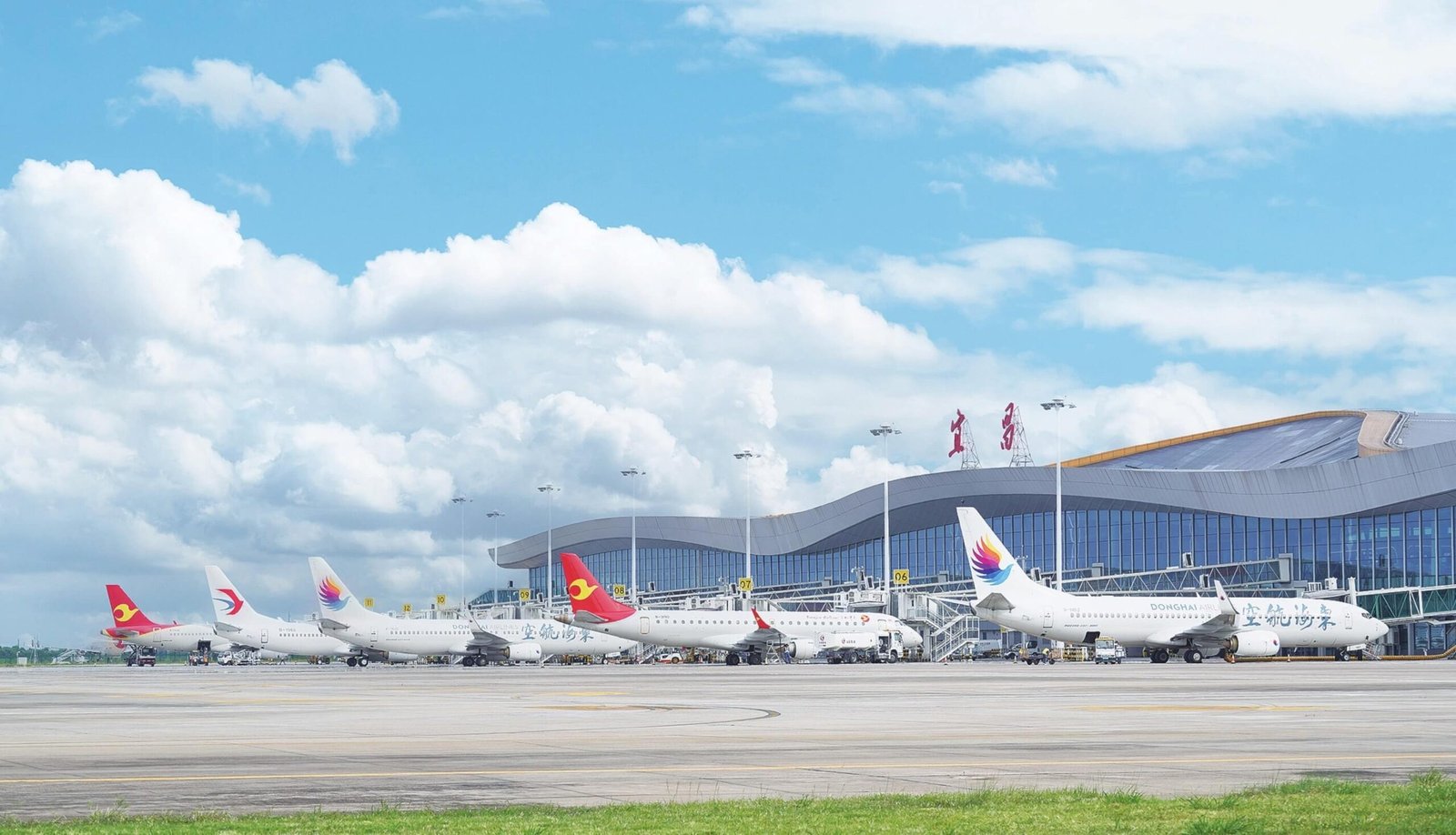
This guide connects the topic to SongXin’s airport HVAC system design guide, airport HVAC maintenance checklist, airport HVAC solutions, air-cooled screw chiller and air handling unit resources for product selection, internal linking and buyer verification.
Scope of this guide: outdoor-air quantity, filtration, ERV/DOAS, pressure zoning and IAQ operating modes. Use the broader airport HVAC system design guide for central plant architecture, terminal cooling selection and whole-system coordination.
An airport ventilation system should supply outdoor air, filter particles, recover energy, manage pressure relationships and support passenger comfort across zones with very different occupancy patterns. Departure halls, arrivals, security checkpoints, baggage areas, offices, retail spaces and lounges do not need the same airflow strategy.
The practical rule is to design ventilation by zone, not by one average terminal value. High-occupancy halls need outdoor-air capacity and filtration. Security and control areas need stability. Baggage and service areas need exhaust coordination. Energy recovery on outdoor air streams typically saves 30–50% of fresh-air conditioning energy in airport climates. AHUs need filter and coil access because maintenance is part of ventilation performance.
This guide connects terminal ventilation to SongXin’s airport HVAC system design guide, airport HVAC plant room design, airport HVAC maintenance checklist, air handling unit and comfort AHU vs process AHU resources.

Quick Answer for Buyers
An airport ventilation system should be specified by zone airflow, outdoor-air rate, filtration class, energy recovery, pressure relationship, AHU access and maintenance interval. The safest procurement approach is to list each terminal zone separately, then match AHUs, filters, fans, ERV and controls to that zone’s occupancy and operating schedule.
For many airport terminals, ventilation problems come from three causes: outdoor air is added without enough cooling and dehumidification capacity, filters are selected without fan-pressure allowance, or energy recovery is omitted leading to high OPEX. All three failures reduce comfort or energy performance because the AHU no longer delivers the designed air volume at the targeted IAQ.
Buyer’s 30-second rule:
- < 5,000 m³/h outdoor air per AHU → simple mixing box + ERV
- 5,000–20,000 m³/h per AHU → dedicated ERV section mandatory
- > 20,000 m³/h per AHU OR high-RH climate → DOAS (Dedicated Outdoor Air System) with full ERV
- High pollution / urban airport → MERV 14 / ePM1 50% as minimum
- Pandemic / IAQ-sensitive areas → HEPA H13 or higher + UV-C
ASHRAE 62.1 Outdoor Air Rates by Airport Zone
ASHRAE 62.1 is the de-facto reference for airport ventilation. These are the typical per-person + per-area rates for airport-relevant occupancy categories.
| Terminal zone | Default occupant density (persons/100 m²) | Per-person rate Rp (L/s · person) | Per-area rate Ra (L/s · m²) | Typical total |
|---|---|---|---|---|
| Lobbies / waiting areas | 30 | 2.5 | 0.3 | 8.5–11 L/s · person |
| Transportation waiting (gates, halls) | 100 | 3.8 | 0.3 | 4.1–5.0 L/s · person |
| Restaurants / food court | 70 | 3.8 | 0.9 | 5.0–6.5 L/s · person |
| Retail sales | 15 | 3.8 | 0.6 | 7.8–10 L/s · person |
| Conference / VIP lounge | 50 | 2.5 | 0.3 | 3.1–4.0 L/s · person |
| Office / staff area | 5 | 2.5 | 0.3 | 8.5–11 L/s · person |
| Corridors / circulation | 0 (transient) | – | 0.3 | per area only |
| Restrooms (toilet rooms) | – | 25 L/s per WC | – | exhaust-led |
| Baggage handling | 5 | 3.8 | 0.9 | high exhaust + makeup |
| Smoking area (if permitted) | – | – | – | dedicated exhaust, code-driven |
Practical examples:
- Departure hall, 200 m² × 100 pax → outdoor air = 200 × 100/100 × 3.8 + 200 × 0.3 = 760 + 60 = 820 L/s ≈ 2,950 m³/h
- Food court, 500 m² × 70 pax/100 m² = 350 pax → 350 × 3.8 + 500 × 0.9 = 1,330 + 450 = 1,780 L/s ≈ 6,400 m³/h
For high-altitude airports (above 2,000 m), apply a density correction factor since ventilation is volumetric. For high-occupancy events, design to peak occupancy not nominal.
Terminal Ventilation Zone Map
Airport ventilation should map the terminal into zones before AHU selection. Passenger density, door opening, baggage handling and security requirements change the airflow duty.
| Terminal zone | Ventilation focus | Typical equipment focus | Maintenance interval |
|---|---|---|---|
| Departure hall | Occupancy swings and fresh air | Large AHU + ERV + filters + VAV | Filter check every 1-3 months |
| Arrivals hall | Door opening and humidity load | AHU coil + condensate control + ERV | Coil and drain check every 3-6 months |
| Security checkpoint | Stable comfort, high occupancy | Dedicated zone control + ePM2.5 | Sensor and alarm review monthly |
| Baggage area | Exhaust and dust control | Supply/exhaust coordination | Filter + belt check every 1-3 months |
| Lounges / VIP | Comfort, lower noise, better IAQ | AHU/FCU + ePM1 + better acoustic | Routine filter service every 1-3 months |
| Retail / food court | High occupancy + cooking exhaust | Local exhaust + makeup air | Grease filter monthly; AHU per 3 months |
| ATC / control room | Stable, redundant, IAQ-critical | Dedicated AHU + ePM1 + UV option | Dedicated maintenance plan |
| Server / IT room | Sensible-heavy, low humidity | Precision DX or chilled water | Continuous monitoring |
| Restrooms | Exhaust-only, negative pressure | Constant exhaust + grilles | Filter not applicable |
| Apron-facing (avbridge) | Jet fuel vapor risk + temperature | Sealed envelope + filtered makeup | Per code |
The zone map matters because a single AHU serving mixed zones can over-ventilate one area and under-ventilate another. Dedicated or well-zoned AHUs reduce that mismatch because airflow follows occupancy and schedule.
Filtration: MERV / ePM Classes for Airports
Airport terminals see high passenger density, outdoor pollution, jet exhaust, dust and baggage particulates. Filtration class affects IAQ, energy and maintenance.
| Filtration class | ISO 16890 equivalent | ASHRAE MERV | Typical airport use | Pressure drop (clean → final) |
|---|---|---|---|---|
| Coarse 50% | Coarse 50% | MERV 6–8 | Prefilter (mandatory upstream) | 30 → 80 Pa |
| Coarse 70% | Coarse 70% | MERV 7–9 | General terminal prefilter | 40 → 100 Pa |
| ePM10 50% | ePM10 50% | MERV 10–11 | Baggage area, support | 50 → 130 Pa |
| ePM2.5 50% | ePM2.5 50% | MERV 12–13 | General passenger areas | 80 → 180 Pa |
| ePM2.5 80% | ePM2.5 80% | MERV 13–14 | Urban / polluted airports | 100 → 220 Pa |
| ePM1 50% | ePM1 50% | MERV 14–15 | VIP, lounges, ATC | 120 → 250 Pa |
| ePM1 80% | ePM1 80% | MERV 15–16 | Sensitive zones | 150 → 300 Pa |
| HEPA H13 | HEPA H13 (EN 1822) | n/a | Pandemic-mode, isolation areas | 250 → 500+ Pa |
| HEPA H14 | HEPA H14 | n/a | Highest containment | 300 → 600+ Pa |
Modern airport baseline (post-2020 design):
- Prefilter: Coarse 60% (MERV 8)
- Main filter: ePM2.5 80% (MERV 14) minimum
- VIP / lounges: ePM1 50–80% (MERV 14–15)
- ATC / IT rooms: ePM1 + activated carbon for VOC
- Pandemic / surge mode: HEPA H13 add-on capability
Practical rule: every filter upgrade adds 50–100 Pa pressure → fan size and energy go up. Budget the final filter pressure (not clean) in ESP. SongXin’s AHU sections support panel / bag / HEPA configurations with airtight seals and accessible service panels.[9]
Fresh Air and Cooling Load
Fresh air is not free air; it adds cooling and humidity load to the terminal. Every outdoor-air decision should be paired with coil, fan and chiller capacity.
| Fresh-air input | Why it matters | Procurement rule |
|---|---|---|
| Outdoor airflow in m³/h | Drives fan and coil load | State per AHU or zone. |
| Outdoor dry-bulb and wet-bulb | Determines sensible and latent load | Use design weather basis. |
| Indoor RH target | Changes coil leaving condition | State comfort or process target. |
| Filter class | Adds pressure drop | Include clean and final pressure. |
| Operating schedule | Changes energy and staging | Match BMS and VAV strategy. |
| ERV / energy recovery | Reduces fresh-air load 40–70% | Specify wheel / plate / heat pipe type. |
Fresh air raises cooling demand because the AHU must remove heat and moisture from outside air. In humid climates, the latent load is the hidden problem: the coil needs to condense water before the supply air reaches the target humidity.
Energy Recovery: ERV / HRV for Airport Outdoor Air
Energy recovery on airport outdoor-air streams is one of the highest-ROI investments in terminal HVAC. With outdoor air rates of 10,000–100,000+ m³/h per AHU and 8,760 hours of annual operation, even 50% sensible-only recovery saves substantial energy.
| ERV type | Sensible efficiency | Latent efficiency | Cross-contamination risk | Best for |
|---|---|---|---|---|
| Plate heat exchanger | 55–75% | 0% (sensible only) | None | Airport offices, hotel, non-humid zones |
| Heat pipe | 45–65% | 0% (sensible only) | None | Hot/dry climates, sensitive areas |
| Run-around coil loop | 45–60% | 0% | None | Retrofits, when supply/exhaust streams are separated |
| Enthalpy wheel (rotary) | 70–85% | 65–80% | Low with purge | Humid airport climates (Southeast Asia, Gulf) |
| Heat wheel (sensible only) | 75–85% | 0% | Low with purge | Hot/dry climates |
| Liquid desiccant | 60–75% | 75–90% | None | Strict humidity zones (electronics, IT) |
Typical airport ERV ROI:
- Single-stage plate HX, 20,000 m³/h, 60% efficiency, hot-humid climate
- Annual fresh-air conditioning energy without ERV: ~120,000 kWh
- With ERV: ~50,000 kWh → 70,000 kWh saved/yr → ~USD 8,400/yr at USD 0.12/kWh
- Incremental ERV CAPEX: ~USD 18,000 → payback ~2.1 years
For Gulf, Southeast Asian, South Asian and tropical airports with both heat and humidity, enthalpy wheels are typically the highest-ROI choice. For dry-climate airports (Saudi inland, North Africa), sensible-only plate or heat pipe is enough.
DOAS vs Mixed Air for Airport AHUs
Two main strategies exist for outdoor air integration:
| Strategy | Description | Pros | Cons | Best for |
|---|---|---|---|---|
| Mixed-air AHU | Outdoor + return air mixed in AHU mixing box | Simpler, lower CAPEX | Energy waste; outdoor air over- or under-conditioned by zone | Small / medium terminals; uniform-load zones |
| DOAS (Dedicated Outdoor Air System) | Outdoor air separately conditioned to neutral or supply state, then distributed | Decoupled latent control; precise ventilation; works with FCUs / VRF / chilled beams | Higher CAPEX, more ductwork, more controls | Large international terminals, humid climates, multi-zone variable occupancy |
Most modern large-airport designs use DOAS + zone units (FCU, VAV box, chilled beam). Departure halls keep mixed-air AHUs with VAV; small zones get DOAS + FCU. The DOAS handles 100% of latent load, simplifying zone equipment.
Pressure Zoning Strategy
Pressure zoning prevents cross-contamination and odor migration. Each airport zone should have a defined relationship to adjacent zones.
| Zone | Pressure relative to corridors | Typical ΔP |
|---|---|---|
| Passenger halls (departure / arrival) | Slightly positive | +5 to +10 Pa |
| VIP / lounges | Positive | +10 to +15 Pa |
| ATC / IT / server rooms | Strongly positive | +15 to +25 Pa |
| Office areas | Slightly positive | +5 to +10 Pa |
| Restrooms / janitor | Negative | -10 to -15 Pa |
| Smoking rooms (where permitted) | Strongly negative | -15 to -25 Pa |
| Kitchens / food prep | Negative to corridor | -5 to -10 Pa |
| Baggage handling | Slightly negative | -5 to -10 Pa |
| Aerobridge / jet bridge | Sealed / pressurized | per code |
| Hazardous storage | Strongly negative | -15 to -25 Pa |
Practical rule: maintain ΔP using dedicated exhaust fans (not just adjusting supply). Use pressure sensors with BMS alarms on critical zones; rebalance after major terminal changes.
IAQ Targets and Special Operating Modes
Modern airports target specific IAQ KPIs:
| Parameter | Recommended target | Critical limit |
|---|---|---|
| CO₂ | < 800 ppm (occupied zones) | < 1,000 ppm |
| PM2.5 | < 12 µg/m³ | < 35 µg/m³ (WHO 24-hr) |
| PM10 | < 25 µg/m³ | < 50 µg/m³ |
| TVOC | < 300 µg/m³ | < 500 µg/m³ |
| Relative humidity | 40–60% | 30–70% |
| Temperature | 22–26 °C (summer) | 20–27 °C |
| Sound level (NC) | NC 35–45 passenger | NC 30–35 lounges |
Special operating modes:
| Event | Ventilation mode | Trigger |
|---|---|---|
| Normal occupancy | Demand control by CO₂ + occupancy | Default |
| Peak hour | Maximum supply + minimum recirculation | Schedule or occupancy |
| Pandemic / IAQ alert | 100% outdoor air, max filtration, no ERV recirculation | Authority directive |
| Sandstorm / high outdoor PM | Reduce outdoor air to minimum code, increase filtration | PM sensor > threshold |
| Smoke event | Smoke control mode (NFPA 92): zone exhaust + adjacent supply | Fire alarm |
| Refrigerant leak (machine room) | Mechanical ventilation activated | Refrigerant sensor (ISO 5149) |
| Off-hours / low occupancy | Reduced supply, maintain minimum hygiene | Schedule + occupancy |
Modern AHUs should support mode switching via BMS, including outdoor-air damper override, ERV bypass, filter override, and pressure-zone reset.
Worked Example: Outdoor Air Cooling Load with ERV
A basic calculation shows why outdoor air must be included before AHU selection. Assume an airport zone needs 10,000 m³/h of outdoor air, and the outdoor-to-indoor enthalpy difference is 18 kJ/kg (hot-humid tropical / Gulf summer condition). Air density 1.2 kg/m³.
Step 1 – Outdoor air cooling load (no ERV).
Formula: cooling load = airflow × air density × enthalpy difference / 3600. Substitution: 10,000 × 1.2 × 18 / 3600 = 60 kW.
Step 2 – With ERV (60% total efficiency).
Recovered: 60 × 0.60 = 36 kW. Net load on coil: 60 − 36 = 24 kW.
Step 3 – Coil sizing.
Coil must handle 24 kW of outdoor-air conditioning + recirculated air load. Wet-coil design with adequate drain pan.
Step 4 – Fan ESP.
Outdoor air branch ESP allowance: ERV (~150 Pa) + filter (~150 Pa final) + damper (~30 Pa) + duct (~80 Pa) = ~410 Pa on the outdoor branch.
Step 5 – Energy economic.
Without ERV: 60 kW × 4,000 equivalent full-load hrs/yr × 0.32 kW/kW = 76,800 kWh/yr. With ERV: 24 kW × 4,000 × 0.32 = 30,720 kWh/yr + ERV fan power ~ 2,500 kWh/yr → ~33,000 kWh/yr. Savings: ~44,000 kWh/yr ≈ USD 5,300/yr at USD 0.12/kWh. ERV CAPEX (incremental): ~USD 12,000 → payback ~2.3 years.
Step 6 – Replicate.
If the terminal has 4 similar outdoor-air streams, the total fresh-air load with ERV becomes 24 × 4 = 96 kW (vs 240 kW without ERV) and savings exceed USD 20,000/yr.
In a recent SongXin RFQ screening for a 4-AHU terminal expansion, the engineering team showed that adding ERVs reduced the central chiller plant sizing by ~140 kW, cutting upstream chiller CAPEX more than the ERV cost.
Pressure and Service Matrix
Filtration should be selected with pressure allowance and service access. A better filter without fan margin reduces airflow after loading.
| Requirement | Practical design value | Maintenance interval | Risk if ignored |
|---|---|---|---|
| Prefilter | Coarse 60% (MERV 8) | 1-3 months | Dust reaches fine filters |
| Fine filter | ePM2.5 80% (MERV 14) minimum | 3-6 months with pressure tracking | Fan airflow drops as pressure rises |
| HEPA (where used) | H13 (EN 1822) | 12-24 months | DP alarm-driven replacement |
| ERV section | Sensible 60%+ or enthalpy 70%+ | Annual cleaning, monitor effectiveness | Energy loss; condensation risk |
| Pressure zones | Per zone strategy (above) | Monthly sensor review | Odor or dust migration |
| AHU access | Full filter, coil, ERV removal path | Every service visit | Maintenance delays reduce ventilation |
| Drain pan | Visible slope and cleaning access | 3-6 months | Microbial growth and leakage risk |
The mechanism is pressure balance. Air moves from higher pressure to lower pressure. If exhaust or supply airflow drifts, odors, dust and unconditioned air move across zones instead of staying within intended areas.
RFQ Data and Specification Checklist
An airport ventilation RFQ should force every supplier to quote the same airflow, filtration, ERV and IAQ condition.
RFQ input list
- Zone list: departure, arrival, baggage, security, lounge, office, ATC, retail, support.
- Outdoor airflow per zone (m³/h) and ASHRAE 62.1 calculation basis.
- Indoor temperature, RH target, CO₂ target and PM2.5 target.
- Occupancy profile (peak / average / off-hour).
- Outdoor design dry-bulb, wet-bulb or enthalpy basis.
- Filtration class (prefilter + main + HEPA if any).
- ERV type and efficiency requirement.
- AHU airflow, ESP, coil duty, drain.
- Pressure relationship for adjacent zones (ΔP per zone).
- Special operating modes (pandemic / sandstorm / smoke).
- BMS points, alarms, filter DP, CO₂ sensors, occupancy sensors.
Specification checklist
| Item | Minimum answer before purchase |
|---|---|
| Outdoor air | Airflow per zone, ASHRAE 62.1 calculation, peak-load basis |
| Filtration | ISO 16890 class + MERV equivalent + clean/final pressure |
| ERV | Type, sensible/latent efficiency, EN 308 / AHRI 1060 certification |
| Cooling coil | Sensible + latent at design, wet-coil pressure drop |
| Fan | Airflow at stated ESP including final filter + ERV |
| Acoustic | NC level at supply diffuser |
| Controls | Damper, VAV, pressure, filter alarm, CO₂ override, mode switching |
| Standards | ASHRAE 62.1, ISO 16890, EN 1886, AHRI 1060 for ERV |
| Documents | Datasheet, wiring diagram, O&M manual, commissioning record, IAQ test report |
If the terminal ventilation design is early-stage, send zone loads, occupancy and fresh-air assumptions to SongXin for engineering support. The team can coordinate AHUs, ERVs, chillers and DX support units before procurement freezes the equipment schedule.
Common Mistakes
The first mistake is adding outdoor air without cooling capacity. The worked example shows that 10,000 m³/h of outdoor air with an 18 kJ/kg enthalpy difference adds 60 kW of cooling load (24 kW with ERV).
The second mistake is selecting filters without final pressure. A clean filter has lower resistance than a loaded filter, so airflow falls when the fan is not selected for final pressure.
The third mistake is mixing zones with different pressure needs. Baggage, restroom, retail, ATC and passenger halls should not all be treated as one pressure zone.
The fourth mistake is hiding AHUs behind poor access. Airport ventilation quality depends on filter changes, coil cleaning, ERV maintenance and drain service.
The fifth mistake is omitting ERV / energy recovery. With airport outdoor-air rates of 10,000–100,000 m³/h per AHU and 8,760 hours/yr operation, payback is typically 2–4 years even at low electricity prices.
The sixth mistake is not designing for special modes. Post-COVID and post-sandstorm-incident airports must switch between energy-saving (recirculation) and IAQ-priority (100% outdoor + max filter) modes – this requires AHU damper and control design from day one.
The seventh mistake is using only return-air CO₂ sensors. Demand-controlled ventilation needs zone-level CO₂ in high-occupancy areas; a single return-air sensor averages out and under-ventilates peak zones.
FAQ
What is an airport ventilation system?
An airport ventilation system supplies outdoor air, filters particles, recovers energy, manages pressure relationships and supports comfort across terminal zones. It usually works through AHUs, ERVs, ducts, dampers, filters, coils and BMS controls. Good ventilation design separates zones because departure halls, baggage areas, security queues, ATC and offices have different airflow needs.
How is airport fresh air calculated?
Airport fresh air is calculated using ASHRAE 62.1 zone categories: lobbies/waiting (3.8 L/s/person), transportation halls (3.8), restaurants (3.8), retail (3.8), offices (2.5), plus per-area rates of 0.3 L/s/m². Total airflow per zone = occupants × Rp + area × Ra. Convert to cooling and latent load before selecting AHU and chiller.
Which filter class fits airport terminals?
Modern airport baseline is ePM2.5 80% (MERV 14) for main filters + Coarse 60% prefilter. VIP / lounges and ATC should use ePM1 (MERV 14–15). HEPA H13 is added for pandemic-mode and isolation areas. Always specify both clean and final pressure to budget fan ESP.
What is ERV and is it required in airports?
ERV (Energy Recovery Ventilation) transfers heat (and optionally moisture) from exhaust air to outdoor air, reducing fresh-air conditioning load by 40–70%. With airport outdoor-air rates and continuous operation, ERV payback is typically 2–4 years. It is standard practice on modern large international terminal designs.
What is DOAS in airport design?
DOAS (Dedicated Outdoor Air System) conditions outdoor air separately from the main AHUs, then distributes it to zone-level equipment (FCUs, VAV, chilled beams). It allows precise latent control, especially in humid climates, and is the most common approach for large international airports built after 2010.
How does pressure zoning work?
Pressure zoning ensures air flows from clean to less clean: passenger halls slightly positive (+5–10 Pa) to corridors, restrooms negative (-10–15 Pa), kitchens negative, ATC strongly positive (+15–25 Pa), smoking rooms strongly negative. Use dedicated exhaust fans and BMS pressure sensors with alarms.
What IAQ targets apply to airport terminals?
Typical targets: CO₂ < 800 ppm (1,000 critical), PM2.5 < 12 µg/m³ (35 critical), PM10 < 25 µg/m³, RH 40–60%, temperature 22–26 °C summer. Modern airports report IAQ on operational dashboards as part of passenger experience metrics.
How should ventilation handle sandstorms or smoke events?
Sandstorm mode: reduce outdoor air to minimum-code rate, increase filtration to ePM1 / HEPA, trigger via outdoor PM sensor > threshold. Smoke event mode: NFPA 92 smoke control (zone exhaust + adjacent zone supply pressurization), triggered by fire alarm. AHUs must support BMS mode switching with damper and fan overrides.
What should I send for airport ventilation equipment selection?
Send zone list, occupancy profile, outdoor airflow per zone (ASHRAE 62.1 calculation), indoor T/RH/CO₂/PM targets, design weather, filter class, ERV type and efficiency target, AHU airflow + ESP + coil duty, pressure relationship per zone, special operating modes, BMS points and zone drawings.
Review Record
Technical review: SongXin HVAC Engineering Team, airport ventilation and AHU selection review, 2025-06-24. SongXin AHU sections support panel / bag / HEPA filtration up to airport tender requirements, with hygienic drain pans, sealed airtight joints, and IoT-ready BMS integration.[9]
Sources
- ASHRAE Standard 62.1 and 62.2 overview, https://www.ashrae.org/technical-resources/bookstore/standards-62-1-62-2
- ISO 16890-1:2016, “Air filters for general ventilation – Part 1,” https://www.iso.org/standard/57864.html
- European Commission policy reference for EN 14511-2 rating conditions, https://webgate.ec.europa.eu/single-market-compliance-space/notified-bodies/notified-body/standards/standard/3474
- AHRI 550/590 and AHRI 551/591, “Performance Rating of Water-Chilling and Heat Pump Water-Heating Packages,” https://www.ahrinet.org/search-standards/ahri-550590-i-p-and-551591-si-performance-rating-water-chilling-and-heat-pump-water-heating-packages
- BS EN 1886:2025 summary, “Ventilation for buildings – Air handling units – Mechanical performance,” https://www.thenbs.com/publicationindex/documents/details?DocId=348559&Pub=BSI
- ISO 5149-1:2014, “Refrigerating systems and heat pumps – Safety and environmental requirements – Part 1,” https://www.iso.org/standard/54979.html
- ISO 5149-2:2014, “Refrigerating systems and heat pumps – Safety and environmental requirements – Part 2,” https://www.iso.org/standard/54980.html
- AHRI Standard 1060, “Performance Rating of Air-to-Air Exchangers for Energy Recovery Ventilation Equipment,” https://www.ahrinet.org/search-standards/ahri-1060-i-p-and-1061-si-performance-rating-air-air-exchangers-energy-recovery-ventilation
- SongXin HVAC, “Air Handling Unit” product page (panel/bag/HEPA filter support, IoT-ready controls, 1,000–40,000 m³/h, 12–610 kW), https://sxinhvac.com/products/terminal-units/air-handling-unit/