

Fan coil units are widely used in commercial HVAC, but the best FCU type depends on room layout, ceiling space, design appearance, airflow, noise target and maintenance plan. Cassette, concealed and exposed fan coil units all provide room-level cooling or heating — but they solve different installation problems.
This guide explains how to choose between the three types, using real specification ranges from SongXin’s fan coil unit lineup so the comparison is grounded in actual equipment rather than generic description.
Direct Answer
Choose a cassette FCU when the room has a suspended ceiling and needs broad ceiling air distribution with a visible panel. Choose a concealed FCU when the indoor unit should be hidden above the ceiling and connected to grilles or short ducts. Choose an exposed FCU when ceiling space is limited, installation must be simple, or maintenance access matters more than hidden appearance.
The final choice should weigh cooling capacity, airflow, external static pressure, noise, condensate drainage, ceiling height, service access, control method and interior design.
Selection Summary
Cassette FCUs suit suspended ceilings with 360° ceiling air distribution (SongXin FP-KM series: 340–1360 m³/h, 1.9–7.8 kW cooling, 2.8–10.5 kW heating, ≤38–47 dB(A), 220V/50Hz). Concealed FCUs suit hidden ceiling-void installation with short duct or grille connections (340–2380 m³/h, 1.8–12.85 kW cooling at 7°C chilled-water inlet, 37–54 dB(A), 2-pipe or 4-pipe), but available external static pressure and access panels must be checked. Exposed FCUs share the 340–2380 m³/h / 1.8–12.85 kW platform and suit retrofits, limited ceiling space and easy maintenance. FCU selection should confirm total and sensible capacity, airflow, water temperature, water flow, noise, drainage, ceiling space, static pressure, valve package and control requirements.
Send These Data for FCU Selection
For a faster quotation, send the room use, estimated cooling load, preferred FCU type, ceiling void height, chilled- and hot-water temperatures, noise target, voltage, quantity, control preference and delivery country.
How Fan Coil Units Work
A fan coil unit uses a fan and a water coil to condition room air. Chilled or hot water flows through the coil, the fan moves air across it, and conditioned air is supplied to the room. FCUs are commonly connected to a central chiller or heat pump. In many buildings, air handling units (AHUs) provide fresh air while FCUs provide local temperature control.
Quick Comparison
| Factor | Cassette | Concealed | Exposed |
|---|---|---|---|
| Airflow | 340–1360 m³/h | 340–2380 m³/h | 340–2380 m³/h |
| Cooling | 1.9–7.8 kW | 1.8–12.85 kW | 1.8–12.85 kW |
| Noise | ≤38–47 dB(A) | 37–54 dB(A) | 37–54 dB(A) |
| Installation | Ceiling cassette, visible panel | Hidden above ceiling | Visible wall/floor/ceiling unit |
| Air distribution | 360° multi-direction | Depends on grille/duct | Direct local supply |
| Static pressure | Usually low | Must match duct resistance | Usually direct discharge |
| Maintenance | Panel access | Needs access panel | Easiest access |
| Drainage | Often needs drain pump | Needs slope + access | Usually simpler |
| Common risk | Poor panel/drainage location | Low airflow if ESP is wrong | Visible equipment, clearance |
When to Choose a Cassette FCU
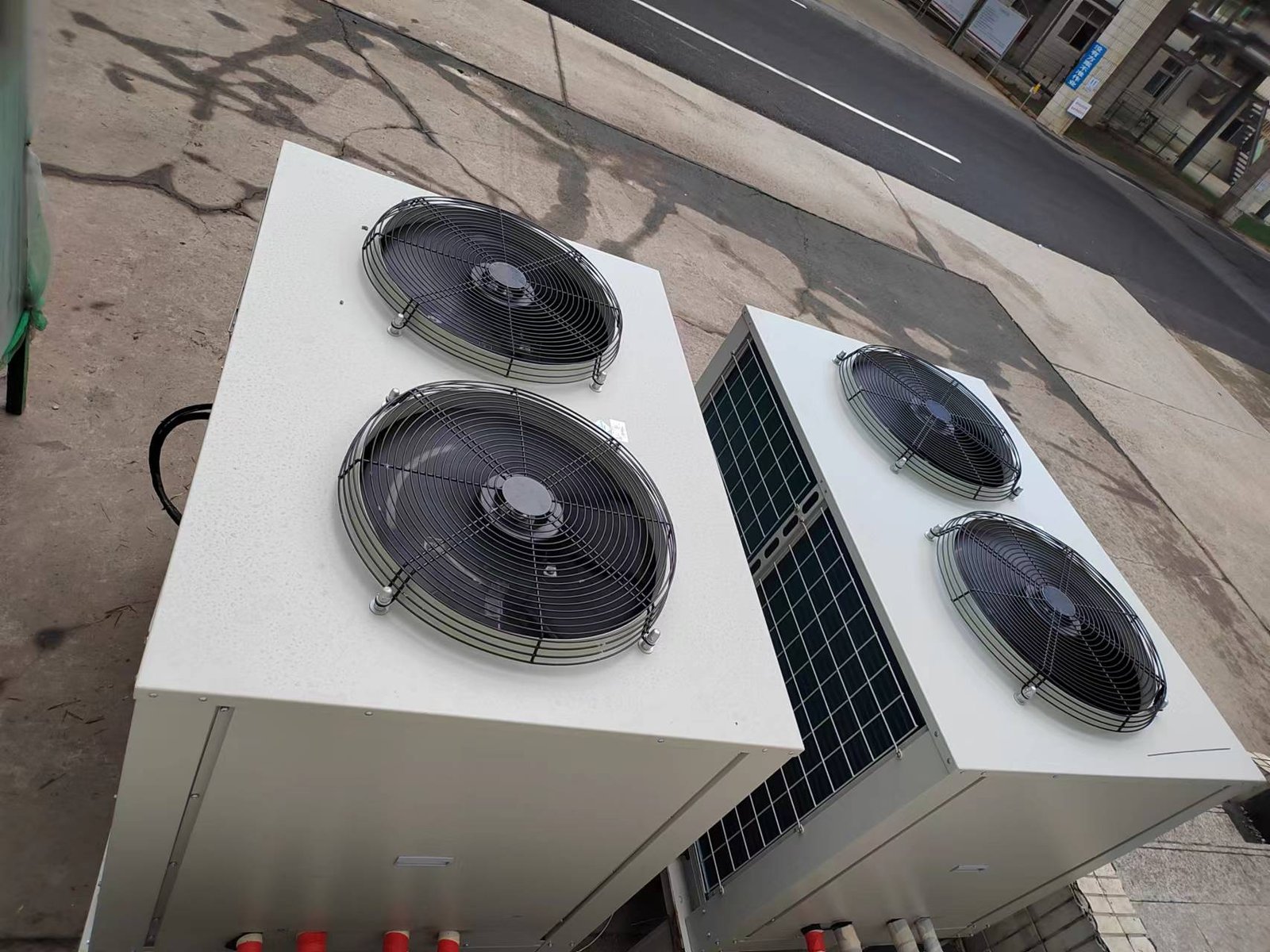
Best for suspended ceilings with a visible panel
A cassette unit fits within a suspended ceiling, leaving only the decorative panel visible, and supplies air in four directions (360° on the FP-KM series). It suits open rooms where ductwork should be minimized.
Applications: offices, hotel rooms, meeting rooms, small retail, restaurants, classrooms, clinics. Check ceiling-void depth, panel size, condensate drainage (a pump may be needed), air throw and service access.
View cassette fan coil units →When to Choose a Concealed FCU
Best for hidden installation above the ceiling
A concealed unit is installed in the ceiling void and supplies air through grilles or short ductwork, available horizontal or vertical. It can include a brushless DC (EC) motor for stepless speed, a 2- or 3-way valve, and HEPA filtration.
Applications: hotels, apartments, premium offices, VIP rooms, corridors, renovations. The critical factors are available external static pressure at design airflow, duct length, return-air path, access-panel location and drain slope.
View concealed fan coil units →When to Choose an Exposed FCU
Best for limited ceiling space and easy access
An exposed unit stays visible, mounted on the wall, floor or ceiling surface in horizontal or vertical orientation. Horizontal units are typically installed 2.3–2.8 m above the floor. No ceiling work is required.
Applications: renovations, schools and dormitories, clinics, small offices, buildings without suspended ceilings and technical rooms. The tradeoff is that the equipment is visible, so layout and appearance matter.
View exposed fan coil units →The Six Core Selection Factors
Ceiling Space
With enough suspended-ceiling void, cassette or concealed units work; with shallow or no void, exposed units are more practical. Concealed units must fit ducts, grilles, filters, valves and drains above the ceiling.
Air Distribution
Cassette supplies 360° from the ceiling, concealed depends on duct and grille design, exposed supplies air directly. Poor distribution causes drafts, hot/cold spots and weak cooling.
Noise
Critical in hotels, bedrooms, offices and hospitals. Compare sound at the in-service fan speed, not maximum. Lower figures (≈37–40 dB(A)) correspond to low-speed operation — the design point for quiet rooms.
Condensate Drainage
Cooling FCUs produce condensate. For cassettes, check whether a drain pump is required; for concealed, check slope and access; for exposed, drainage is simpler but still must be planned.
Maintenance Access
Filters and drain pans need regular inspection. Exposed units are easiest, cassettes use panel access, concealed units need access panels in the right location. Poor access becomes a long-term service problem.
External Static Pressure
Vital for ducted concealed units, which must overcome duct, grille and filter resistance. Too little ESP means weak airflow and cooling that never reaches the room. Always ask for available ESP at the selected airflow.
Engineering Selection Method
Many buyers start with appearance — a better sequence avoids costly mistakes:
- Confirm whether a suspended ceiling exists.
- Confirm available ceiling depth and maintenance access.
- Confirm room cooling load and chilled-water temperature.
- Check whether low noise is critical.
- Check whether ducted air distribution is required.
- Check the drainage route and pump requirement.
- Select cassette, concealed or exposed type.
- Confirm capacity at the intended fan speed.
- Confirm controller and valve package.
This prevents a common mistake: choosing a concealed unit for appearance, then finding there is no service access, no drain slope, or not enough static pressure for the duct connection.
Worked Example: Capacity & Noise
Assume a hotel guest room needs about 3.2 kW of cooling with chilled water at 7/12 °C (a 5 °C difference).
Water-flow check: 3.2 / (1.163 × 5) = 0.55 m³/h — comfortably inside SongXin’s concealed-FCU water-flow range of 0.31–2.17 m³/h.
The noise lesson: A cassette FP-KM-51 (2.8–3.3 kW at 510 m³/h) can meet 3.2 kW only near the top of its band — high fan speed, higher noise (≈40 dB(A)). For a quiet guest room it is usually better to step up to an FP-KM-68 (3.7–4.2 kW at 680 m³/h) and run it at low/medium speed. Size for the load at low/medium speed, and keep high speed as a short pull-down mode.
Always confirm whether the quoted figure is total or sensible cooling. In humid climates the latent load matters — a unit that meets total capacity may still leave the room humid.
Static Pressure Note for Concealed FCUs
Even a short supply duct adds resistance from the duct, supply and return grilles, filter (clean and dirty) and any flexible duct. If the unit has only low available ESP, airflow drops after installation, the room under-cools, and the contractor raises fan speed — increasing noise. Always ask the supplier for available ESP at the selected airflow and fan speed.
Project-Based Examples
| Project | Better Choice | Reason |
|---|---|---|
| Hotel guest room, premium interior | Concealed | Hidden look and controlled supply-grille layout |
| Small office, standard suspended ceiling | Cassette | Simple install and 360° distribution |
| School renovation, no ceiling void | Exposed | Low install complexity and easy maintenance |
| Apartment bedroom, strict noise limit | Concealed at low/medium speed | Quiet operation if properly sized |
| Retail shop, open ceiling | Exposed or cassette | Ceiling design decides the best option |
| Clinic treatment room | Cassette or concealed, easy filter access | Comfort, cleanability and service access |
Common Buying Mistakes
- Choosing by capacity only. Capacity must be checked at real water temperature, air condition and fan speed.
- Ignoring noise. A low price is useless if the unit is too noisy for hotel rooms or offices.
- Forgetting drainage. Condensate problems damage ceilings; drain planning is essential.
- No access panel for concealed units. Hidden units still need reachable filters, valves and drains.
- Wrong static pressure. Concealed ducted units need enough ESP, or airflow is too low.
Supplier Evaluation Checklist
When comparing suppliers, ask for: capacity table at your water and air conditions; sound data at multiple fan speeds; water pressure-drop data; available ESP for concealed models; drain-pump information for cassette models; thermostat and valve package options; installation drawings; maintenance-access instructions; spare-parts support; and delivery schedule. The best supplier isn’t always the lowest unit price — it’s the one that reduces installation risk, comfort complaints and service problems after handover.
For supplier-level capability and RFQ context, see Fan Coil Unit Supplier for Commercial HVAC.
Frequently Asked Questions
Which fan coil unit is best for hotels?
Which FCU is easiest to maintain?
Do concealed fan coil units need ducts?
Can fan coil units provide heating?
What is the biggest risk when selecting fan coil units?
Can SongXin help choose between cassette, concealed and exposed FCUs?
Request Fan Coil Unit Selection
Send your room layout, FCU type preference, chilled-water conditions and quantity. SongXin will recommend a practical FCU configuration within 24 hours.
Request Fan Coil Unit Selection