

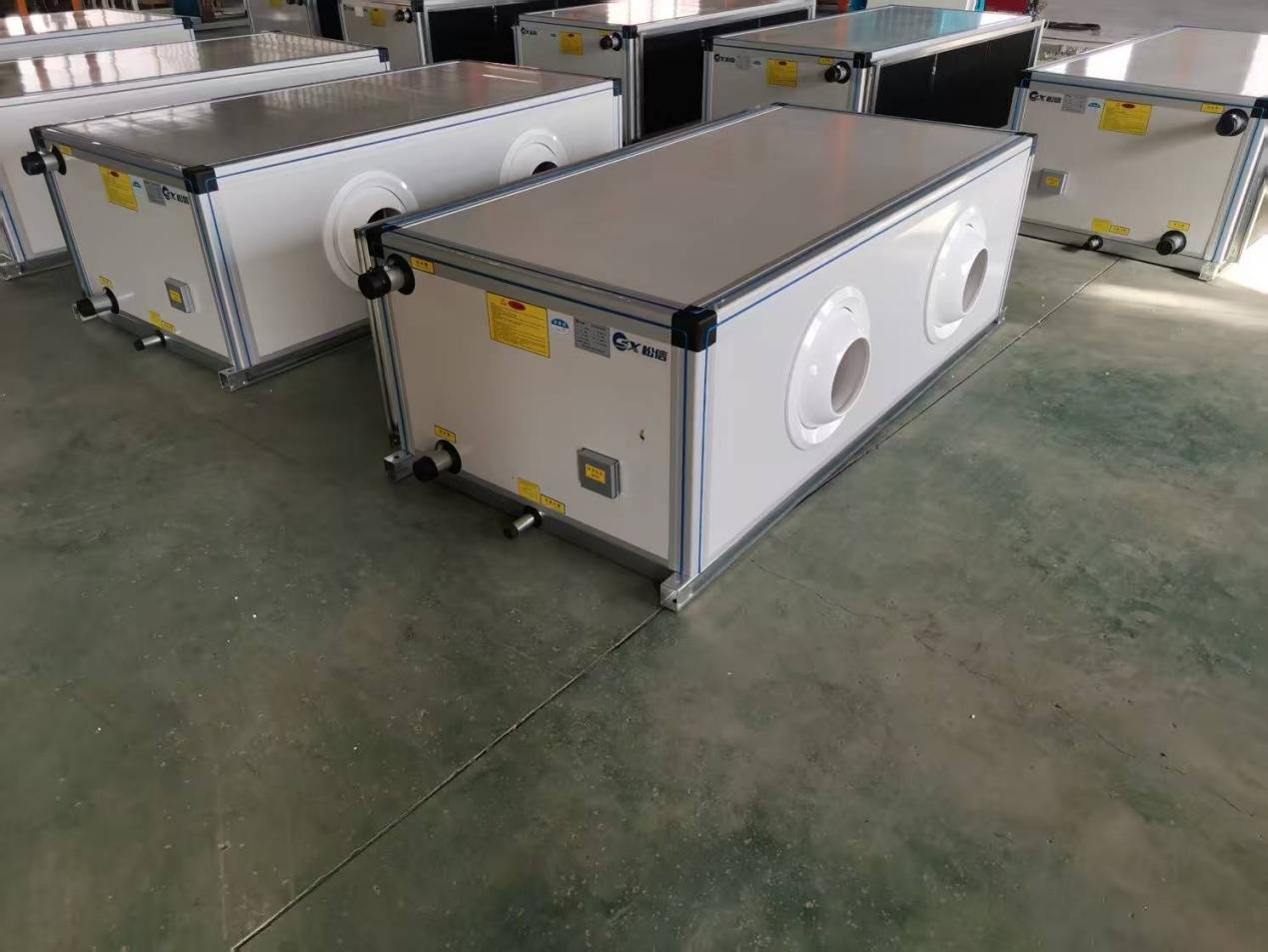
Selecting a modular AHU requires more than choosing an airflow number. A modular air handling unit must match the duct system, cooling source, heating source, filtration requirement, humidity target, casing requirement, installation space, noise limit and control strategy.
This guide explains how to select a modular AHU for commercial, industrial and process HVAC. It is written for buyers, consultants, contractors and facility teams preparing a custom AHU quotation, and uses real data from SongXin’s AHU lineup so the selection logic maps to actual equipment. For supplier capability, custom sections and procurement context, see Modular Air Handling Unit Supplier for Custom HVAC Projects.
Direct Answer
To select a modular AHU, confirm airflow, external static pressure, fresh air ratio, entering and leaving air conditions, chilled-water or DX cooling source, heating source, coil capacity, filter grade, humidity requirement, casing type, installation location, service access, noise limit, voltage and control interface. Airflow alone is not enough — two AHUs at the same airflow can perform very differently if fan pressure, coil design, filter pressure drop, casing leakage and controls differ.
For commercial buildings, comfort, energy efficiency, noise and fresh-air control usually matter most. For industrial and process HVAC, filtration, corrosion resistance, humidity control, temperature stability and continuous operation may matter more.
Selection Summary
Modular AHU selection depends on airflow, external static pressure, internal pressure drop, fresh air
ratio, entering/leaving air conditions, coil conditions, filter grade and final filter pressure drop,
humidity target, casing strength, leakage control, noise limit, installation layout, service access and
controls. SongXin modular AHUs cover 1,000–40,000 m³/h and 12–610 kW cooling in ceiling-suspended
(1,000–20,000 m³/h, 12–196 kW, ≤68 dB(A)), vertical and horizontal frames (2,000–40,000 m³/h, 18–610 kW, ≤75
dB(A)), with aluminum-frame, IP54-rated, low-leakage casing. Airflow alone is not
enough because filters, coils, dampers, ducts and silencers add pressure drop and change fan
selection. Modular AHUs are used when standard AHUs cannot match project-specific air treatment,
filtration, humidity or layout needs.
Send These Data for AHU Selection
Send airflow, external static pressure, fresh-air ratio, outdoor/return/supply air conditions, chilled-water or DX coil data, filter grade, humidity target, noise limit, voltage, installation space, access side and BMS requirement.
The 10 Selection Checkpoints
Confirm Airflow
Based on cooling load, ventilation, occupancy, fresh-air standard, air changes, process or pressure control. State it in m³/h, CFM or L/s. SongXin covers 1,000–40,000 m³/h, so most duties fit one unit; very tall spaces may use the dedicated high-space AHU.
Confirm External Static Pressure
ESP must overcome ducts, filters, dampers, coils, silencers and terminals. Underestimate it and the unit misses design airflow after install; overestimate it and the motor is oversized. State ESP at design airflow, separate from internal pressure drop.
Fresh / Return Air Ratio
The fresh-air ratio strongly affects coil load. A 100% fresh-air unit and a 20% mixed-air unit at the same airflow have very different coil duties, because outdoor air carries sensible heat plus a large moisture load. Define it before sizing the coil.
Cooling Coil Conditions
Needs entering dry/wet-bulb (or RH), leaving-air target, chilled-water supply/return (or DX) and face velocity. SongXin coils range 12–610 kW; the source is commonly chilled water, coordinated with SongXin chillers for a single-supplier package.
Heating Source
Hot water, steam, electric or a heat-pump source. Confirm the winter design condition and heating medium so the heating coil is sized correctly, and decide whether reheat is needed for humidity control.
Filter Grade
Pre + medium filter for offices; better filtration with low noise for hotels; multi-stage with hygienic casing for hospital support; cleanability + humidity control for food/pharma. Higher grades raise pressure drop and maintenance.
Humidity Requirement
If humidity matters, give both temperature and RH targets. Dehumidification depends on coil design and face velocity; some projects need reheat or a humidifier. Dry-bulb only risks a coil with insufficient latent capacity.
Casing & Construction
SongXin uses aluminum-alloy frames (corrosion resistant), thick insulated panels, sealed low-leakage joints and IP54 protection, with modular panels for access. For humid markets, insulation and leakage control affect condensation, hygiene and energy.
Noise Limit
Ceiling-suspended units run ≤68 dB(A), vertical/horizontal ≤75 dB(A); a silencer section can be added for stricter limits. State the required sound limit and whether it is measured at the unit or in the room.
Installation & Access
The unit must fit the mechanical room, roof or ceiling, with planned access for coil pull, filter changes, fan/motor service and drain cleaning. For export, discuss container loading and on-site section reassembly early.
Choosing the Frame Type
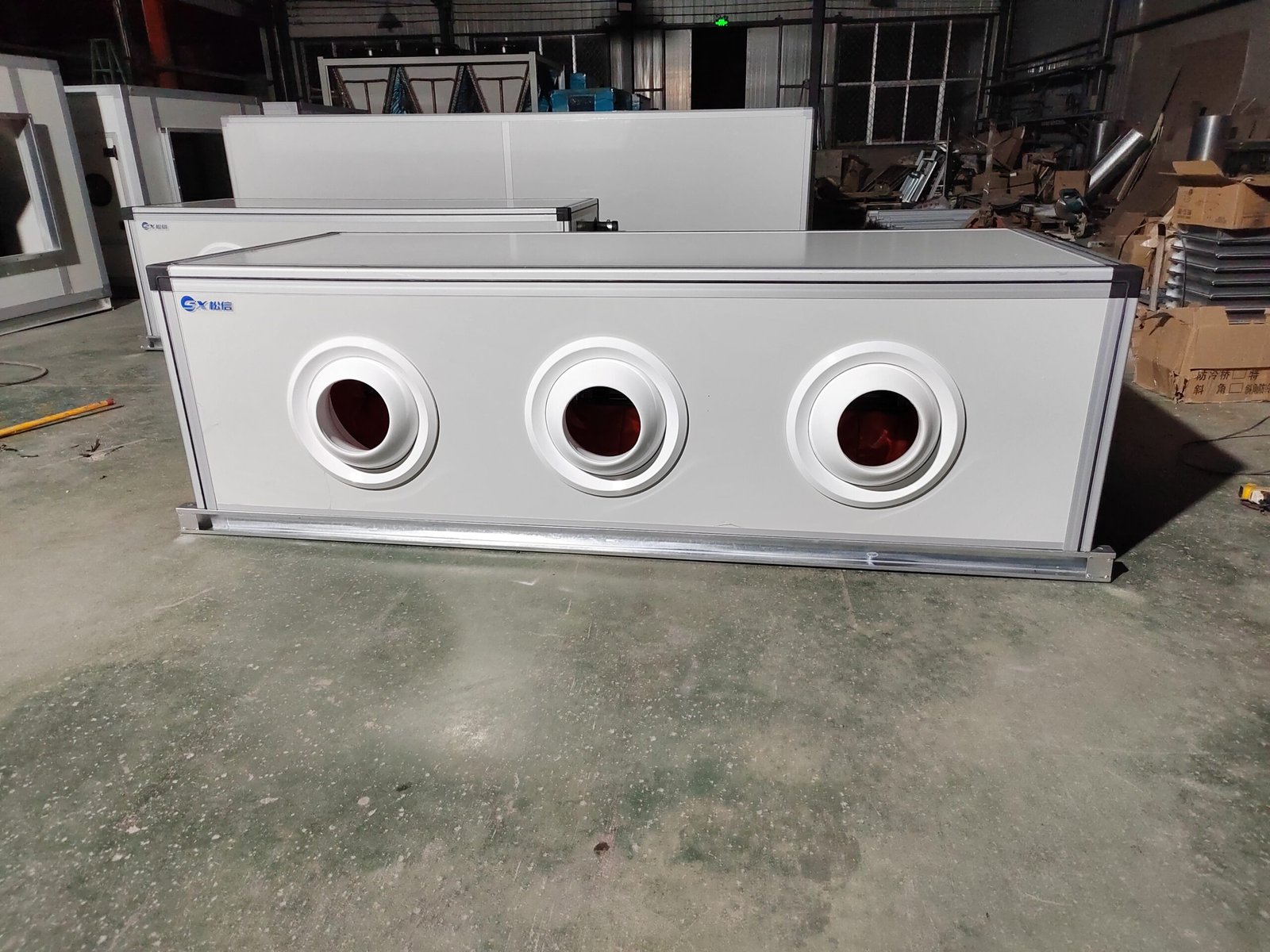
Ceiling-Suspended
Offices, malls and smaller rooms — saves floor space.
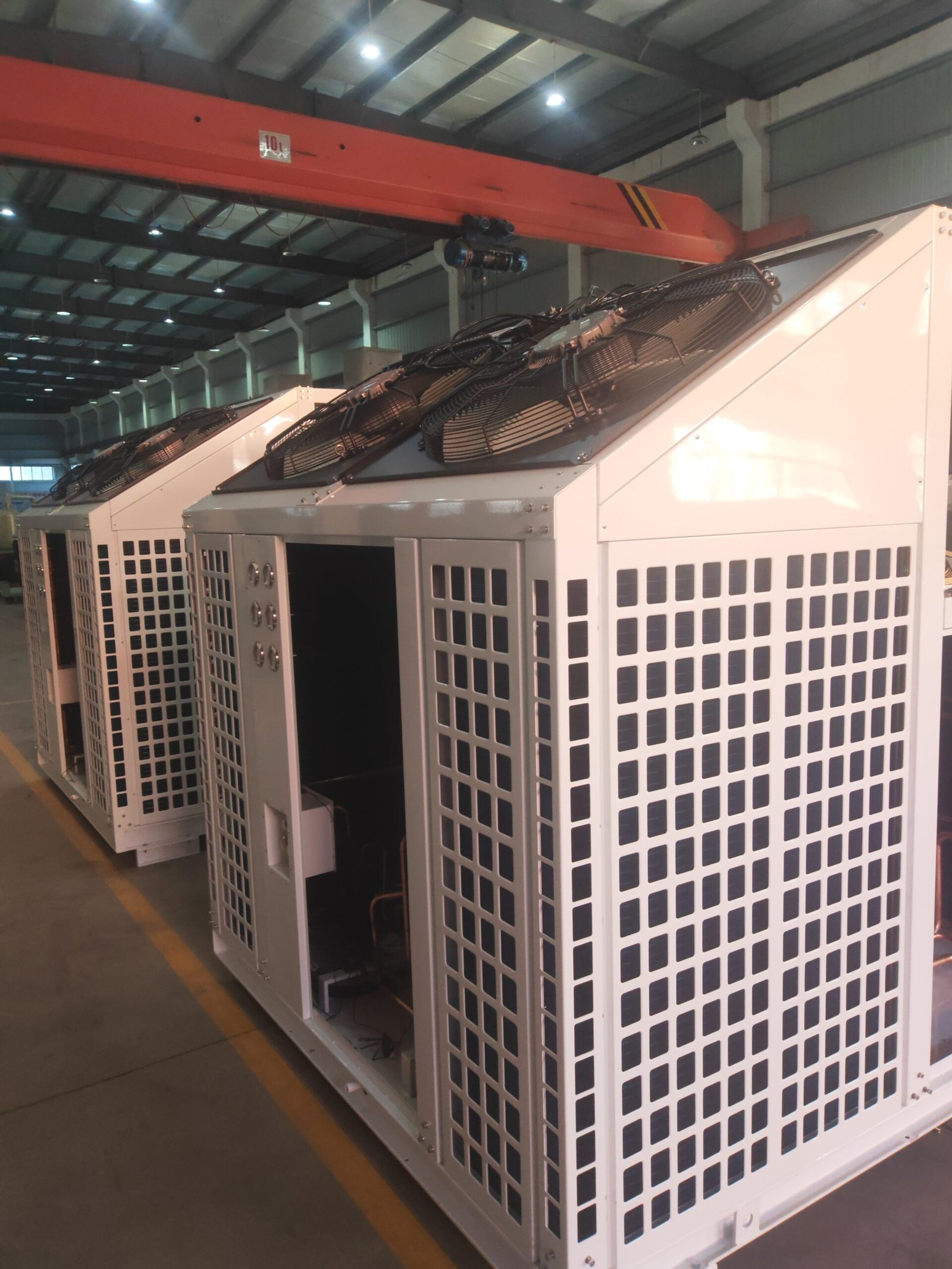
Vertical
Large halls, factories and exhibition centers.
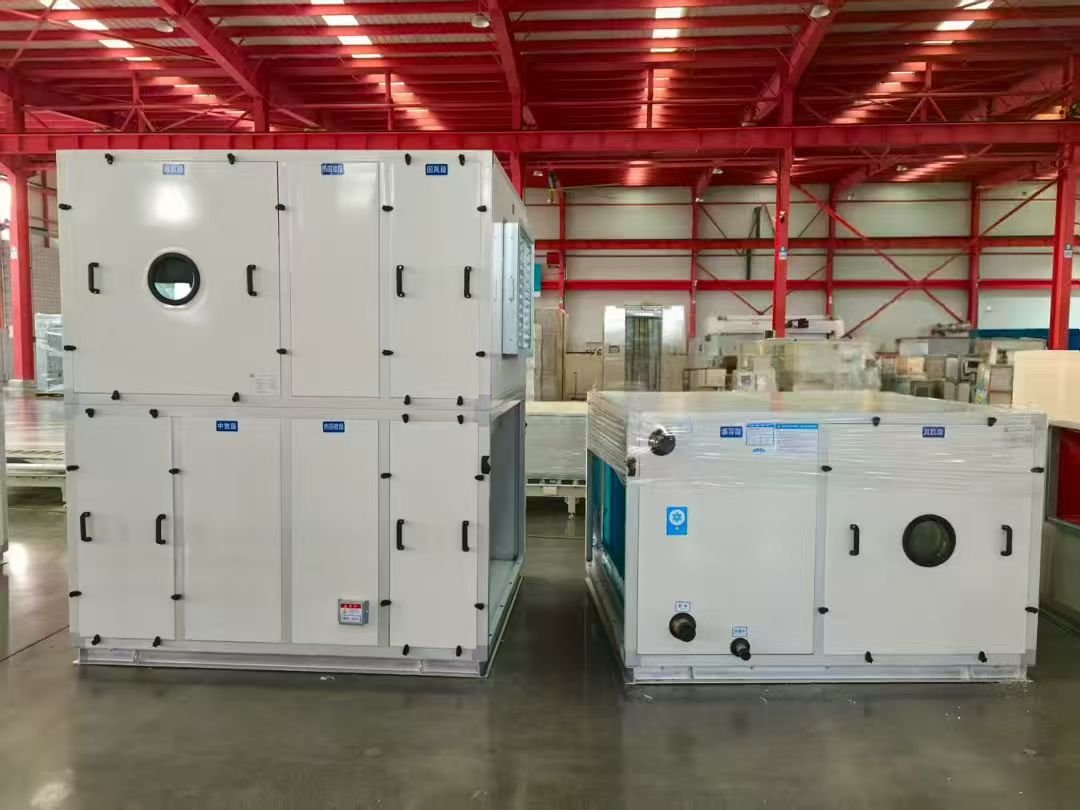
Horizontal
Basements, technical rooms and low-ceiling spaces.
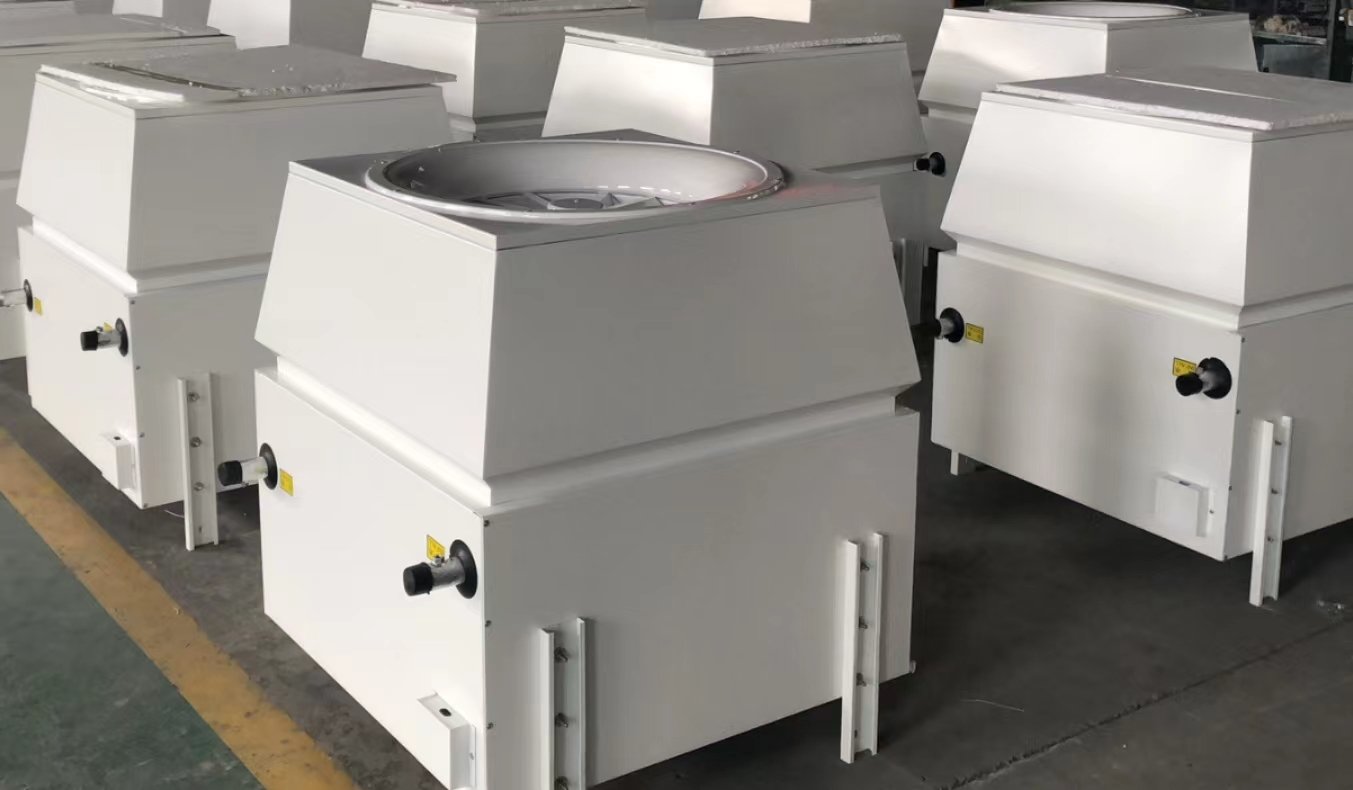
High & Large-Space Air Handling Unit
For buildings 3–30 m high — warehouses, sports halls, exhibition centers and workshops — with directional nozzles that push conditioned air down to the occupied zone where standard frames can’t reach.
For the full frame range and configuration options, see the SongXin air handling unit overview.
| Frame | Airflow | Cooling | Noise | Typical use |
|---|---|---|---|---|
| Ceiling-suspended | 1,000–20,000 m³/h | 12–196 kW | ≤68 dB(A) | Offices, malls, smaller rooms |
| Vertical | 2,000–40,000 m³/h | 18–610 kW | ≤75 dB(A) | Large halls, factories, exhibition centers |
| Horizontal | 2,000–40,000 m³/h | 18–610 kW | ≤75 dB(A) | Basements, technical rooms, low-ceiling spaces |
Pressure Budget & Fan Selection
Assume a vertical AHU at 20,000 m³/h (well within the 2,000–40,000 m³/h range) with an estimated 650 Pa external static pressure, including pre-filter, medium filter, cooling coil, heating coil and silencer.
| Pressure component | Concern |
|---|---|
| External duct system | 650 Pa from consultant/contractor |
| Pre-filter | Initial and final pressure drop |
| Medium filter | Higher final pressure drop as it loads |
| Cooling coil | Depends on coil rows and face velocity |
| Heating coil | Adds resistance if included |
| Silencer | Can add significant pressure drop |
| Internal transitions | Poor layout adds extra loss |
The fan selection should not simply say “20,000 m³/h.” It should show design airflow, external static pressure, internal losses, motor power and the operating point. If filter final pressure is ignored, the AHU meets airflow only when filters are new.
Cooling Coil: Sensible & Latent Load
A modular AHU handling outdoor air in a humid climate needs much more coil capacity than a return-air unit at the same airflow, because outdoor air includes both sensible heat and moisture. Provide outdoor design dry-bulb and relative humidity (or wet-bulb), return-air condition, fresh-air percentage, supply-air temperature target, supply-air humidity target if required, and chilled-water supply/return temperature. If only airflow is provided, the coil cannot be sized correctly.
For coil selection, also provide entering and leaving air dry-bulb/wet-bulb conditions, entering and leaving water temperatures, sensible and latent load if available, condensate drainage requirement and whether reheat or humidification is needed.
Face Velocity & Water Carryover
Coil face velocity affects coil size, pressure drop, dehumidification and water carryover. Too high a face velocity carries condensate downstream, causing wet filters, duct contamination and poor hygiene. Consider coil face area, rows, fin spacing, drain-pan design, eliminator requirement, cleaning access and air-side pressure drop. For humid climates, hospitals, food processing and process HVAC, coil drainage and cleanability are core selection points.
Filter Final Pressure & Fan Margin
Filters become dirty in operation, so a fan sized only for clean-filter pressure cannot maintain design airflow over time. Ask suppliers to state filter grade, initial (clean) pressure drop, final (dirty) pressure drop assumed before replacement, access side, and whether a filter differential-pressure switch or gauge is included. This is especially important for industrial, healthcare and dusty environments. Specify the filter language your project uses, such as MERV, ISO 16890 ePM grades or HEPA level for clean or hygienic areas.
AHU Control Sequence
A modular AHU should be selected with its control strategy. Common points include:
- Supply- and return-air temperature sensors
- Fresh- and return-air damper actuators
- Chilled-water valve, heating valve or heater control
- Filter differential-pressure switch
- VFD or EC-motor fan speed control and supply-air pressure sensor
- Humidity sensor if required, freeze-protection thermostat, and fire/smoke interlock where the project requires it
Clarify control responsibility: some buyers need only a motor and electrical cabinet, others a complete control panel with sensors, actuators and BMS communication.
Application-Specific Configurations
| Application | Typical configuration |
|---|---|
| Commercial buildings | Mixing, filter, cooling coil, heating coil, fan and BMS communication |
| Hospitals | Stronger filtration, hygienic casing, drainage design, humidity control, careful air distribution |
| Industrial facilities | Corrosion-resistant casing, higher-pressure fans, special filtration, rugged construction |
| Hotels | Low noise and maintainability for public areas and fresh-air systems |
SongXin supplies AHUs into documented application areas including industrial manufacturing, healthcare, exhibition centers and high-end public buildings. Where chilled water is the cooling source, the AHU can be coordinated with SongXin water-cooled chillers for a single-supplier air-and-water package.
Common Selection Mistakes
- Selecting by airflow only. Static pressure, coils, filters, casing and controls change performance at the same airflow.
- Underestimating static pressure. The fan must be sized for realistic, dirty-filter conditions.
- Ignoring filter pressure drop. Airflow falls after a few weeks if only clean-filter pressure is considered.
- No humidity target. Without an RH target the coil may lack latent capacity.
- Poor drainage and access. Condensate carryover and inaccessible sections cause hygiene and maintenance problems.
Technical Submittal Checklist
A professional submittal should include design airflow and tolerance; external static pressure; cooling coil entering/leaving air and water conditions; heating coil source and winter design; filter grade, arrangement and access; fan type, motor power, drive and speed control; casing construction, insulation, leakage and IP rating; noise data or acoustic treatment; control scope and BMS interface; service access and pull space; and installation manual and drawings.
Frequently Asked Questions
What is the most important data for modular AHU selection?
Why is external static pressure important for AHUs?
Can a modular AHU control humidity?
Can a modular AHU use chilled water or DX cooling?
What filter grade should I choose?
What casing and protection rating do SongXin AHUs use?
Request Modular AHU Selection
Send your airflow, static pressure, coil conditions, filter grade and installation layout. SongXin will review your project data and recommend a configuration within 24 hours.
Request Modular AHU Selection