Chilled water systems are often preferred for larger, centralized, multi-zone buildings. DX systems are often favored for smaller, decentralized, retrofit, or fast-track projects. But a chilled water system vs DX system comparison is never as simple as picking one based on building size alone. The right choice depends on zoning complexity, budget structure, installation constraints, operating priorities, and long-term maintenance strategy.
This article is a selection guide, not a system theory lesson. It is written for HVAC distributors, EPC contractors, consulting engineers, facility procurement managers, and building developers who need to evaluate both options against real project conditions — and make a defensible recommendation.
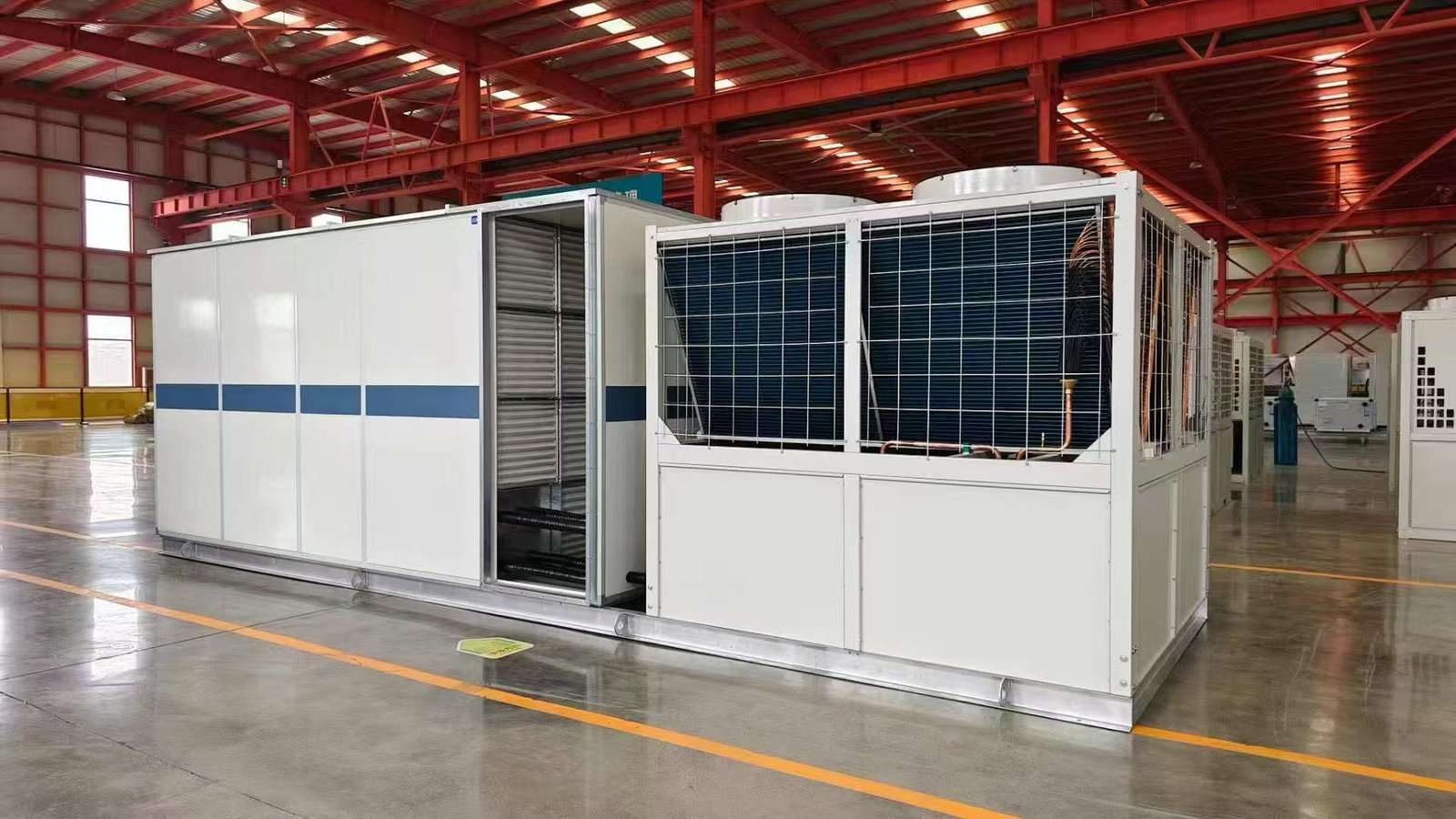
A chilled water system uses a central chiller to cool water, typically to around 6–7 °C. Pumps distribute this chilled water through insulated pipes to AHUs, FCUs, or other terminal devices throughout the building.
The core infrastructure includes the chiller, circulation pumps, a pipe distribution network, expansion vessels, water treatment equipment, and the terminal air-side units. This makes chilled water systems more infrastructure-intensive than DX, but also more scalable for large, complex buildings.
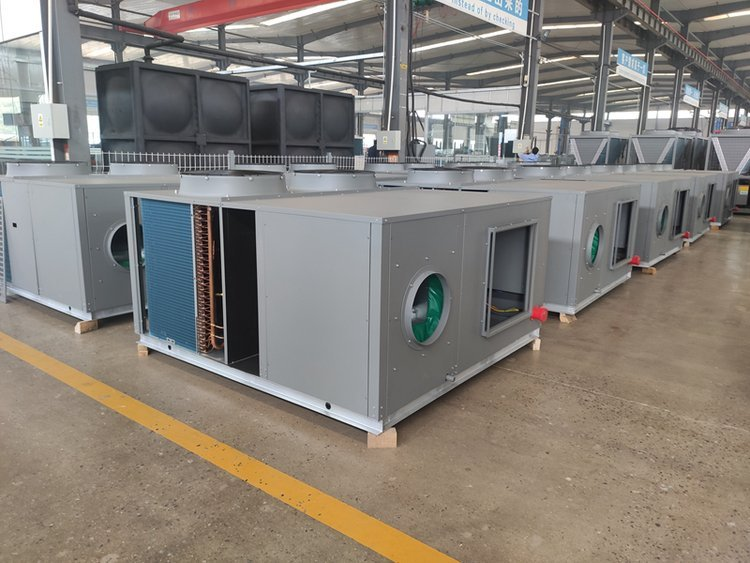
DX stands for direct expansion. In a DX system, refrigerant flows directly to the indoor coil, where it evaporates and absorbs heat from the supply air. There is no intermediate water loop.
Typical configurations include split systems, packaged units, ducted DX units, and VRF-based applications. No water pumps, no chilled water pipes, and no cooling towers — making DX faster to install and simpler to maintain for small to mid-scale projects.

The key difference: a chilled water system uses a water loop between chiller and point of cooling. A DX system delivers refrigerant directly to the air-handling point.
Step 1: The chiller produces chilled water by extracting heat through a refrigeration cycle within the chiller unit itself.
Step 2: Circulation pumps move the chilled water through insulated piping to AHUs, FCUs, or other terminals.
Step 3: At each terminal, chilled water flows through a coil. Indoor air passes over the coil, transferring heat to the water.
Step 4: Warmed return water flows back to the chiller. The chiller rejects absorbed heat through an air-cooled condenser or cooling tower.
Step 1: Liquid refrigerant enters the indoor evaporator coil and expands, absorbing heat from the supply air.
Step 2: The gaseous refrigerant flows to the compressor, which raises its pressure and temperature.
Step 3: The high-pressure gas moves to the outdoor condenser, releasing heat to ambient air and condensing back into liquid.
Step 4: The liquid refrigerant passes through an expansion device and re-enters the indoor coil to repeat the cycle.
This distinction drives most of the practical differences in infrastructure, installation, scalability, and maintenance. A chilled water system uses a water loop between the chiller and the point of cooling. A DX system delivers refrigerant directly to the air-handling point.
| Factor | Chilled Water System | DX System |
|---|---|---|
| Application Scale | Larger commercial, institutional, industrial buildings | Smaller commercial, retail, decentralized facilities |
| Upfront Investment | Higher — chiller plant, piping, pumps | Lower — simpler infrastructure |
| Installation | More complex — plant room, piping, water treatment | Simpler — refrigerant lines + electrical |
| Space Required | Dedicated plant room, pipe risers, cooling tower | Compact distributed outdoor units |
| Operating Efficiency | Better at large scale with plant optimization | Competitive at smaller scale; inverter-driven |
| Maintenance Scope | Chiller, pumps, water treatment, valves, tower | Compressor, condenser, refrigerant, filters |
| Scalability | Strong — add terminals to existing plant | Phased expansion possible; each unit independent |
| Commissioning Speed | Slower — full system integration required | Faster — individual units commission independently |
| Best-Fit Projects | Hospitals, hotels, campuses, high-rises, industrial | Retail, offices, fit-outs, labs, phased builds, retrofits |
Building size alone does not determine the answer. The factors below interact, and the right choice depends on which combination of constraints applies to the project.
Larger multi-zone buildings with varying load profiles generally align better with chilled water. Smaller buildings or facilities with a few independent zones favor DX. Zoning complexity matters as much as total floor area.
DX usually requires less upfront investment; chilled water may deliver better value over a long operating life. Buyers should request a project-specific lifecycle cost analysis rather than relying on general assumptions.
DX is often the faster, more practical option in retrofit and tight-site conditions. Chilled water needs more coordination and lead time. Schedule pressure should not be underestimated as a selection factor.
Neither system is inherently more efficient. Chilled water with variable-speed drives and intelligent staging performs well at large scale. DX with inverter compressors excels in small-to-mid applications.
Chilled water involves broader maintenance scope — chiller service, pump seals, water treatment, tower cleaning. DX is typically simpler for facilities without a large technical team.
Chilled water offers stronger long-term expansion flexibility. DX suits phased or isolated additions. Centralized BMS integration is often more straightforward in chilled water plants.
Rather than applying a generic rule, match the project conditions to the right system architecture:
A supplier or consulting engineer cannot give useful guidance without project-specific data. Before requesting quotations, organize the following:
Songxin supports early-stage system selection by reviewing project conditions — building layout, application type, zoning requirements, and site constraints — and recommending configurations that fit. From compact direct expansion units to large-capacity rooftop packaged DX configurations, as well as AHUs and FCUs for chilled water terminal applications.
A chilled water system is often the stronger choice for larger, centralized, multi-zone facilities that prioritize long-term operating efficiency and future flexibility. A DX system is often the better fit for smaller, decentralized, retrofit, or schedule-driven projects that need simpler infrastructure and lower initial investment.
There is no universal rule. The right system depends on the specific combination of building size, zoning, budget, site constraints, operating profile, and maintenance capability.
Share your building layout, zoning plan, and operating requirements with Songxin HVAC’s technical team. We can help you compare configurations and recommend the equipment that fits — whether that means DX units, chilled water terminals, or a combination of both.