

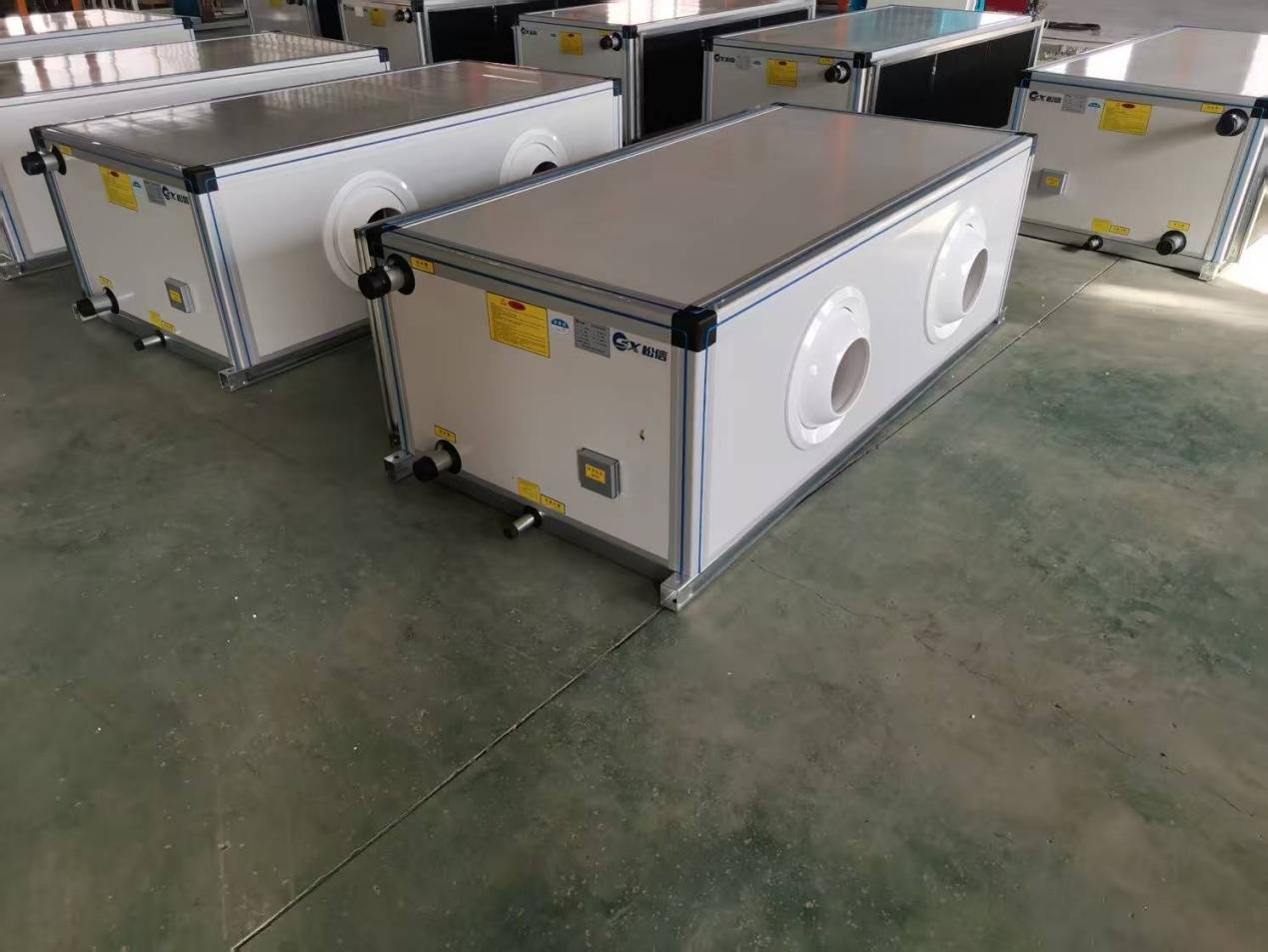
Why an AHU FAT matters
A factory acceptance test (FAT) turns a submittal into observable evidence before the unit is packed. It does not replace site commissioning. It gives the buyer a controlled opportunity to verify the exact configuration, workmanship, measurements and open deviations while correction is still cheaper than a return visit.
Eurovent’s AHU programme identifies airflow, available static pressure, power input, sound, cooling capacity, pressure loss and energy performance among the characteristics that can be certified. Its programme references EN 1886 for mechanical performance and EN 13053 for rating and performance. Use the project specification to decide which tests are witnessed and which are document reviews.
Freeze the test basis first
Before travel or video witnessing, approve one test plan containing model code, serial number, revision, fan duty, coil duty, filter class, design airflow, external static pressure, electrical supply, controls sequence and acceptance tolerances. A test against an earlier drawing is not evidence for the delivered unit.
| FAT item | Record before testing | Buyer acceptance evidence |
|---|---|---|
| Identity | Model, serial, drawing and revision | Nameplates and as-built drawing match |
| Airflow | Design airflow and static pressure | Calibrated measurement report |
| Fan/electrical | Motor, VFD/ECM, voltage and current | Test values and alarm log |
| Coil | Fluid, entering/leaving conditions and flow | Capacity, pressure-drop and leak records |
| Casing | Panel, door, seal and thermal-break specification | Inspection and leakage result |
| Controls | Sensors, safeties, BMS points and sequence | I/O test and signed point list |
Inspect construction before energising
Check panel gauge, frame joints, thermal breaks, access doors, hinges, gaskets, inspection lights, drain-pan slope, coil pull space and filter rails. Confirm that service doors can open without removing unrelated equipment. Photograph serial plates and hidden sections before panels are closed.
For hygienic or process AHUs, inspect cleanable surfaces, sealant, internal corners, drain-pan material, coil headers and inspection access. Confirm that the final filter arrangement matches the approved pressure-drop budget. A filter class printed on a general brochure is not proof that the selected filter, frame and gasket were installed.
Witness airflow, pressure and power
The fan test should show airflow at the scheduled external static pressure, fan speed, motor input and control response. Record the instrument ID and calibration date. Test at design duty and, where specified, at minimum and maximum control points. Confirm rotation, proving switches, high-static alarms, filter alarms and loss-of-airflow shutdown.
Daikin Applied’s AHU specification illustrates the type of measurable result buyers can request: casing leakage can be tested at design positive and negative pressure using calibrated pressure and flow equipment, with a written report issued to the owner’s representative. Your project may specify a different leakage class; write the exact class and pressure into the purchase specification.
Verify coils, drains and frost protection
For a cooling coil, record entering/leaving air, entering/leaving water or refrigerant conditions, flow, pressure drop and capacity calculation. Check the coil circuiting, distributor, expansion device scope and sensor locations. For a DX coil, confirm that the outdoor combination and indoor coil match the approved schedule.
Flood the drain pan or use the approved method to verify drainage, trap arrangement and overflow protection. Test low-temperature, freeze and loss-of-flow safeties where fitted. The FAT should identify which tests are factory tests and which must be repeated on site.
Test controls as a sequence, not isolated points
Run the sequence from enable to normal operation, staging, alarm, recovery and shutdown. Verify fan start before cooling, compressor staging, valve modulation, outdoor-air damper position, smoke/fire interlocks, condensate alarms and BMS values. Compare displayed values with calibrated reference instruments. Record failed points and retest them after correction.
Documents required for release
- Approved GA, wiring, controls and coil drawings.
- Final bill of materials and component model list.
- Factory test report with instrument IDs and calibration dates.
- Fan curve, coil selection and pressure-drop data.
- Electrical test, insulation/continuity results where specified.
- Leak or pressure-test records for coils and refrigerant circuits.
- Filter certificates and spare-part list.
- Packing list, lifting points, shipping protection and storage instructions.
- Deviation register with owner disposition.
Do not release a unit because the test was “completed” if the report omits the measured value, test condition, instrument or acceptance criterion. Mark the result pass, pass with approved deviation, or fail—retest required.
A practical release gate
The purchaser, consultant and manufacturer should sign the test record only after identity, construction, performance, controls, documents and deviations are closed. FAT acceptance means the tested configuration is ready to ship; it does not waive the installer’s obligation to protect the unit, connect it correctly, balance the system and complete site commissioning.
For a project-specific AHU FAT package, send SongXin the airflow, static pressure, air conditions, fluid temperatures, filtration, sound, controls, certification, delivery and witness requirements. See SongXin’s AHU supplier page and quality-control page for the information path.
FAT sequence a witness can follow
- Document freeze: compare the approved drawing, bill of materials and nameplate.
- Construction inspection: open representative panels and record seals, thermal breaks, drains, coil headers and filter frames.
- Dry run: energise the fan, verify rotation, vibration, controls and emergency stop.
- Air performance: measure airflow and static pressure at the agreed duty and control points.
- Thermal performance: stabilise entering conditions, measure coil flow and temperatures, and record capacity calculation.
- Controls and alarms: run enable, staging, failure, reset, fire and shutdown sequences.
- Closeout: list deviations, assign owners, repeat failed tests and sign the release record.
Example acceptance record
Illustrative example only. Values below are assumptions or worksheet entries, not verified SongXin project results.
| Test | Design value | Measured value | Instrument / tolerance | Result |
|---|---|---|---|---|
| Supply airflow | 20,000 m³/h | Record at FAT | Calibrated traverse / project tolerance | Pass/fail |
| External static pressure | 800 Pa | Record at FAT | Calibrated manometer | Pass/fail |
| Cooling entering/leaving air | 28/14 °C | Record at FAT | Calibrated DB/WB sensors | Pass/fail |
| Fan motor input | Approved schedule | Record at FAT | Power analyser | Pass/fail |
| Casing leakage | Specified class | Record at FAT | Pressure/flow rig | Pass/fail |
The blank “measured value” cells belong in the signed report, never in the buyer’s acceptance email. If factory conditions cannot reproduce the design point, record the limitation and define the site test that will close it.
Sources
- Eurovent Certita, AHU certification programme.
- Daikin Applied Vision AHU specification (example leakage-test documentation).
- Daikin Applied Europe, factory acceptance testing.
- SongXin HVAC, Air Handling Unit.