

Single Screw vs Twin Screw Chiller: Which Compressor Type Fits Your Project?
Single screw vs twin screw chiller selection is not a simple “which is better” decision. The better choice depends on cooling capacity, part-load profile, service access, vibration requirement, refrigerant, supplier support and the exact operating condition.
Balanced-force story only matters when the full package proves it.
Single screw designs can be attractive for stable operation and vibration-sensitive projects, but the buyer still needs corrected capacity, controls, service instructions and parts lead time.
Widely used, but still needs project-condition evidence.
Twin screw packages are common in larger chilled-water systems. The useful proof is load-point performance, compressor brand, warranty scope and local service support.
How the Two Screw Compressor Types Work
Scope boundary: this page compares compressor architecture and package evidence; it is not a general chiller supplier or plant-design page. For water-side scope, plant accessories and procurement workflow, use the water-cooled chiller supplier selection guide. For high-ambient air-cooled performance, use the air-cooled screw chiller ambient-capacity guide.
A single screw chiller uses one main screw rotor with gate rotors, while a twin screw chiller uses two intermeshing rotors. Both compress refrigerant by reducing pocket volume as the rotors turn. The mechanical layout changes bearing loads, sealing path, oil management and service practice.
The key mechanism is compression force balance. A single screw design is promoted by some manufacturers because the compression forces around the main rotor are more balanced. A twin screw design uses paired rotors, and its performance depends heavily on rotor profile, bearing design, oil injection, clearances and unloading method.
Refrigerating-system safety and environmental requirements are addressed by ISO 5149-1, while design, construction, testing, marking and documentation are addressed by ISO 5149-2. Refrigerant designation and safety classification are covered by ISO 817:2024.
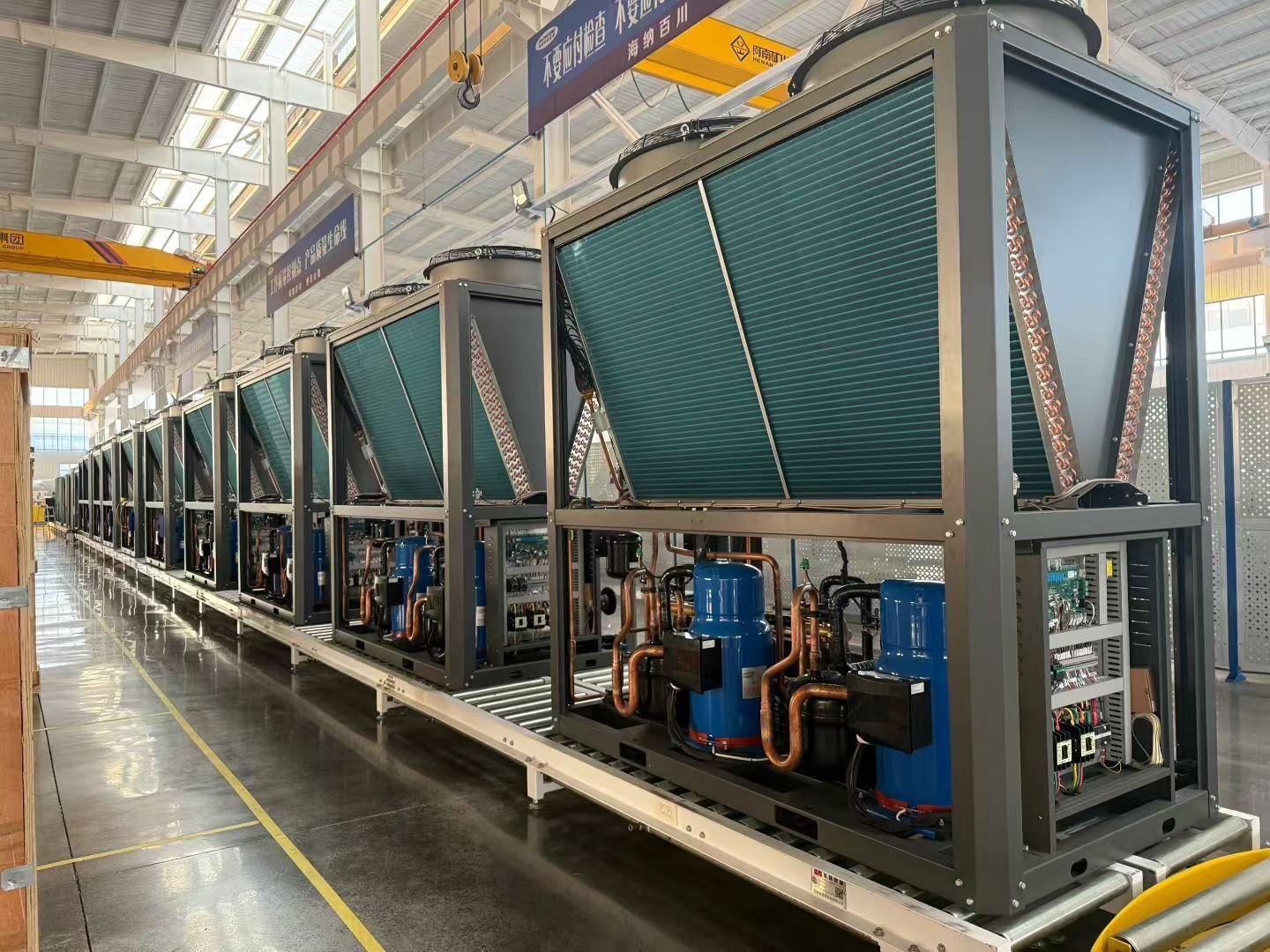
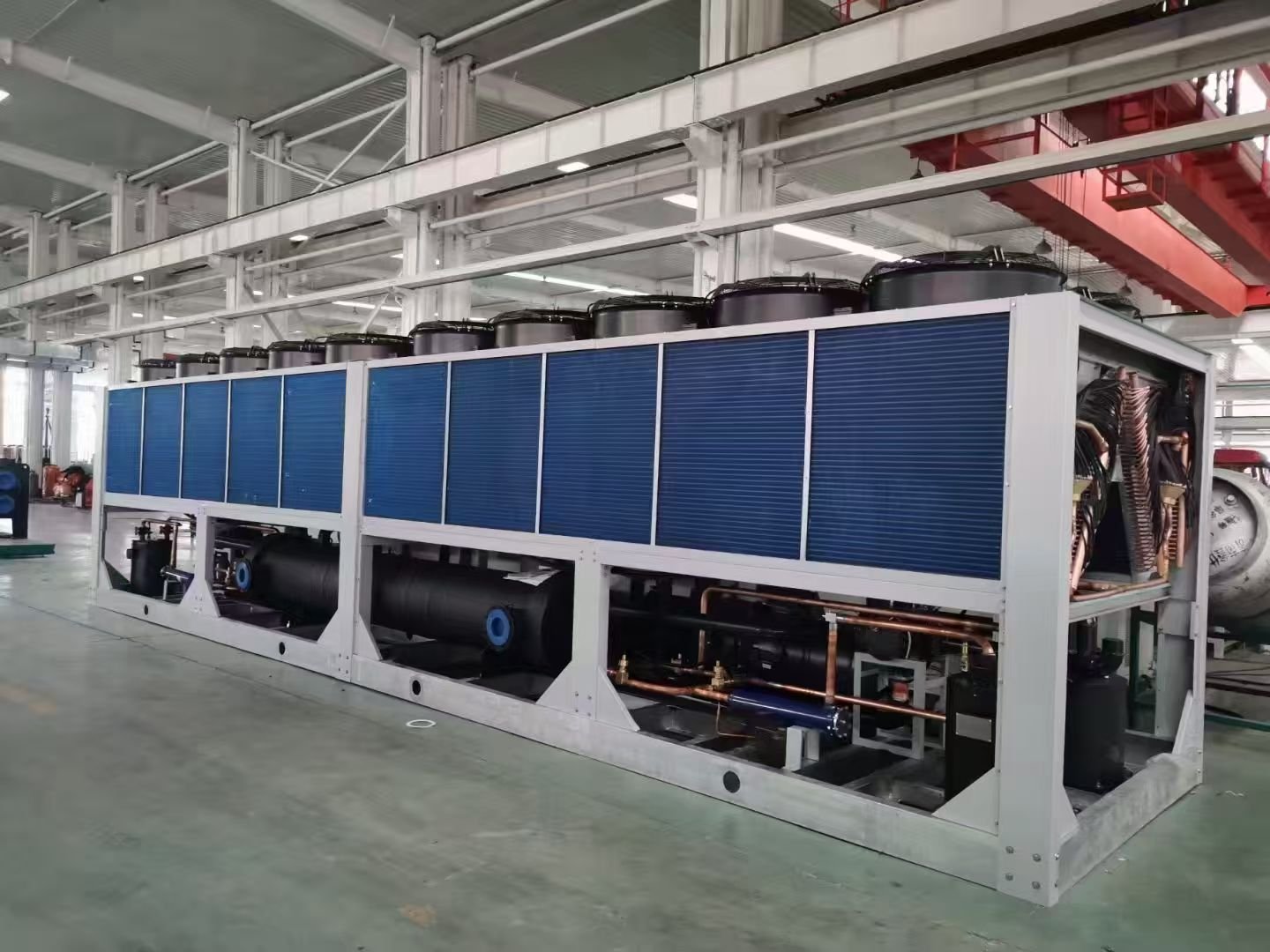
Single Screw Layout
Project value comes from documented stability, vibration data, service instructions and supplier support, not the name alone.
Twin Screw Layout
Performance depends on rotor profile, bearings, oil injection, unloading method and package-level controls.
Selection Matrix for B2B Buyers
This matrix gives an early comparison framework before final supplier selection. Use it with rated performance from AHRI 550/590, AHRI 551/591, EN 14511 or the project-specified standard.
Medium to large loads, model-dependent.
Medium to very large loads, model-dependent.
Request exact kW range at project conditions.
Strong when unloading control is proven.
Strong when slide valve or inverter control is proven.
Request IPLV/NPLV or project load-point data.
Balanced-force design can help when supplier data proves it.
Rotor pair design can be stable with correct bearings and mounting.
Request vibration data and installation limits.
Depends strongly on compressor brand and region.
Often easier to source in many markets.
Request spare parts lead time in days.
Specialized package with strong factory support.
Broad commercial and industrial chiller selection.
Choose the package with corrected capacity, service proof and clear warranty.
Compressor geometry alone does not guarantee project performance because condenser sizing, evaporator approach, refrigerant circuit design and control logic decide the delivered capacity at site conditions.
Worked Example: Capacity and Part-Load Fit
A worked calculation helps buyers separate compressor choice from chiller sizing. Assume an industrial project needs 900 kW of cooling and the process runs at 70% load for most production hours.
| Item | Value |
|---|---|
| Required peak cooling load | 900 kW |
| Dominant operating load | 70% |
| Dominant operating capacity | 630 kW |
| Chilled-water condition | 7/12 C |
| Early chilled-water flow at peak load | 154.8 m3/h |
| Early chilled-water flow at dominant load | 108.4 m3/h |
Chilled-water flow = cooling capacity / (1.163 x water delta T)

Peak load flow = 900 / (1.163 x 5) = 154.8 m3/h
Dominant load flow = 630 / (1.163 x 5) = 108.4 m3/hRecommendation: request both full-load and 70% load-point performance for the single screw and twin screw options. If one option has a better compressor story but cannot provide stable operation near 630 kW, it is not the better project choice.
In a SongXin process-cooling project review for a 600 TR, about 2110 kW, two-chiller installation in Southeast Asia, the engineering team compared screw-compressor staging before recommending two units instead of one oversized machine.
Maintenance and Lifecycle Questions
Maintenance risk changes the real cost of a single screw vs twin screw chiller. Buyers should compare the service method, not only the purchase price. A chiller that saves 3% in initial cost but has weak spare parts support is risky for a production line or public building.
For a commercial building with comfort cooling, service convenience and noise matter. For industrial cooling, production continuity and repair lead time carry more weight because a stopped chiller can stop equipment, molds, laboratories or process water loops.
RFQ Data to Send Before Selection
A useful single screw vs twin screw chiller RFQ should request comparable package data. Send your project data first, then ask the supplier to recommend the compressor configuration.
For engineering support, send your project cooling load, water temperatures, operating schedule and site condition when you request a quote from SongXin. If the project is air-cooled and located in a hot region, also read the air cooled chiller ambient temperature capacity guide before approving the compressor option.
Buyers comparing chilled-water systems can also review SongXin’s air-cooled screw chiller product range and air-cooled screw chiller supplier page before sending final RFQ data.
Common Procurement Mistakes
Approving a compressor type without corrected performance
A single screw quotation at one condition and a twin screw quotation at another condition cannot be compared. Use the same kW load, water temperature, ambient or condenser-water condition, voltage and refrigerant.
Treating part-load as a brochure claim
If the project runs near 60-80% load for most hours, request load-point power input, unloading method and leaving-water stability.
Ignoring spare parts lead time
A compressor with excellent efficiency but a 45-day parts delay is risky for continuous process cooling. Ask for stocked items, sensor lists and emergency support before purchase.
Forgetting system scope
Pumps, buffer tank, flow switch, strainer, expansion tank and BMS interlock affect whether either compressor type operates smoothly.
Specification Checklist
Use this checklist before approving a single screw or twin screw chiller proposal:
FAQ
These FAQ answers use the same rating-condition and safety-standard basis referenced above under EN 14511, ISO 5149-1, ISO 5149-2 and ISO 817.
Is a single screw chiller better than a twin screw chiller?
A single screw chiller is not automatically better than a twin screw chiller. The better option is the complete package that proves corrected capacity, stable part-load operation, service support and documentation at your project condition. Use compressor type as one selection factor, then compare condenser, evaporator, controls, refrigerant, service access and factory test evidence.
When should I choose a twin screw chiller?
Choose a twin screw chiller when the supplier has proven model data for your kW range, project water temperatures, part-load profile and local service plan. Twin screw packages are widely used in commercial and industrial chillers, so spare parts and technician familiarity can be advantages in many markets. Confirm the exact compressor brand and service channel before purchase.
When should I choose a single screw chiller?
Choose a single screw chiller when the supplier can document stable operation, corrected performance, vibration data and spare parts support for your project. Single screw designs are attractive in some applications because of balanced compression forces, but that advantage only matters when the full chiller package is well engineered and supported through commissioning and maintenance.
What data should I send for single screw vs twin screw selection?
Send cooling capacity in kW, chilled-water entering and leaving temperature, ambient or condenser-water condition, operating schedule, part-load profile, voltage, refrigerant requirement, noise limit, installation layout and required standards. These inputs allow the supplier to compare compressor options under the same condition instead of quoting nominal capacity from different catalog points.
Does compressor type affect chiller efficiency?
Compressor type affects efficiency, but the delivered chiller efficiency also depends on heat exchangers, refrigerant, fan or tower condition, control logic and part-load operation. A twin screw and single screw comparison is meaningful only when both are selected at the same water temperature, heat-rejection condition and load profile, with power input stated at each point.
Need a compressor option checked before RFQ approval?
Send cooling load, chilled-water temperatures, operating profile and site condition. SongXin can compare compressor configuration as part of the complete chiller package.
Review Record
Technical review: SongXin HVAC Engineering Team, screw chiller compressor selection review, 2026-07-13.
Sources
- AHRI 550/590 and AHRI 551/591, “Performance Rating of Water-Chilling and Heat Pump Water-Heating Packages,” ahrinet.org
- European Commission policy reference for EN 14511-2 rating conditions, ec.europa.eu
- ISO 5149-1:2014, “Refrigerating systems and heat pumps – Safety and environmental requirements – Part 1,” iso.org
- ISO 5149-2:2014, “Refrigerating systems and heat pumps – Safety and environmental requirements – Part 2,” iso.org
- ISO 817:2024, “Refrigerants – Designation and safety classification,” iso.org