In hot and humid regions such as Southeast Asia and South Asia, ventilation alone does not always improve indoor comfort. In many homes and small commercial buildings, bringing in untreated outdoor air actually increases indoor moisture, creates a sticky feeling, and raises the risk of mold, condensation, and musty odors. That is why more project owners and distributors are looking for a system that handles fresh air and humidity control together — and why the fresh air dehumidifier, also commonly called a ventilating dehumidifier or ducted dehumidifier, has become a practical solution for this exact problem.
Unlike a portable dehumidifier, a ducted fresh air dehumidifier is designed for concealed, long-term, multi-room operation. Unlike an ERV, its core job is not energy recovery but active moisture removal. In warm and humid climates, that distinction matters more than most buyers initially realize.
This guide explains how a ducted fresh air dehumidifier works, when it makes practical sense, how it compares with the alternatives, and what to evaluate before selecting a system for a villa, apartment, clinic, office, or small commercial project.
Modern buildings need fresh air. Occupants need cleaner air, lower odor concentration, and better dilution of indoor pollutants. In many projects, mechanical ventilation is a basic requirement for acceptable indoor air quality.
However, in humid climates, fresh air creates a second problem. Outdoor air often carries a high moisture load before it even enters the building. If that air is introduced without treatment, indoor humidity rises quickly — sometimes to the point where occupants feel the space is cool but still uncomfortable. The air conditioner lowers temperature, but the indoor environment still feels damp, heavy, or sticky.
The symptoms are familiar to anyone who has lived or worked in a tropical or subtropical climate. Wardrobes smell musty. Corners and ceilings show signs of mold. Cold surfaces — supply grilles, ducts, window frames — develop condensation. These problems are especially common in villas, apartments, clinics, retail spaces, and offices where outdoor air is brought in but humidity was never treated as a separate design issue.
Air conditioning alone does not reliably solve this. In many buildings, the AC system primarily handles sensible cooling while the latent load from outdoor air remains uncontrolled. A fresh air dehumidifier addresses that moisture burden directly — removing excess humidity from the incoming air before it is distributed indoors. That is one reason HVAC industry guidance consistently positions ventilating dehumidifiers as particularly relevant for warmer and more humid climates rather than cold ones.
A fresh air dehumidifier does more than remove moisture from recirculated indoor air. It draws in outdoor air through a dedicated intake, filters it, removes moisture from it, and then sends the treated air through a duct network to one or more indoor spaces. In the market, whole-house and ventilating dehumidifier products are consistently described this way: they combine mechanical outdoor air ventilation, filtration, and dedicated dehumidification in a single ducted system.
In practical terms, that means the system addresses several goals at once. It introduces fresh outdoor air rather than relying only on recirculated room air. It lowers the moisture content of that air before supply, which helps stabilize indoor relative humidity. It supports a cleaner indoor environment through basic filtration. And in suitable designs, it can help maintain slight positive indoor pressure, which reduces uncontrolled humid-air infiltration through gaps and leaks in the building envelope.
For property owners, the main benefit is straightforward: the home or apartment feels drier and more comfortable without visible plug-in equipment in every room. For contractors and distributors, the value is equally clear: one concealed ducted solution covers multiple rooms and delivers a more professional project result than a collection of portable machines.
Outdoor air enters the unit through a fresh air intake duct. The incoming air first passes through a filter stage to remove dust and larger particles. Depending on the model, additional filtration may be available for projects with stricter air quality requirements.
After filtration, the air moves across a cooling coil. The air is cooled below its dew point, and excess moisture condenses on the coil surface. The condensate is collected and drained away through a continuous drain connection — one of the fundamental differences between a ducted system and a portable dehumidifier, which typically depends on a water tank or a small condensate pump.
In some systems, the dried air then passes through a reheat section. The purpose of reheat is not to add space heating in the conventional sense, but to temper the air after dehumidification so it does not feel uncomfortably cold when supplied to occupied rooms. This is particularly useful in projects where comfort-focused delivery matters more than raw moisture removal capacity.
Finally, an internal fan — often an EC (electronically commutated) motor in modern designs — pushes the treated air into the duct network. That air can then be distributed to bedrooms, living rooms, offices, consulting rooms, or other occupied areas. In a properly designed system, this achieves more stable and uniform humidity control than treating each room independently.
Many buyers first compare a fresh air dehumidifier with a portable unit because portable dehumidifiers are familiar, widely available, and easy to purchase. But the difference between them is not just a matter of size. It is a difference in system role.
A portable dehumidifier handles one room or one localized problem area. It suits a homeowner who wants temporary humidity reduction in a bedroom, basement, or storage space. It sits visibly in the room, produces noise in the occupied space, and requires regular water tank emptying or a small drain arrangement. It does not provide fresh air ventilation.
A ducted fresh air dehumidifier is a permanent system solution. It is designed for concealed installation — typically above the ceiling or in a utility area — and connects to a duct network. It can serve multiple rooms, introduce filtered outdoor air, and discharge condensate automatically. Whole-house dehumidifier product positioning across the market consistently frames ducted units as broader-coverage systems that address ventilation and humidity on a whole-space basis, which portable units are not designed to do.
The right comparison is not “which is better in every case.” The better question is: what problem are you solving? If the issue is one damp room and you need a quick fix, a portable unit may be enough. If the issue is long-term comfort, multi-room coverage, concealed installation, or fresh air plus humidity control in a humid climate, a ducted fresh air dehumidifier is the more appropriate choice.
In projects already using ducted DX units for cooling, duct routing, available static pressure, and commissioning discipline should be aligned with the fresh air dehumidifier supply paths.
This is one of the most important comparisons for buyers in humid climates — and one of the most commonly misunderstood.
An ERV (Energy Recovery Ventilator) or HRV (Heat Recovery Ventilator) is primarily a ventilation device. Its core function is to exchange indoor and outdoor air while recovering part of the energy between the two air streams. That can improve ventilation efficiency and reduce some of the thermal penalty of bringing in outdoor air. But HVAC industry sources are unambiguous on one point: an ERV is not a dehumidifier. In humid climates, an ERV does not actively remove indoor moisture the way a dedicated dehumidifier does. In fact, in hot and humid conditions, an ERV can still introduce significant moisture into the building even after partial recovery through its enthalpy wheel or plate.
A fresh air dehumidifier has a fundamentally different primary job. It actively removes moisture and delivers drier air into the building. That is why building science and HVAC content consistently positions ventilating dehumidifiers as a stronger fit for warm and humid climates where the dominant concern is humidity control — not heat recovery.
That does not mean ERVs are unnecessary. In some higher-end or more engineered projects, an ERV and a dehumidifier can work together: one handles ventilation and energy exchange, while the other handles active moisture removal. But for many residential and small commercial projects in Southeast Asia and South Asia, where the core complaint is “the space feels damp even with the AC running,” a fresh air dehumidifier often addresses the buyer’s biggest pain point more directly and at lower system complexity than combining an ERV with a separate dehumidifier.
The practical decision framework is this: if the project’s primary concern is humidity and the climate is consistently warm and wet, a ventilating dehumidifier is usually the first priority. If the project also requires heat recovery — for example, in a mixed or cooler climate, or in a building with high energy-efficiency targets — then an ERV may be added or substituted depending on the specific conditions.
A fresh air dehumidifier is especially well-suited to projects where outdoor air is humid, indoor comfort is a priority, and concealed ducted installation is feasible. That combination is common across much of Southeast Asia and South Asia.
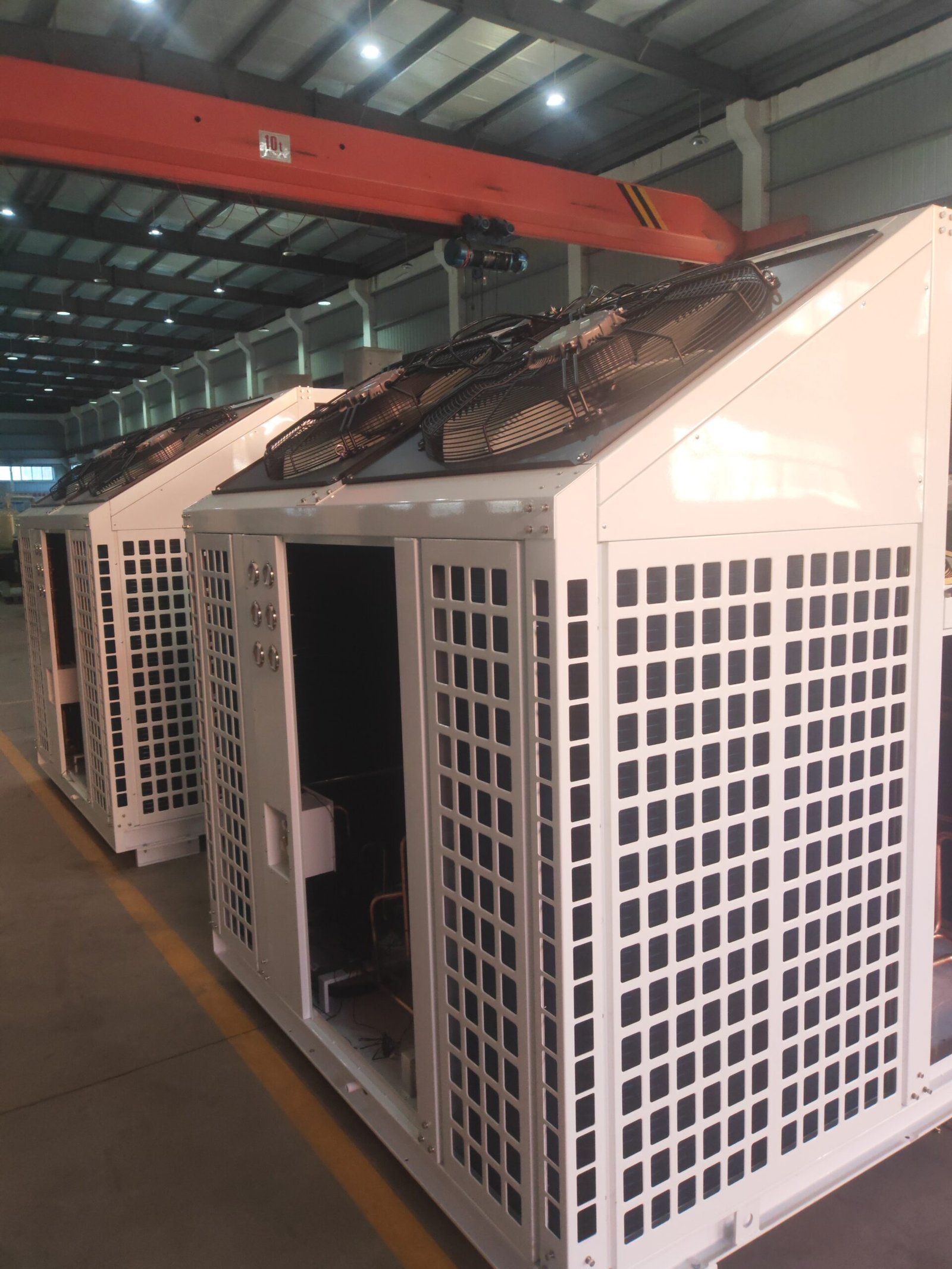

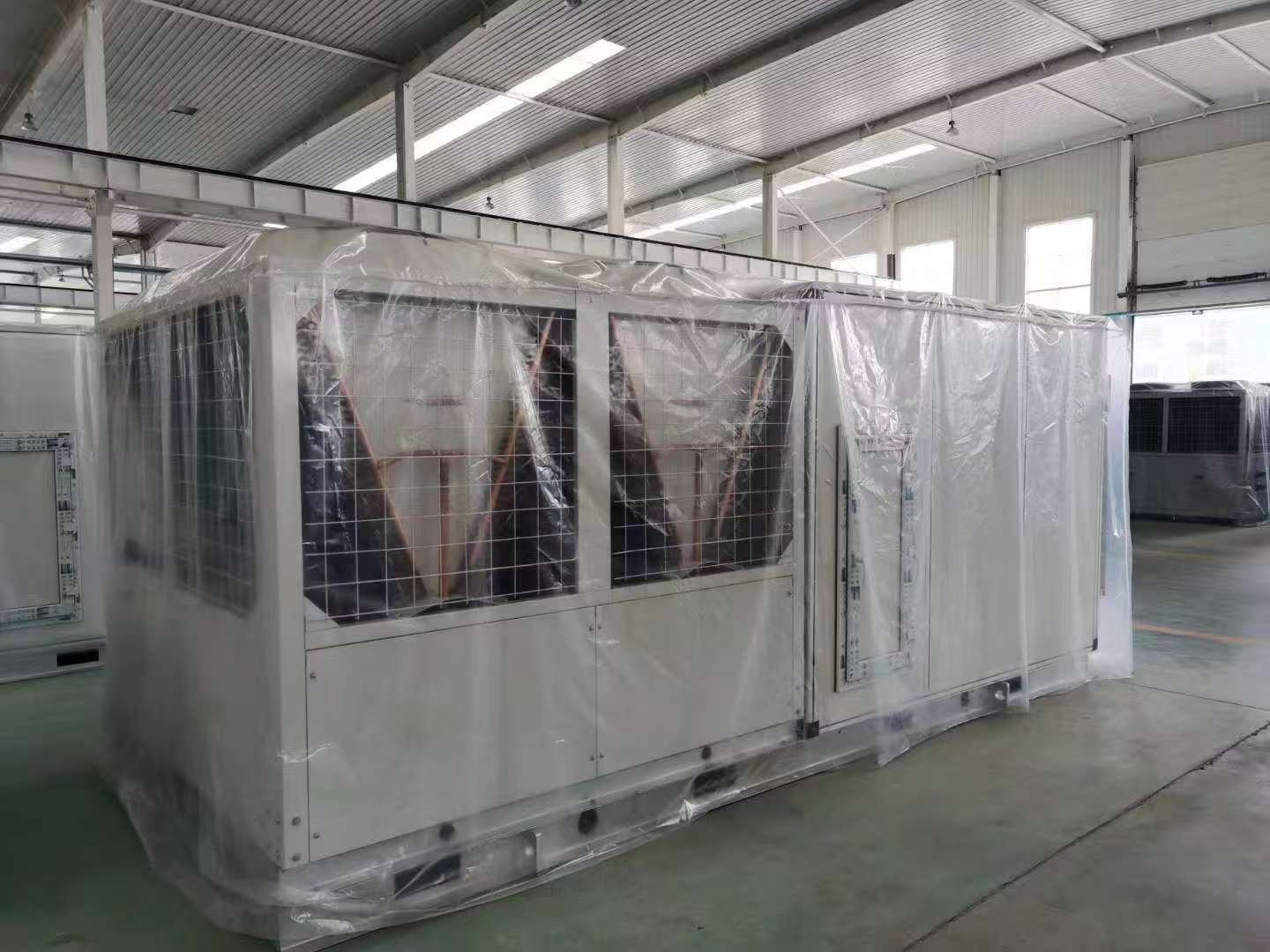
Hotels, serviced apartments, and renovation projects can also be strong applications, particularly when there is enough ceiling void for concealed ducting. In retrofit situations, installation conditions must be assessed carefully — but when the duct path is available, a concealed fresh air dehumidification system is typically easier to justify as an upgrade than multiple visible room-level machines.
One of the most common mistakes in the inquiry stage is selecting a unit based only on floor area. Area can serve as a rough reference, but it is not sufficient for a ducted fresh air dehumidifier.
A better starting point is fresh air requirement. How much outdoor air does the project actually need? That depends on the number of rooms, occupancy level, application type, and ventilation target. A villa, a clinic, and a small office of similar floor area may require very different fresh air volumes.
The next factor is humidity load. In hot and humid climates, the outdoor moisture condition matters at least as much as floor area — sometimes more. A coastal project in southern Vietnam or the Philippines faces a different moisture challenge than a similar-sized project in a drier inland location. Occupancy pattern also matters: a family apartment used mainly at night behaves differently from a busy clinic or retail store open throughout the day.
Duct layout and available static pressure also need attention. A unit may appear sufficient on paper, but the real-world result depends on whether treated air can actually be delivered properly through the duct system. Ceiling height, duct run length, number of supply grilles, and how the system integrates with any existing AC or concealed fan coil units (FCU) installation all affect actual performance.
That is why project-based selection is more reliable than catalog-only selection. For a more accurate recommendation, buyers should prepare a floor plan, project location (city or region), room count, application type, and basic information about the existing AC or ventilation system.
Ducting is not a secondary detail for this kind of system. It is part of the system itself. HVAC training content on ventilating dehumidifiers specifically highlights that return and supply arrangement, dedicated versus shared ducting, and discharge location all affect whether the system actually performs as intended.
In a typical installation, the unit has a return air side and a supply air side. The return may draw from a dedicated grille in the occupied space or from a suitable connection within the indoor air system, depending on the project design. The treated air is then supplied to the target indoor zones through a supply duct network. For most projects, the simplest and most effective strategy is to deliver dry air directly to where people actually spend time — bedrooms, living areas, workspaces — rather than treating the dehumidifier as a hidden accessory with no deliberate airflow plan.
Exhaust and relief air should also be considered. A fresh air supply system does not automatically replace all other ventilation functions. Bathrooms, kitchens, and similar wet or odor-heavy spaces often still need dedicated exhaust planning. This is an important consideration for both contractors and property owners, because it affects comfort, odor control, and overall air balance.
For larger projects that also require central air handling units, ducted fresh air dehumidification should be coordinated with static pressure budgets and control sequences—not treated as an isolated add-on.
In suitable humid-climate applications, designers may incorporate slight positive pressure as part of the ventilation strategy. The idea is to reduce uncontrolled humid-air infiltration through gaps and leaks in the building envelope. This approach is discussed in warm-climate ventilation literature, but it should be treated as a project-specific design decision rather than a universal rule.
Finally, drainage and duct insulation must not be overlooked. Since the system removes moisture continuously during operation, the condensate drain must be reliable and properly routed. Duct insulation and careful routing help prevent sweating and condensation on duct surfaces — a common issue in humid climates that can undermine the entire purpose of the system if not addressed during installation.
For projects that need dehumidified fresh air, concealed installation, and multi-room ducted supply, the Sxin FD series is designed as an integrated solution. Instead of combining separate devices for ventilation and room-by-room dehumidification, the system brings fresh air treatment and humidity control into one compact ducted platform.
The FD series is particularly suitable for villas, apartments, clinics, small offices, and similar projects where hidden installation and quiet operation matter. By removing moisture from incoming air before supply, the unit helps reduce the damp, sticky indoor feeling that is a constant complaint in humid regions — while keeping the interior visually clean compared to a portable-unit approach.
Key project-facing advantages include combined ventilation and dehumidification in a single unit, concealed ceiling-mount installation, automatic condensate drainage, intelligent humidity control, and compatibility with project-specific duct layouts. Optional filtration and control features are also available depending on local market requirements and application needs.
Model selection should be based on required airflow, dehumidification demand, and project layout rather than price alone. For inquiry-stage conversations, it is more useful to match the model to the project’s actual conditions — floor plan, climate zone, room count, and existing HVAC setup — than to pick the cheapest unit from a catalog.
See Sxin HVAC’s full product range.
To discuss a specific project or request a model recommendation, contact the Sxin HVAC engineering team with your floor plan, project location, and application details.
Once the Sxin FD series has its own dedicated product page on sxinhvac.com, a high-priority internal link should be added from this blog article directly to that product page. This is the single most important future internal link for this article.
Yes. It is particularly well-suited to hot and humid regions where buildings need fresh air but untreated outdoor air raises indoor humidity. In these climates, ventilation and active moisture removal are needed together — which is exactly the function a fresh air dehumidifier serves.
An ERV is primarily a ventilation and energy recovery device. A fresh air dehumidifier is primarily an active moisture removal and dry-air supply system. In humid climates, this distinction is important because an ERV does not actively dehumidify incoming air the way a dedicated dehumidifier does. In hot and wet conditions, an ERV can still introduce significant moisture into the building.
For whole-space humidity control across multiple rooms, yes — a ducted fresh air dehumidifier can take over the role that several portable units might otherwise attempt to fill. However, the two products serve different use cases. Portable units are better for single-room or temporary problems. Ducted systems are designed for long-term, concealed, multi-room applications with integrated fresh air supply.
In many projects, yes. Ducted dehumidifiers are commonly used alongside existing HVAC systems. The specific connection method depends on the building layout, duct configuration, and system design. This should be evaluated on a case-by-case basis during project planning.
Do not select based on floor area alone. Start with the fresh air demand for the project, then assess the humidity load based on climate zone, occupancy pattern, and application type. Duct layout and available static pressure also affect real-world performance. In humid regions, outdoor moisture severity and airflow path design are often just as important as square meters.
Yes. These are among the most practical applications — especially where buyers want concealed installation, stable humidity control, and treated fresh air delivered to multiple rooms from a single system.
Usually yes. A fresh air dehumidifier introduces and treats outdoor air, but it should not be treated as a complete replacement for all exhaust functions. Wet rooms and odor-heavy spaces such as bathrooms and kitchens typically still require dedicated exhaust ventilation.
Prepare your floor plan, project location (country and city), application type, number of rooms or occupants, and information about any existing AC or FCU system. If you already know the target fresh air volume or have a ventilation design, include that as well.
If you are selecting a fresh air dehumidifier for a villa, apartment, clinic, office, or small commercial project in a humid climate, send your floor plan, project location, and application details to Sxin HVAC. Our engineering team will recommend a suitable airflow range, dehumidification capacity, and system configuration based on your actual project conditions.
Contact Sxin HVACNot sure whether you need a fresh air dehumidifier, an ERV, or both? Share your project details with the Sxin HVAC team for a practical recommendation based on your climate zone and building type.
Ask for a comparison viewLooking for a ducted fresh air dehumidifier supplier with OEM support and project-based model selection for humid-climate markets? Contact Sxin HVAC to discuss product range, minimum order, and technical documentation packages.
Discuss OEM & MOQ