A DX air handling unit is an air handler that uses a refrigerant-based direct expansion coil — rather than a chilled water coil — to cool and dehumidify supply air. The refrigerant evaporates inside the coil, absorbing heat directly from the airstream, while an outdoor condensing unit rejects that heat to ambient air. No chiller plant, no water loop, no cooling tower.
This matters in cleanroom HVAC because controlled environments for pharmaceutical production, electronics manufacturing, and laboratory work demand more than standard comfort cooling. They require multi-stage filtration, tight temperature and humidity tolerances, pressure cascade control, and high air change rates — all of which the AHU must be engineered to deliver.
For project teams weighing a direct expansion air handling unit against a chilled water AHU, the choice is not about which technology is universally better. It is about which one fits the project’s scale, infrastructure constraints, timeline, and long-term operating profile.
This article is written for EPC contractors, cleanroom project engineers, HVAC distributors, and procurement managers who are past the introductory stage and need practical evaluation logic for system selection.

Before comparing DX and chilled water options, it helps to be specific about what a cleanroom actually demands from an air handling unit.
Multi-stage filtration — G4 pre-filter, F7/F8 bag filter, H13/H14 HEPA final stage achieving 99.97–99.995% efficiency at 0.3 µm. In ISO 6+ rooms, terminal HEPA/ULPA filters are ceiling-mounted; the AHU must deliver pre-filtered air at sufficient volume and static pressure to feed those devices.
Zones maintained at different positive pressures, stepping down 10–15 Pa per zone. The cleanest zone sits at the highest pressure. The AHU must supply enough airflow to sustain differentials even as doors open, airlocks cycle, and exhaust systems operate.
ISO 8: 20–40 ACH. ISO 7: 30–60 ACH. ISO 6+: 150+ ACH, though most air delivery shifts to ceiling FFUs. The fan must be sized for both airflow volume and ESP through multi-stage filters, ductwork, fire dampers, and terminal HEPA units.
Many specs require ±1 °C and ±5% RH or tighter — sometimes ±3% RH for pharma and semiconductor. Maintaining both simultaneously needs independent control of sensible cooling, latent removal, reheat, and humidification.
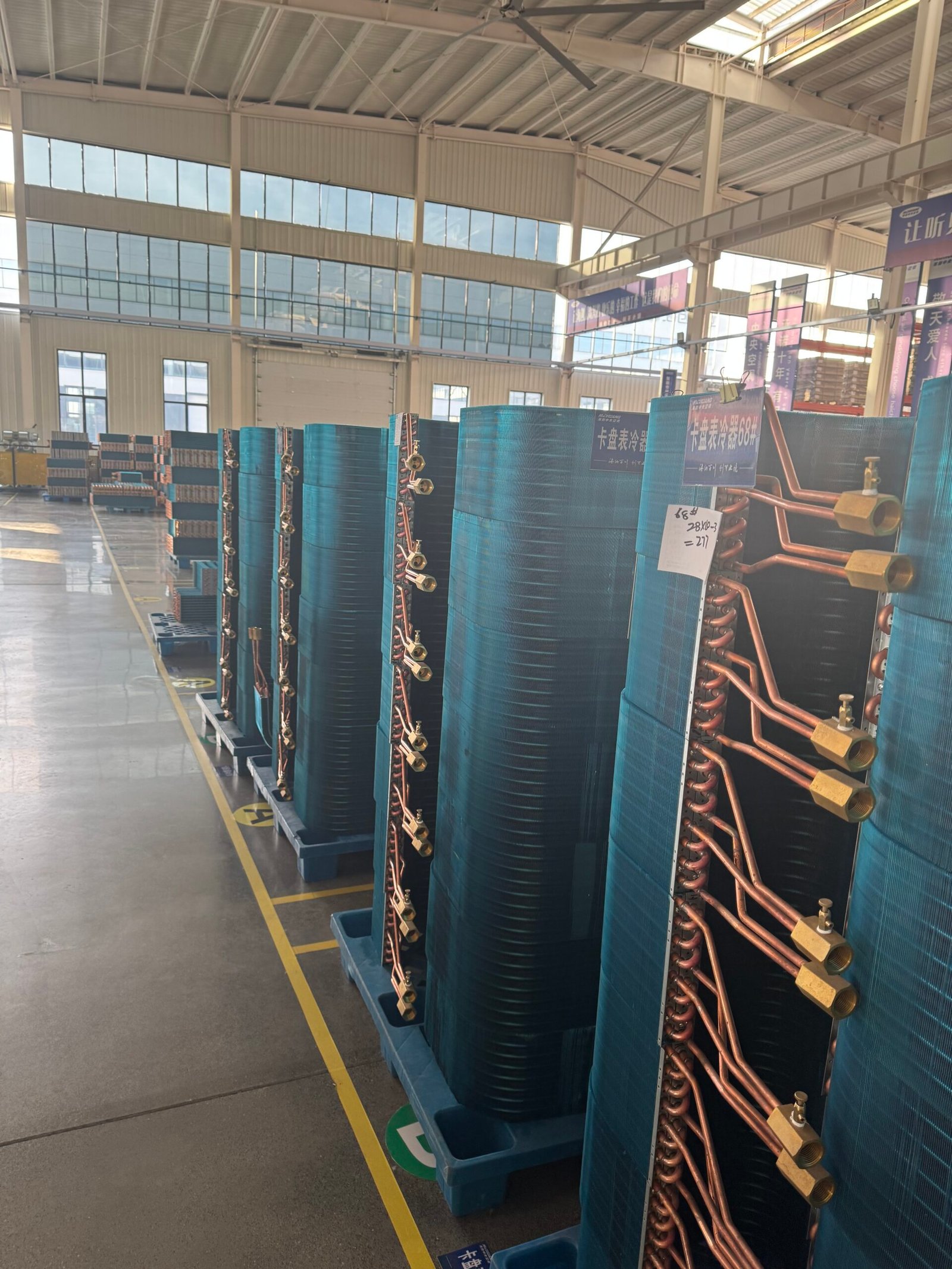
This is one of the first questions project engineers raise when a DX cleanroom AHU is proposed, and the answer is yes — with specific design provisions.
A DX coil naturally removes moisture as it cools air below the dew point. In many cleanroom applications, this latent capacity is sufficient to maintain the required humidity band. However, in projects requiring tight humidity control, the DX system needs a reheat section downstream of the cooling coil.
The reheat coil allows the system to overcool the air for dehumidification, then raise it back to the target supply temperature without exceeding the humidity setpoint.
In tropical or high-humidity climates where outdoor air carries a heavy moisture load, the DX system may also benefit from a dedicated outdoor air pre-treatment stage — a separate DX unit or pre-cooling coil that reduces the moisture content of fresh air before it enters the main AHU.
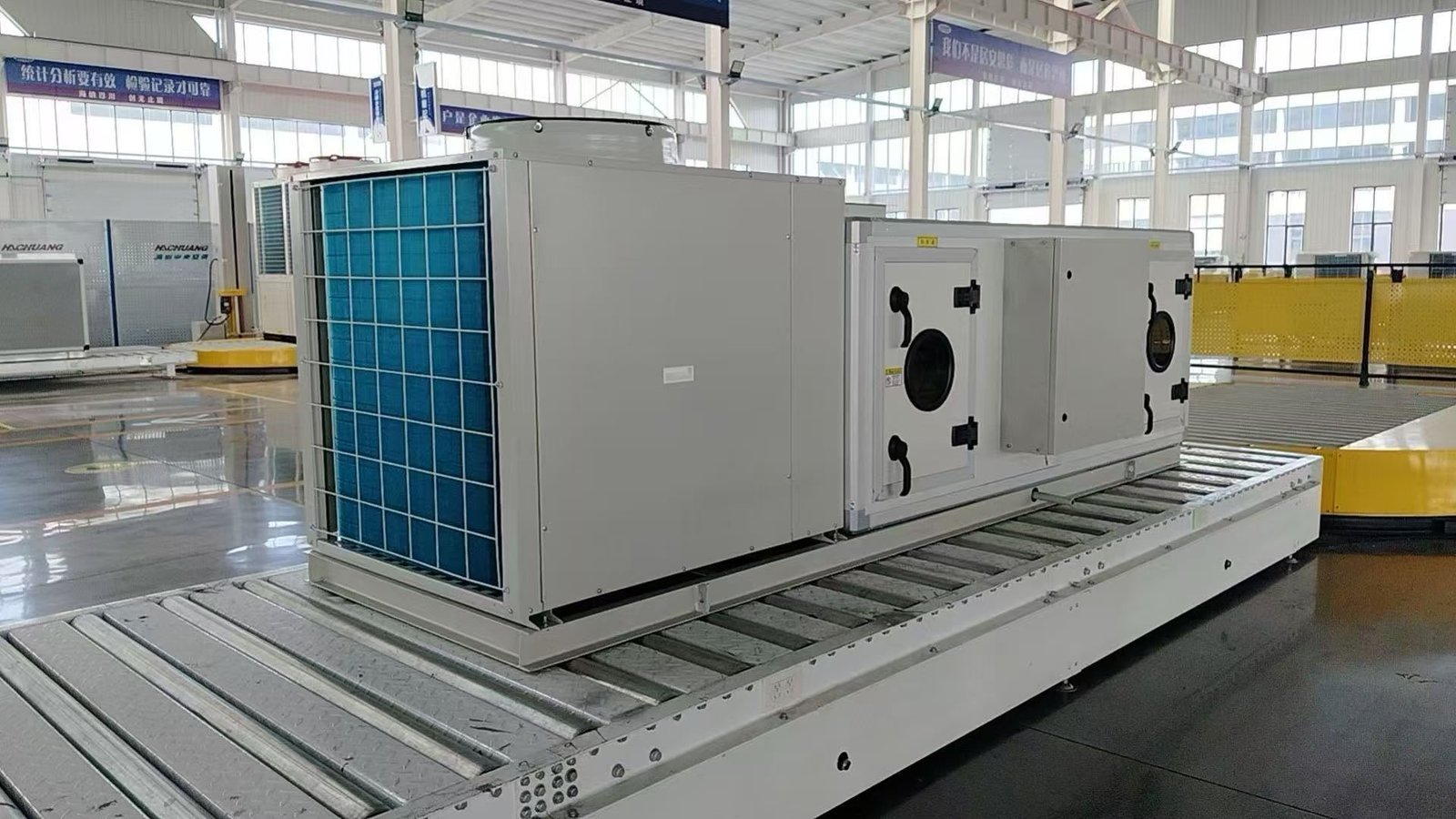
The outdoor condensing unit compresses refrigerant gas into a high-pressure, high-temperature state, then condenses it into liquid by rejecting heat to outdoor air. This liquid refrigerant flows through piping to the DX coil inside the AHU.
At the coil, it passes through an expansion device, drops in pressure, and evaporates — absorbing heat from the supply airstream in the process. The low-pressure gas then returns to the outdoor unit to be compressed again.
The DX AHU is typically a self-contained cooling system when paired with its condensing unit. There is no intermediate heat transfer fluid. This is the fundamental difference from a chilled water system, where the AHU coil receives pre-chilled water from a separate central plant.

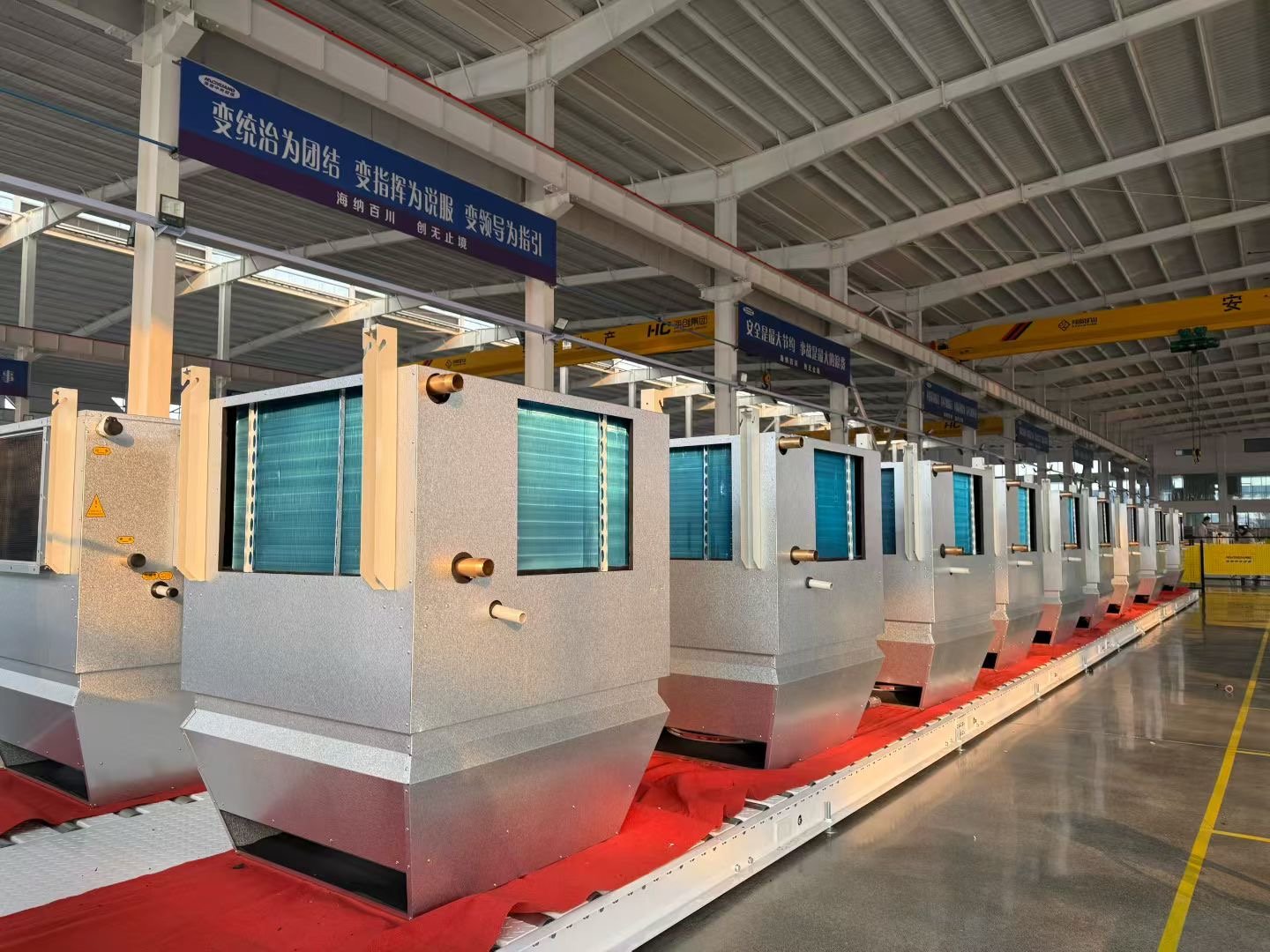
A chilled water AHU depends on a central chiller, circulation pumps, piping network, expansion vessel, water treatment equipment, and often a cooling tower — significant mechanical room space and multi-trade coordination.
A DX AHU connects to one or more outdoor condensing units via refrigerant piping. No water loop, no pump room, no cooling tower. For projects with limited space, phased construction, or impractical water infrastructure, this is a real advantage.
| Criteria | DX Air Handling Unit | Chilled Water AHU |
|---|---|---|
| Cooling Medium | Refrigerant evaporates directly in coil | Chilled water from central chiller plant |
| Infrastructure | AHU + outdoor condensing unit only | Chiller + pumps + piping + cooling tower |
| Install Time | Faster — fewer trades, less site coordination | Longer — requires full mechanical plant commissioning |
| Capacity Modulation | Inverter compressor = smooth; fixed-speed = step control | Chilled water valve modulation — inherently stable |
| Best Efficiency | Small-to-mid scale projects | Large aggregate loads (centralized chiller COPs higher) |
| Maintenance | Simpler — no water treatment, no pump seals | More complex — water chemistry, tower cleaning, pump service |
| Scalability | Easy phased expansion — add units independently | Requires central plant capacity planning upfront |
| Cleanroom Suitability | ISO 8, many ISO 7, selected ISO 6 applications | All ISO classes — preferred for large aseptic campuses |
In a chilled water system, the AHU modulates a control valve for stable, gradual capacity adjustment. In a DX system, capacity modulation depends on the compressor. Fixed-speed compressors cycle on/off, causing potential temperature fluctuations. Inverter-driven compressors modulate continuously, offering smoother control and better part-load efficiency — strongly preferred for cleanroom applications with tight temperature and humidity bands.
DX systems generally cost less upfront and install faster. At very large aggregate cooling loads, chilled water gains an efficiency advantage through higher-COP centralized chillers. But the crossover point depends on total load, AHU distribution, operating hours, energy costs, water availability, and end-user maintenance capability. Most real projects fall somewhere in between and require a project-specific comparison.
Rather than citing a fixed kW threshold, the decision is better framed around project conditions:
A manufacturer can only provide a meaningful system selection if the buyer supplies project-level technical data. Vague requests produce vague quotations.
Providing this data upfront reduces unnecessary back-and-forth and allows the manufacturer’s engineering team to propose a system that is properly sized and configured for the actual application — not a generic catalogue pick.
Selecting the right manufacturer matters as much as selecting the right system type. Experienced buyers typically evaluate suppliers against these criteria:
Sealed panel joints, smooth cleanable surfaces, thermal-break panels to prevent condensation, corrosion-resistant condensate trays. Ask for panel cross-section details, airtightness reports, and surface finish specifications.
Full filtration chain — G4 pre-filters through F7/F8 to H13/H14 HEPA. Verify whether the AHU accepts internal HEPA or feeds external terminal HEPA/FFU installations. Ask about differential pressure monitoring across each stage.
Matched reheat section and humidification module as part of the AHU scope — not an afterthought. If the manufacturer cannot explain their dehumidification and reheat strategy clearly, treat that as a warning sign.
Inverter-driven compressors strongly preferred. Ask what the minimum step-down capacity is at part load. Fixed-speed DX can work in less demanding applications but introduces control limitations for tight-tolerance rooms.
For regulated cleanroom projects: IQ/OQ documentation, test reports, material certificates, wiring diagrams — sometimes customized per project. Ask what’s included in standard scope vs. additional lead time.
Hundreds of commercial HVAC installations ≠ cleanroom experience. Ask specifically for references in pharmaceutical, electronics, or laboratory cleanroom applications — not general commercial buildings.
Songxin HVAC’s direct expansion product line covers 15 kW to over 500 kW, with configurations for cleanroom-grade panel construction, multi-stage filtration, electric and hot water heating, humidification, and inverter-driven compressors. ISO 9001, CE, and AHRI certified — equipment supplied to projects in 40+ countries.
Send your ISO class, room dimensions, target temperature and humidity range, fresh air requirement, and pressure cascade plan to receive a preliminary DX cleanroom AHU selection recommendation from Songxin HVAC’s engineering team — or share your project brief for a system comparison and preliminary sizing review.