

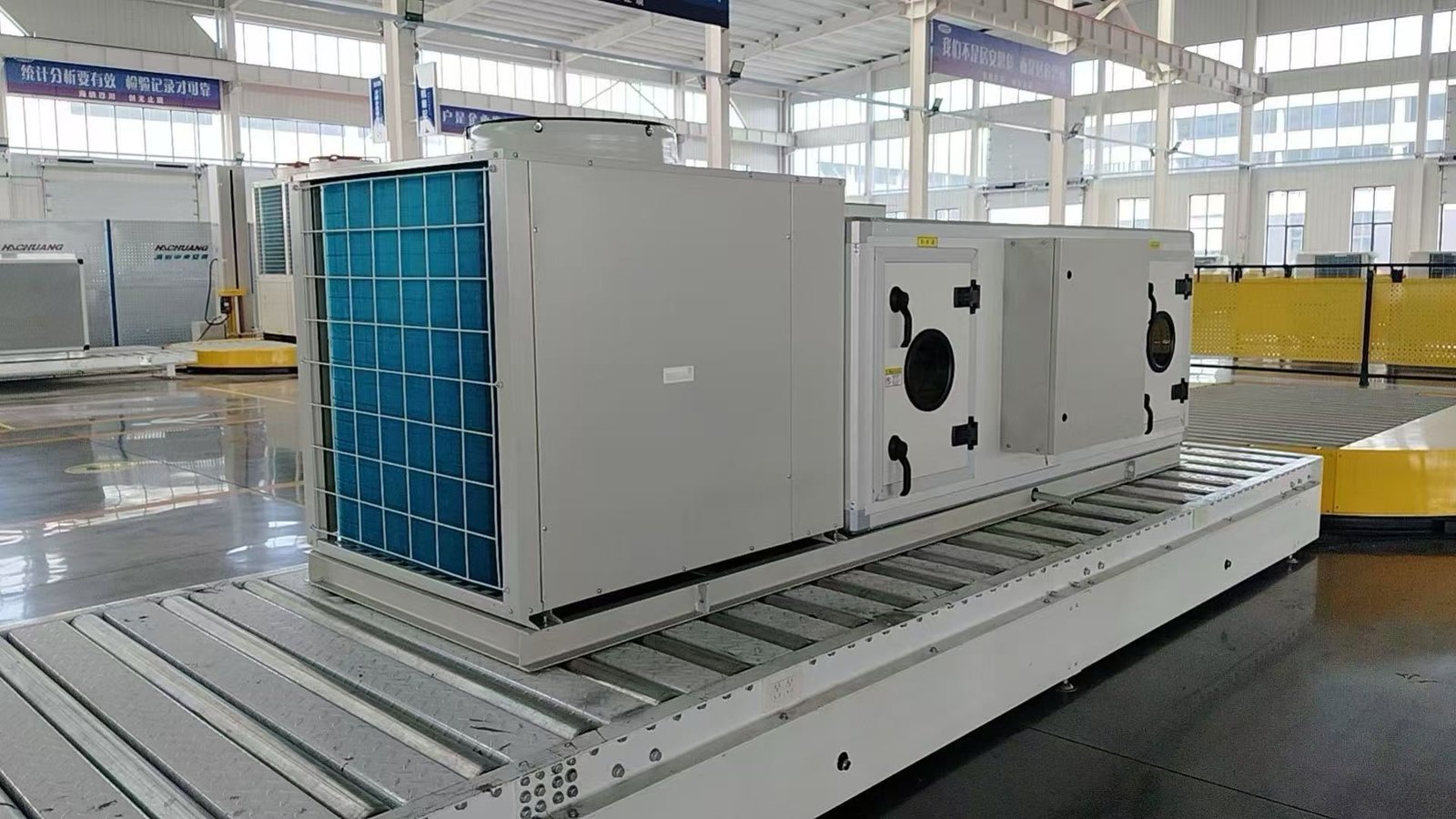
Outdoor packaged and duct-connected
DX Rooftop Units
Packaged rooftop equipment connected to ductwork. Confirm roof loading, fan ESP, outside-air provisions, condenser clearance and controls.
Explore DX Rooftop Units →SongXin HVAC · DX Equipment Families
Compare rooftop, ducted, split and temporary DX air conditioners by installation format, duct and piping requirements, airside performance and maintenance access. This catalogue is a starting point for selecting a configuration—not a model-specific performance guarantee.
For full commercial product procurement data see the main Direct Expansion Unit product page.
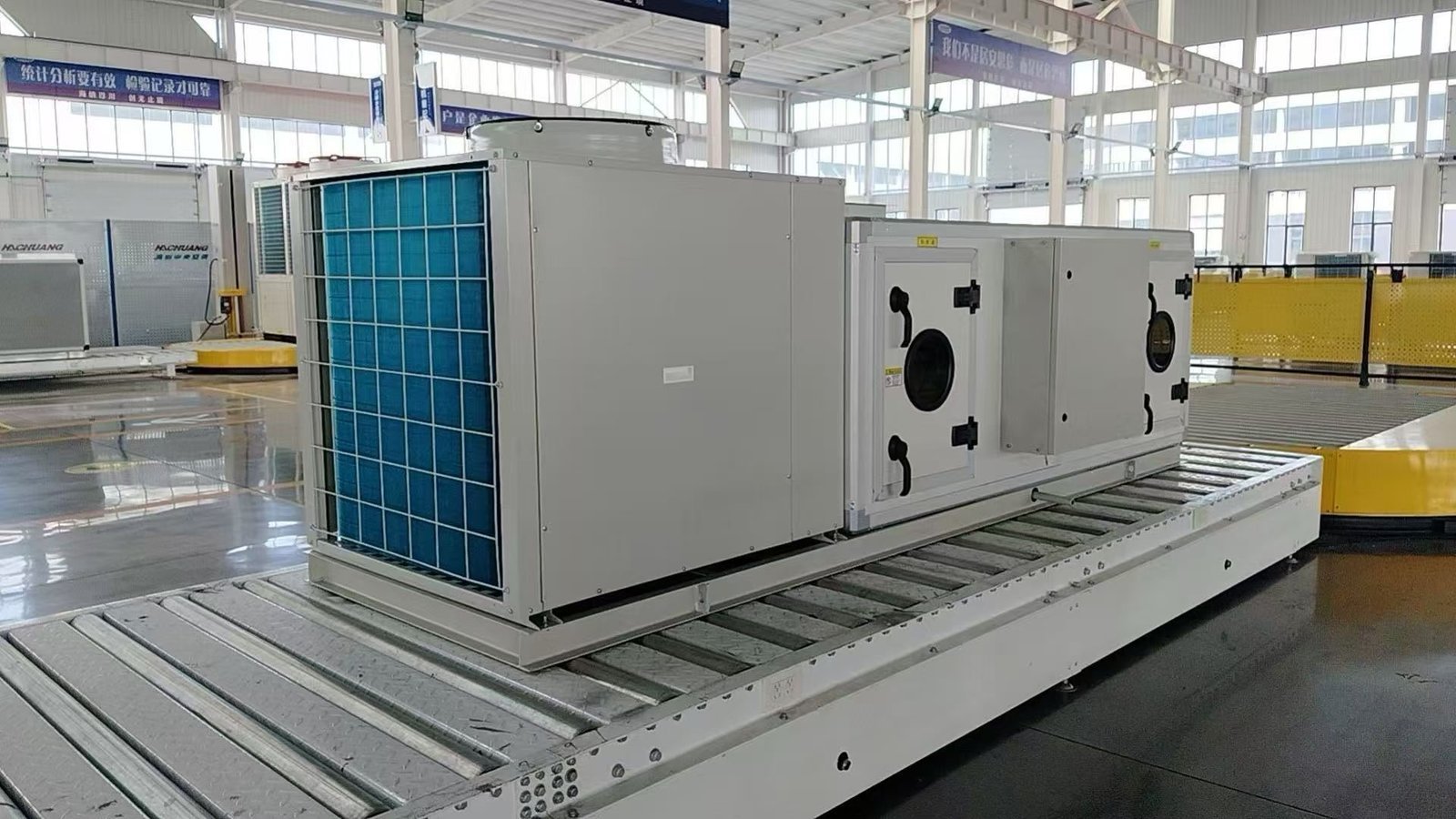
Four equipment formats
DX is a refrigeration method: pressure is reduced at an expansion device, and the refrigerant evaporates inside an air-cooling coil. Rooftop, ducted and split arrangements use this principle in different mechanical layouts. The right choice depends on actual design conditions, not simply a cooling-capacity range.
Outdoor packaged and duct-connected
Packaged rooftop equipment connected to ductwork. Confirm roof loading, fan ESP, outside-air provisions, condenser clearance and controls.
Explore DX Rooftop Units →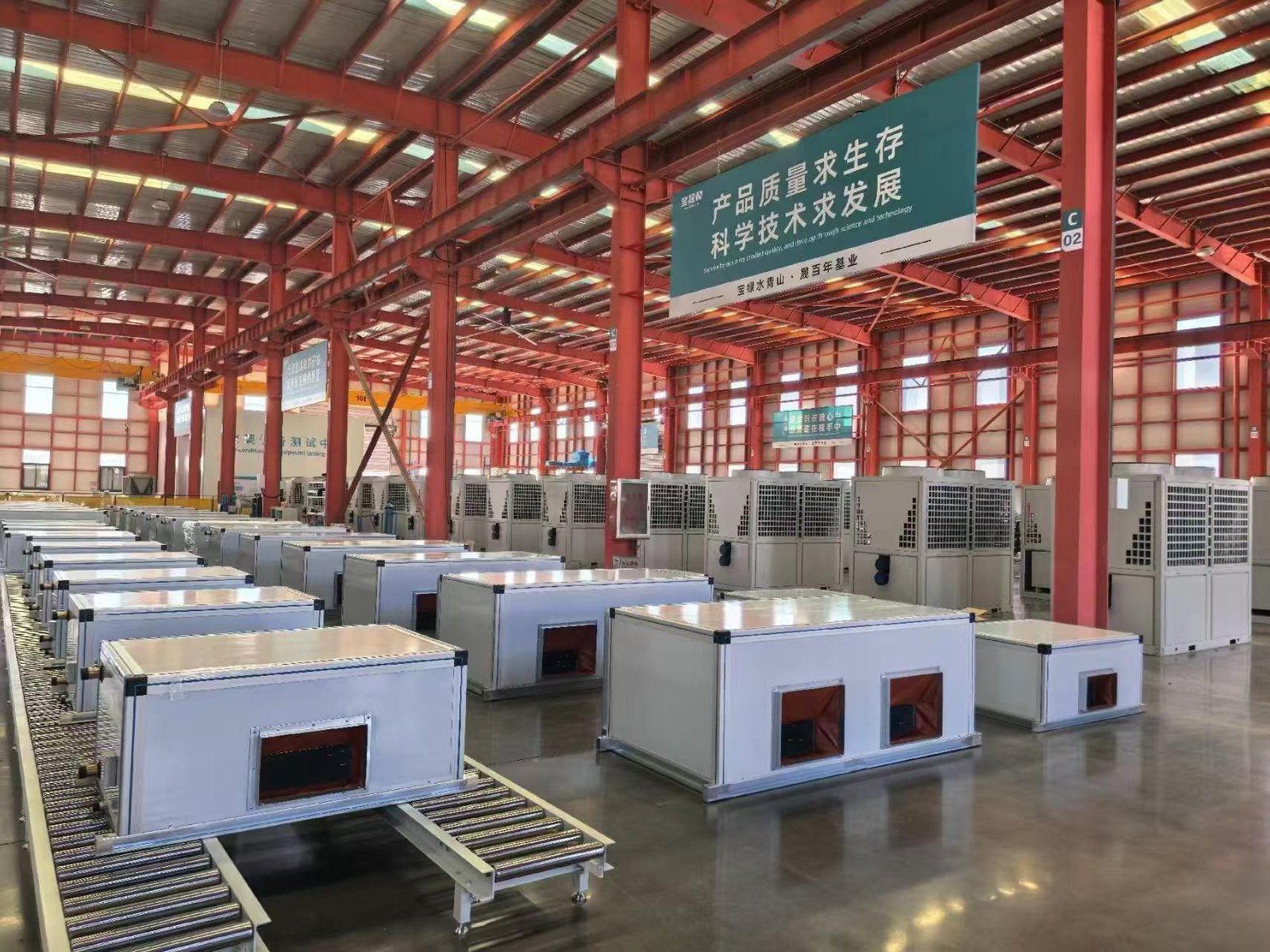
Concealed distribution and duct pressure
Concealed equipment serving ducted zones. Check ceiling/service space, static pressure, supply/return layout, drainage and sound.
Explore Ducted DX Units →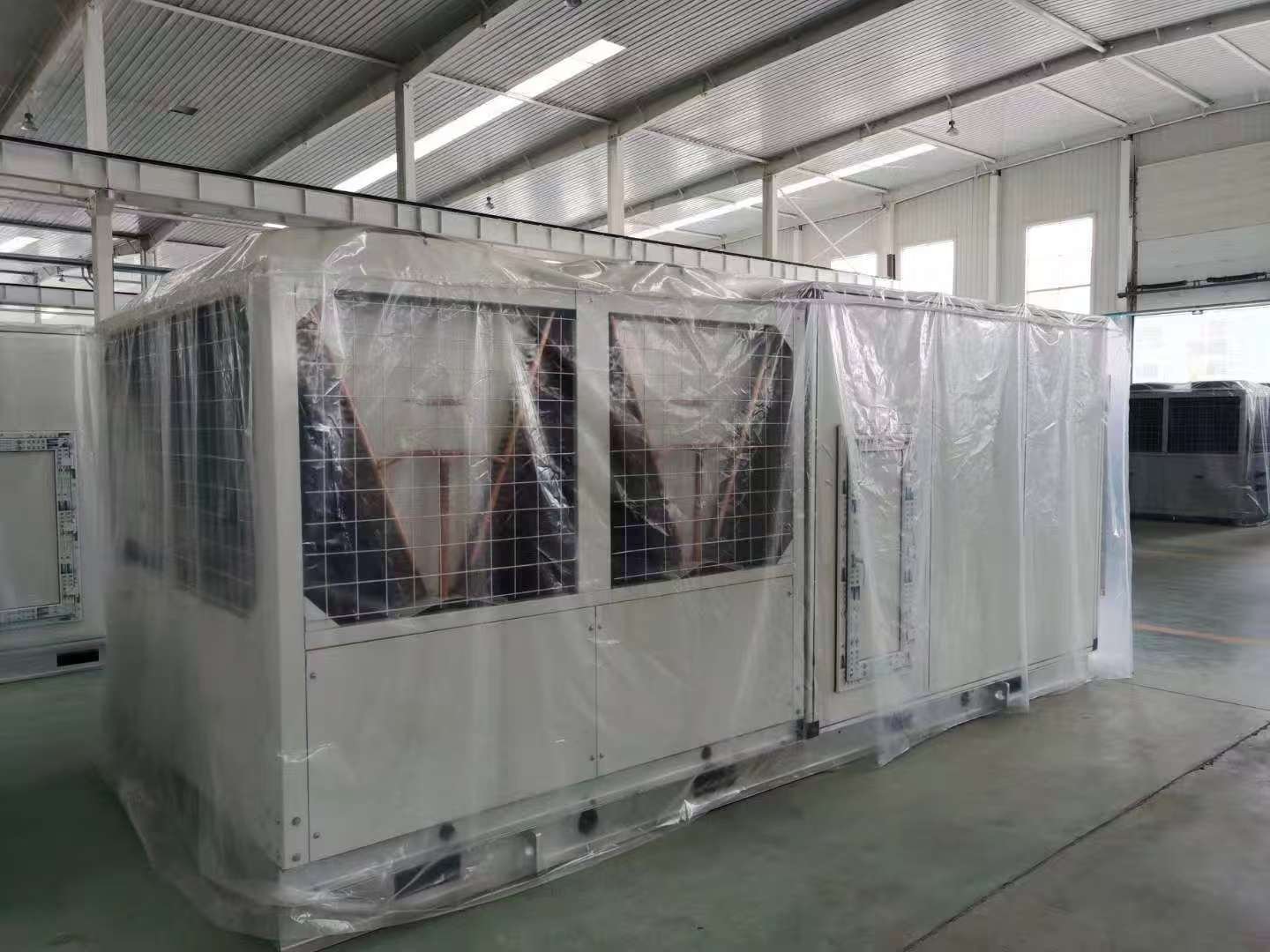
Separated indoor/outdoor units
Separate indoor and outdoor sections. Match evaporator and condensing unit; assess refrigerant piping limits, safety and maintenance.
Explore DX Split Systems →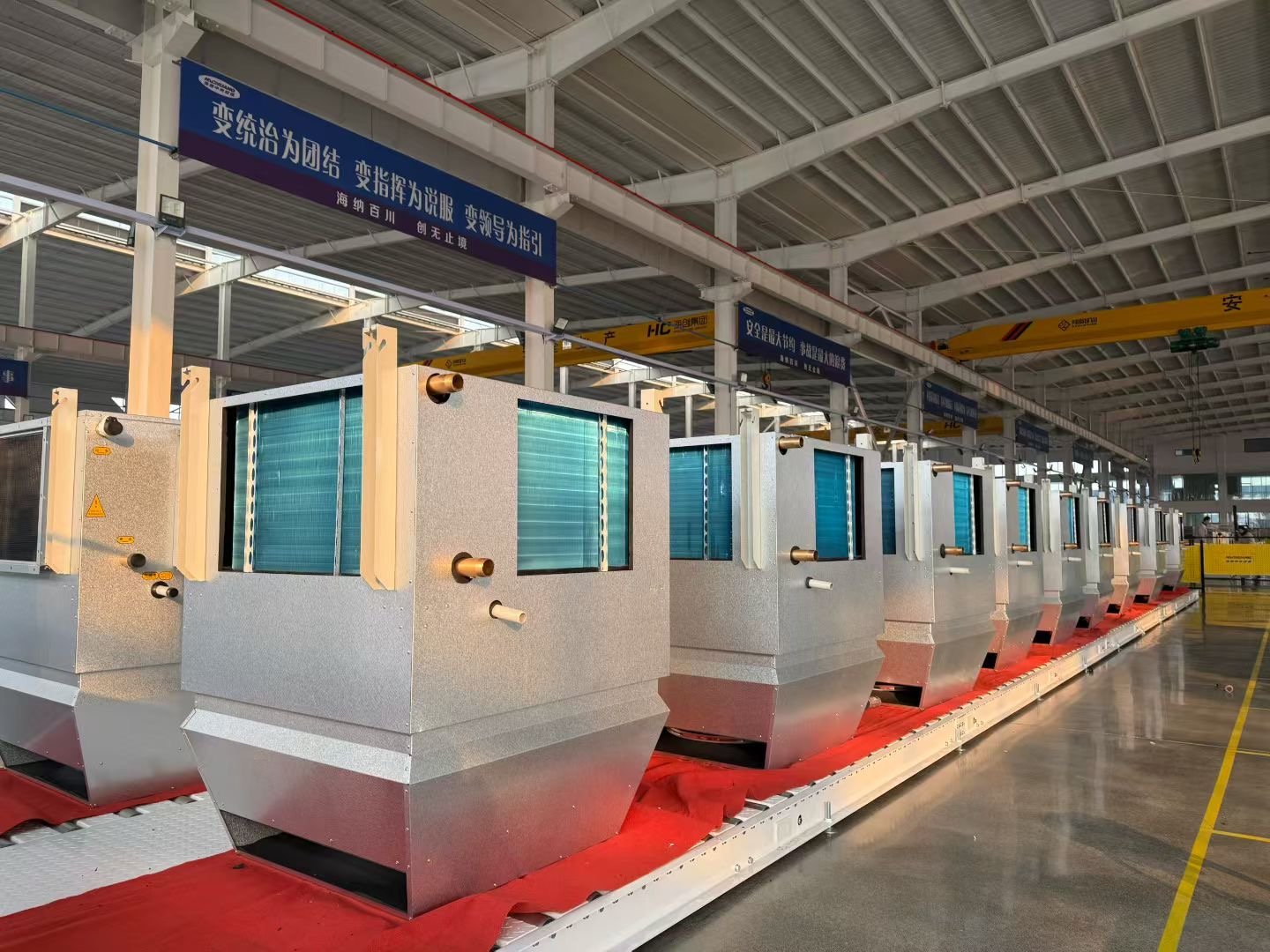
Temporary and rapid-deployment sites
Portable or temporary installations; verify event load, fresh air, power supply, air distribution and fast commissioning scope.
Explore Tent & Temporary DX →| Project question | Information required | Decision impact |
|---|---|---|
| Building / use | Retail, office, technical room, tent or remote plant | Cooling load shape, operating schedule and installation limitations |
| Required thermal duty | Calculated total and sensible kW, fresh-air latent duty | DX configuration must satisfy both loads at the same design point |
| Air distribution | Supply airflow, available external static pressure and noise | Ducted/rooftop fan performance; filter and duct resistance |
| Outdoor conditions | Ambient dry-bulb, altitude, dust/salt exposure | Corrected capacity, condenser airflow and approved operating envelope |
| Installation | Roof/platform, ceiling void, indoor/outdoor separation, electrical supply | Physical fit, service access, refrigerant piping distance and charge/safety check |
| Maintenance and cost | Run hours, redundancy, availability of parts, export destination | Controls, testing data, installed cost and defined warranty/Incoterms scope |
A nominal 50 kW cooling label, for example, cannot prove the same sensible cooling output or fan performance at different indoor conditions, outdoor ambient and external static pressure. Use model-specific data at a shared test basis to compare quotes.
Send the total/sensible cooling load, indoor dry/wet-bulb (or RH), outdoor design dry-bulb, fresh-air fraction and planned operating hours.
Identify rooftop/indoor equipment space, duct route and ESP, refrigerant pipe length, electrical supply and applicable local refrigerant safety rules.
Request matched equipment numbers, corrected cooling/power, airside data, drawings, applicable documents, service scope and delivery terms.
Independent DX equipment can be useful for smaller or separate air-conditioning zones. A central chiller and AHU solution may be preferable for some large or multi-zone schemes; compare architecture, operating hours and installed lifecycle cost rather than assuming one answer fits all projects.
It depends on the building’s cooling load, airflow, roof and ceiling constraints, number of zones, humidity and maintenance access. Compare the same conditions across rooftop, ducted and split solutions.
No. Heating requires an explicitly reversible heat-pump or supplementary heating configuration. Check the offered model and its cold-weather envelope.
Not necessarily. Ducted describes supply-air distribution; split refers to separate indoor and outdoor refrigeration assemblies. A system can be both, depending on its arrangement.
Not without correction. Obtain the selected model’s cooling output and electrical input at the project outdoor temperature and indoor state; nominal catalogue conditions may differ.
Applicable documentation depends on the model and destination. Ask for product-specific tests and certificates or declarations; listing a standard does not prove universal certification.